
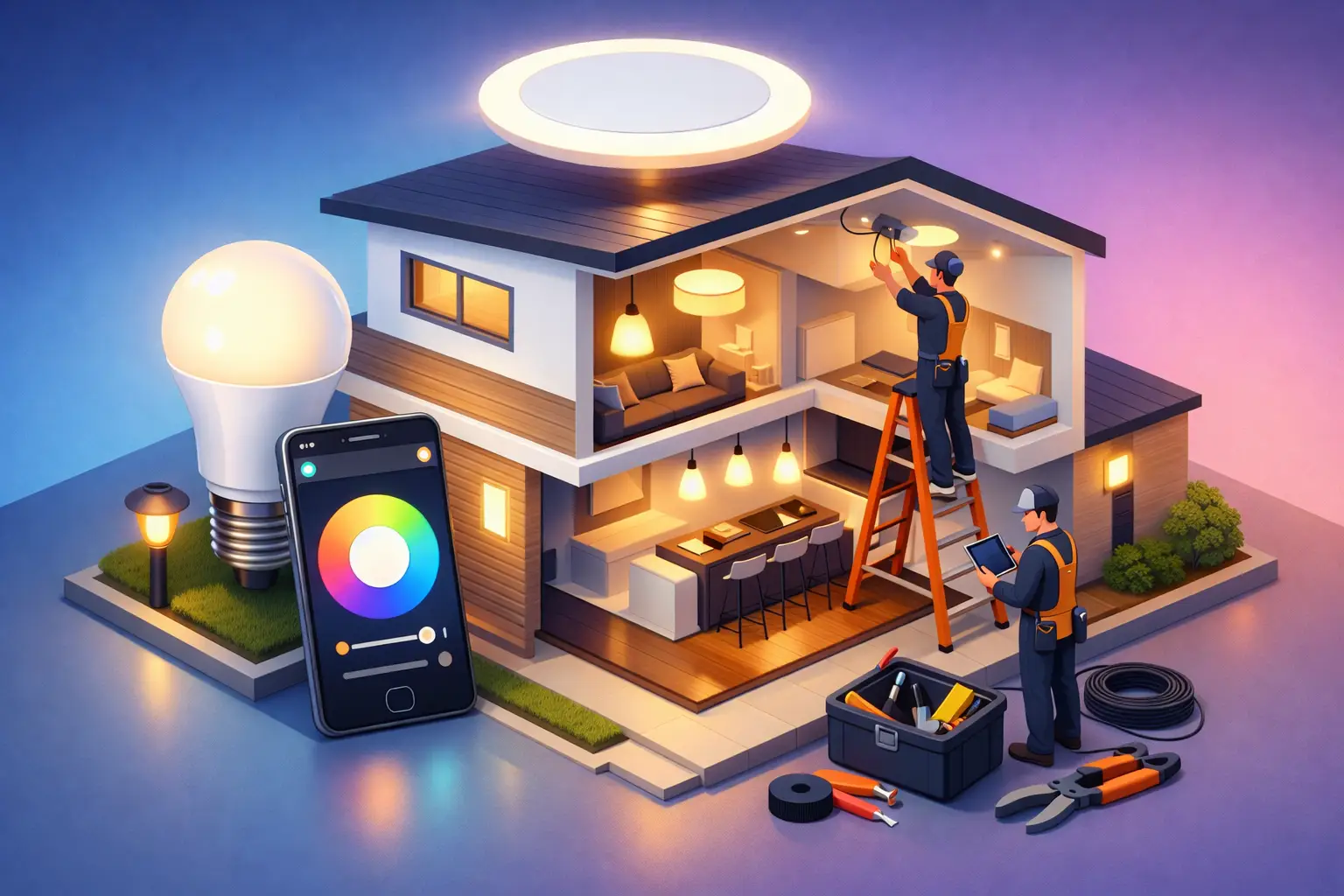
A well-designed home should not require a row of switches, multiple remotes, or a phone call to the electrician every time your needs change. Smart lighting installation for homes replaces that friction with lighting that responds naturally to how each room is used – while preserving the clean finishes and reliability expected in a Dubai villa, penthouse, or apartment.
The difference is not simply the ability to switch a light on from a phone. A professionally planned system considers the quality of light, the placement of fittings, circuit design, control options, scene programming, future expansion, and the way lighting works alongside curtains, climate control, security, and entertainment. The result is one intelligent system tailored to your space and needs.
Start With How You Live in Each Space
The best lighting plan begins before devices are selected. A formal living room, for example, may need soft ambient lighting for evenings, focused accent lighting for artwork, and brighter settings for cleaning or hosting. A kitchen needs clear task lighting at worktops, while a bedroom should make it easy to move from a gentle wake-up setting to complete darkness at night.
This is why room-by-room planning matters. Rather than asking which smart bulb or switch is most popular, consider what should happen when you enter, leave, entertain, sleep, or travel. In a villa, outdoor pathways, façade lighting, pool areas, and garden zones also deserve separate consideration. They have different operating hours, weather exposure, and security requirements than interior spaces.
Natural daylight is equally important in the UAE. Rooms with large glazing can benefit from lighting scenes that work with motorized curtains and blinds. During bright daytime hours, artificial lighting can remain restrained. In the evening, the system can create a comfortable layered setting without making the home feel overlit.
Choose the Right Smart Lighting Architecture
A smart lighting system can be wired, wireless, or a combination of both. The right choice depends on the property, the stage of the project, the desired level of control, and the budget.
Wired systems for new builds and major renovations
A wired architecture is often the strongest choice for luxury villas, new apartments under fit-out, and extensive renovations. Control wiring is installed during the electrical works, allowing keypads, dimmers, sensors, and centralized panels to communicate reliably. It also reduces dependence on individual battery-powered devices and can support a large number of lighting circuits without cluttering walls with switches.
This approach requires early coordination. The automation design should be aligned with the electrical contractor, interior designer, lighting consultant, and MEP team before ceilings close and finishes are completed. That planning protects the visual quality of the home and prevents costly changes later.
Wireless systems for completed properties
Wireless smart lighting can be an excellent solution for occupied apartments or homes where major construction is not practical. It can add scene control, app access, smart switches, and selected automated functions with less disruption. It is particularly useful when upgrading a single room, adding control to rental properties, or introducing automation in phases.
The trade-off is that wireless systems need careful product selection, network planning, and testing. Not every wireless device offers the same performance, finish quality, or long-term support. A professional integrator will assess signal coverage, electrical compatibility, and the number of devices before recommending an approach.
Plan the Lighting Layers Before Programming Scenes
Smart controls cannot compensate for a weak lighting design. The property should have the right mix of ambient, task, and accent lighting before automation is programmed.
Ambient lighting provides the general level of illumination in a room. This may come from recessed downlights, cove lighting, or decorative fixtures. Task lighting supports specific activities, such as cooking, reading, grooming, or working. Accent lighting adds depth by highlighting art, textured walls, joinery, or architectural features.
Once those layers are in place, scenes become genuinely useful. A “Welcome Home” scene might activate pathway lights, a warm entrance setting, and selected living-area lights. “Dinner” can lower general lighting, bring pendants to the right level, and illuminate artwork. “Good Night” can switch off common areas, leave a low-level route to bedrooms, close curtains, and arm selected security functions.
The goal is not to create dozens of scenes nobody remembers. A refined system usually focuses on a small set of intuitive settings that match real routines. Keypads should use clear labels or thoughtfully programmed buttons, so guests and household staff can use the system without opening an app.
Specify Dimming and Fixtures Carefully
Dimming is one of the most valuable parts of a smart lighting installation, but it must be planned correctly. LED fittings, drivers, dimmers, and control modules need to be compatible. If they are not, homeowners may experience flickering, buzzing, limited dimming range, inconsistent color, or lights that fail to turn fully off.
This is especially relevant when decorative fixtures are sourced separately from the automation package. Before installation, confirm the lamp type, driver specification, wattage, dimming method, and whether the fitting needs a trailing-edge, leading-edge, 0-10V, DALI, or another control method. The details depend on the product, but the principle is simple: design the controls around the actual lighting equipment, not assumptions.
Color temperature also shapes the feel of a home. Warm white lighting often suits bedrooms, lounges, and dining areas, while neutral white may be more practical in kitchens, dressing rooms, and workspaces. Tunable lighting can offer more flexibility, though it adds cost and requires stronger programming discipline. For many homes, carefully selected fixed-color fittings and good scene control deliver a better value than adding tunability everywhere.
Make Control Easy Without Making Walls Busy
A smart home should offer more than one way to control lighting. Wall keypads provide immediate, dependable control. A centralized app provides convenience when you are away from home. Voice control can be useful for hands-free requests, particularly in kitchens, bedrooms, and accessible living environments. Motion and occupancy sensors can automate practical areas such as corridors, wardrobes, bathrooms, staircases, and service rooms.
Each option has a role. Phone-only control is rarely ideal because family members should not need to find an app to turn on a light. Conversely, relying only on wall switches limits the value of automation. The most comfortable homes combine familiar physical control with smart scenes, scheduling, sensor logic, and remote access.
For larger properties, keypad placement deserves careful attention. A single entrance keypad may control arrival and departure scenes, while room keypads handle the lighting layers used most often in that space. This reduces wall clutter and gives the interior a more considered finish.
Build for Security, Efficiency, and Future Changes
Lighting can contribute to security without creating an overly complicated system. When the property is vacant, selected lights can follow a varied schedule that gives the appearance of occupancy. Exterior lighting can respond to time, sunset, sensors, or access events. If integrated with CCTV, intercoms, and access control, lighting can support a more informed response when someone arrives at the gate or front door.
Energy savings are also possible, but they should be viewed realistically. LEDs already use far less energy than older lamp types. The additional benefit of smart lighting comes from reducing unnecessary use through occupancy sensing, scheduling, daylight response, and easy whole-home shutdown scenes. In a large villa with many lighting zones, those controls can make a meaningful difference over time.
Scalability matters as well. A homeowner may start with lighting, then later add automated curtains, AC control, smart locks, audio, or security. Choosing an established automation platform and allowing capacity in the design can make those additions far simpler. It is usually more cost-effective to plan pathways, panel space, and network requirements at the beginning than to retrofit them after the home is complete.
What Professional Installation Should Include
Smart lighting is a design and commissioning project, not just a device installation. A complete process starts with a site consultation to understand the property, lifestyle requirements, finishes, electrical condition, and project timeline. This is followed by a clear quotation and system design that explains what will be controlled, how it will be controlled, and what is included.
During installation, the team coordinates with relevant trades, installs and labels equipment cleanly, and tests every circuit, keypad, scene, sensor, and app function. Programming should reflect the household’s actual preferences, not a generic template. At handover, homeowners should receive practical guidance on daily operation, scene adjustments, and support procedures.
For high-value homes, accountability matters. Esmartech manages the process from consultation and design through installation, testing, and user handover, helping clients avoid the common gap between lighting design, electrical installation, and automation programming.
A Better Starting Point Than Buying Devices
The smartest first decision is not choosing a brand or a feature. It is deciding what you want your home to feel like at different moments of the day, then designing the lighting and controls to support that experience. When the system is planned early, installed professionally, and kept simple for everyday use, intelligent lighting becomes part of the home rather than another technology to manage.



Leave a comment