
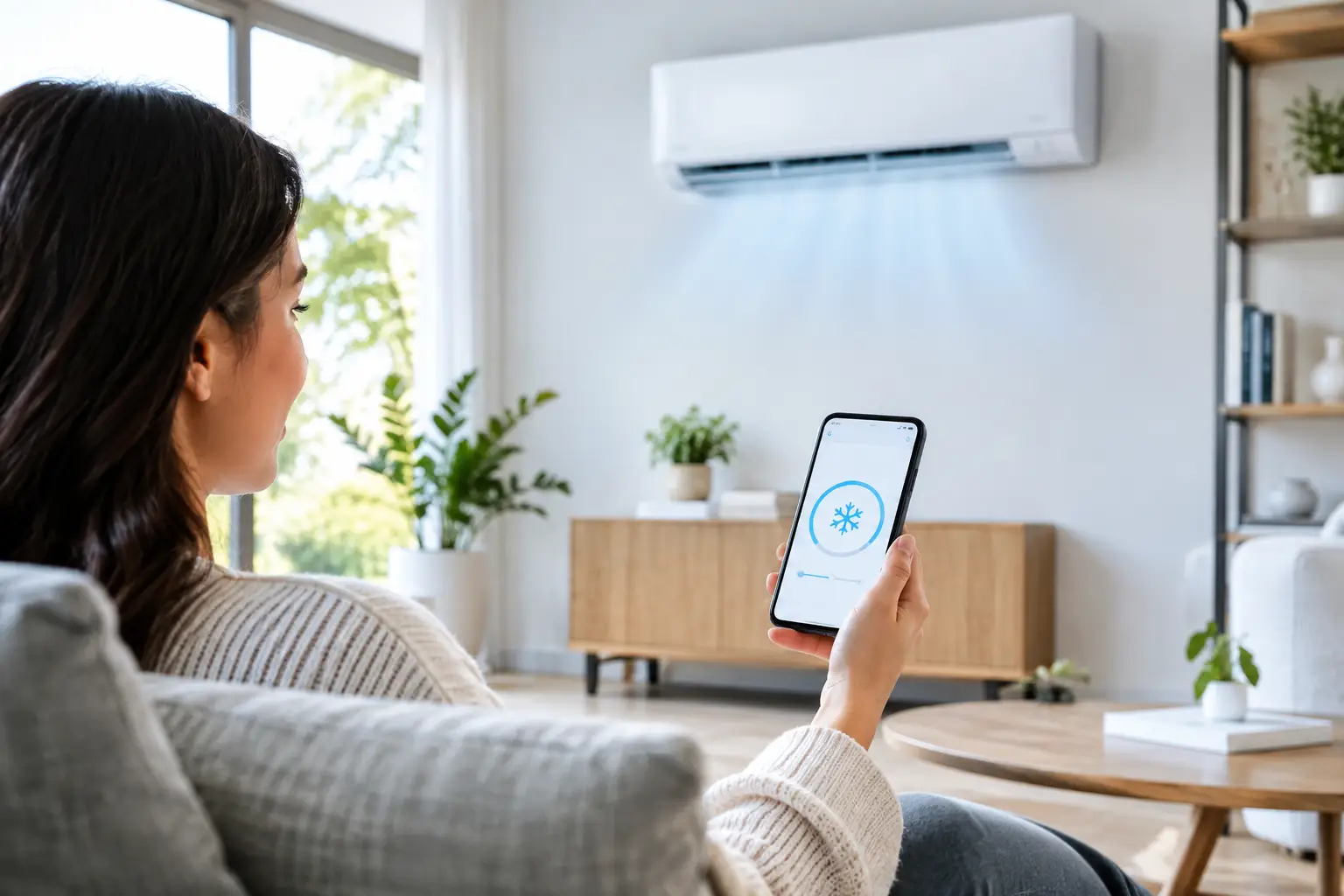
Looking for practical ways to reduce AC cooling costs in Dubai? Smart home automation can help homeowners manage air conditioning more efficiently without compromising comfort. By combining smart thermostats, occupancy sensors, automated cooling schedules, and motorized curtains, you can reduce unnecessary energy consumption and improve everyday comfort.
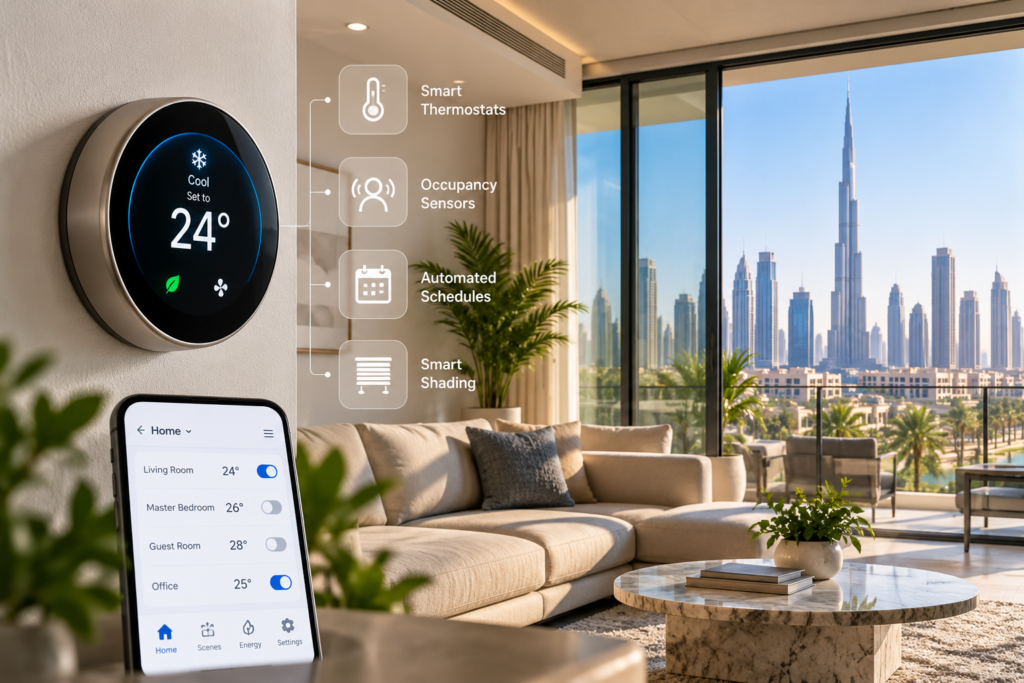
For high-value homes, apartments, hotels, offices, and restaurants, the goal is not simply to lower the thermostat. It is to maintain the right comfort level in the right space at the right time. An intelligently designed system connects climate control with occupancy, schedules, window coverings, door contacts, and remote access so cooling works with the property rather than against it.
How Smart Automation Helps Reduce AC Cooling Costs
Cooling costs rise when conditioned air is delivered to empty spaces, when sunlight heats rooms unnecessarily, or when settings remain unchanged through the day and night. Automation addresses these patterns with a coordinated response instead of relying on someone to remember every adjustment.
A smart thermostat is often the starting point, but a premium climate strategy goes further. In a zoned property, automation can manage individual rooms or groups of rooms based on occupancy and preferred temperatures. A bedroom can be cooled before bedtime, while unused guest rooms stay in an energy-conscious setback mode. In an office, meeting rooms can receive cooling before scheduled use and return to a reduced setting after the meeting ends.
The savings depend on the building, equipment condition, insulation, occupancy habits, and local weather. In hot climates such as Dubai and across the UAE, the opportunity can be especially meaningful because air conditioning operates for much of the year. Automation does not make an inefficient AC unit efficient, but it can reduce avoidable runtime and give owners clearer control over a major operating cost.
Occupancy-based cooling prevents empty-room waste
Occupancy sensors can tell the system when a room is in use. When someone enters, the climate setting can move toward the preferred comfort level. After a defined period with no detected activity, the room can return gradually to an energy-saving temperature.
This approach suits rooms with inconsistent use: formal lounges, home cinemas, guest suites, conference rooms, private dining areas, and hotel meeting spaces. The timing matters. Switching cooling off immediately after a sensor sees no movement can make a space uncomfortable or cause the system to work harder when people return. A professional design uses sensible delays, temperature thresholds, and room-specific rules.
Door and window contacts add another layer of protection. If a balcony door or window is left open, the system can send an alert, pause cooling in that zone, or adjust the set-point. For a large villa or hospitality property, this small intervention can prevent a frequent and expensive source of energy loss.
Smart schedules match real routines
Schedules are effective when they reflect the way people actually live and work. A family may want living areas comfortable in the morning and evening, while bedrooms need priority at night. An office may need pre-cooling before staff arrive, followed by reduced cooling after hours. A restaurant may need its dining room prepared before service, with different settings for the kitchen, reception, and storage areas.
The value of automation is flexibility. Schedules do not need to be rigid. A homeowner can override the system from a centralized app when plans change, while a property manager can adjust operating hours without visiting each thermostat. Vacation settings can maintain a safe baseline temperature while avoiding full comfort cooling in an empty property.
For second homes and investment properties, remote climate control offers practical reassurance. Owners can prepare the home before arrival, confirm that systems are operating correctly, and avoid leaving the AC at an unnecessary setting between visits.
Automated shading reduces solar heat gain
Cooling is not only about the air conditioner. Sunlight entering through large windows can add substantial heat to a room, particularly in glass-fronted villas, penthouses, and hospitality spaces. Motorized curtains, blinds, or shades can respond to time of day, sunlight levels, or a selected scene.
For example, shades can close during the hottest afternoon period on sun-exposed elevations, then open later to restore natural light and views. The system can coordinate this behavior with lighting, so lights adjust when shading changes. This protects comfort without turning a well-designed space into a darkened room.
The trade-off is that automated shading must be planned around the property’s orientation, glazing, interior fabrics, and privacy requirements. A generic schedule may close shades when the room is occupied and the view is most valued. Tailored programming is what makes the system feel considered rather than intrusive.
Can Automation Reduce Cooling Costs in Every Property?
Automation can improve cooling efficiency in most properties, but results are not identical everywhere. A compact apartment with one split AC unit may benefit most from scheduling, remote control, and a smart thermostat. A large villa with multiple zones, motorized curtains, outdoor areas, and guest rooms can support more advanced logic. Hotels and commercial buildings may require integration with building management systems, access control, booking schedules, and central HVAC equipment.
The existing cooling system also matters. Older equipment with blocked filters, refrigerant issues, poor duct-work, or weak airflow should be serviced before automation is expected to deliver meaningful results. Automation is a control layer, not a replacement for maintenance.
Likewise, aggressive setback temperatures are not always the best choice. In humid conditions, allowing indoor temperatures to rise too far can affect humidity levels and create discomfort when the system restarts. A well-programmed installation balances energy reduction with equipment protection, indoor air quality, and a stable return to comfort.
Features That Deliver the Most Value
The strongest systems combine several inputs rather than depending on one device. Climate zones provide control at the room or area level. Temperature and humidity sensors offer more accurate readings than a thermostat placed in an unsuitable location. Occupancy sensors identify when a space is active, while door and window contacts prevent cooling from fighting outdoor air.
Motorized shading helps manage heat before it enters the room. Centralized control gives homeowners and operators one clear view of temperatures and system status. Voice control can be useful for quick adjustments, but the real value is in the background programming that works without repeated commands.
Alerts are equally useful. A notification for an AC zone that is not reaching its target temperature may reveal a maintenance issue early. An alert when a door remains open in a cooled area gives staff or homeowners a chance to act before energy is wasted for an entire afternoon.
Design Comes Before Devices
The best cooling automation begins with a site assessment, not a shopping list. A professional integrator should review the property layout, existing AC equipment, control compatibility, room usage, window exposure, network reliability, and future expansion plans. This determines whether a wired, wireless, or hybrid architecture is the right fit.
From there, the system should be designed around simple daily experiences. One touch could set the home to Away mode, raising temperatures, closing selected shades, turning off unnecessary lights, and sending confirmation through the app. A Good Night scene can prioritize bedroom comfort while reducing cooling in the rest of the home. Commercial properties can use comparable modes for opening, closing, and unoccupied periods.
At Esmartech, this means managing the project from consultation and system design through clean installation, testing, and handover. The programming should be explained clearly, so owners and staff understand what the system will do automatically and how to adjust it when needed.
A Smarter Standard for Comfortable Spaces
Cooling should not depend on a collection of thermostats, remotes, and remembered routines. With the right automation design, your property can respond to occupancy, sunlight, schedules, and changing plans while keeping comfort at the center. The most effective next step is to assess how each space is used, then build controls that are tailored to that reality.
Leave a comment