
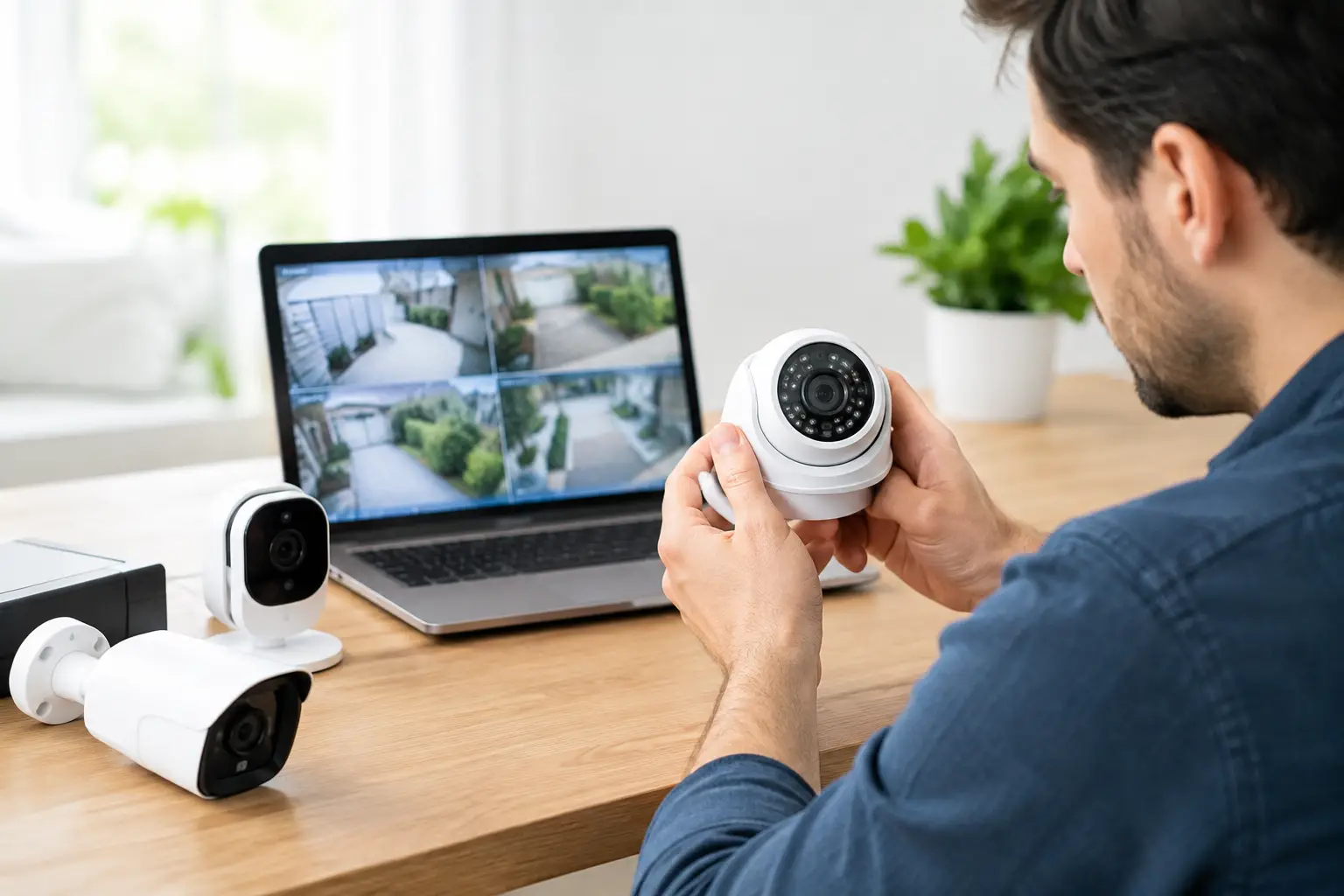
Choosing the best CCTV cameras in Dubai requires more than comparing prices or camera resolution. Whether you’re securing a villa, apartment, office, or commercial property, understanding video quality, night vision, storage options, remote monitoring, and smart security features is essential. In this guide, Esmartech explains what to consider before investing in a reliable CCTV security system.
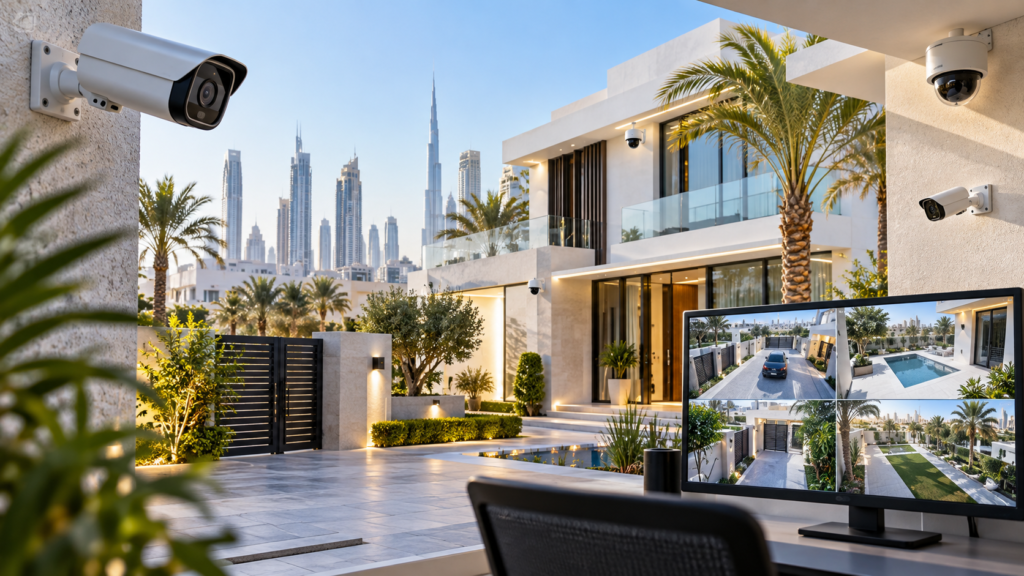
For homeowners, developers, and commercial operators, CCTV is rarely a standalone purchase. It becomes part of daily access, visitor management, staff operations, and peace of mind when the property is vacant. That is why the right decision starts with the site, not the camera box.
How to Choose CCTV Cameras in Dubai: What Really Matters
Most product reviews focus on specifications because they are easy to compare. Resolution, night vision distance, field of view, storage capacity, and artificial intelligence detection all have value. Yet those figures only become meaningful when matched to a real security objective.
A wide-angle camera may cover an entire driveway, for example, but it may not provide enough detail to identify a face at the far end. A high-resolution camera mounted too high can produce a sharp picture of the top of a visitor’s head rather than a useful identification image. Reviews that mention placement, lighting conditions, and viewing distance are generally more valuable than those that simply declare a model to be “the best.”
Look for reviewers who explain what they were trying to protect. Was the system tested at a front door, a parking lot, a retail counter, or a large villa perimeter? A camera that performs well in a compact apartment corridor may be the wrong choice for a sun-exposed exterior wall or a hotel service entrance.
Resolution is only one part of image quality
4K cameras can provide excellent detail, particularly for wide outdoor areas where digital zoom may be needed after an incident. But higher resolution also creates larger video files, which affects storage, network capacity, and the cost of recording hardware. In some indoor areas, a well-positioned 4MP or 5MP camera can deliver the required result with more efficient bandwidth use.
Also consider wide dynamic range, which helps a camera handle difficult scenes such as a bright Dubai driveway facing a shaded entrance. Low-light performance matters just as much. Infrared night vision is useful in darkness, but color night imaging with controlled exterior lighting can make people, vehicles, and clothing easier to distinguish.
The best review is not the one that favors the highest number. It is the one that confirms whether the image remains usable in the conditions your property actually faces.
Detection alerts should reduce noise, not create it
Motion alerts can be helpful, but basic motion detection often reacts to moving trees, headlights, pets, or changes in sunlight. Reviews should clarify whether a camera can distinguish people, vehicles, or other relevant events. This is particularly useful at entrances, parking areas, and commercial perimeters where constant irrelevant notifications quickly cause users to ignore the app.
Artificial intelligence detection is not perfect. A system may occasionally misclassify an event, and accuracy can change with camera angle, distance, weather, and lighting. The practical goal is a sensible balance: alerts that bring genuine activity to attention without turning a phone into a constant interruption.
What Strong CCTV Reviews Often Miss
Even detailed product testing may overlook the parts of CCTV ownership that determine long-term satisfaction. These are not glamorous features, but they are where many systems either earn trust or become difficult to manage.
Recording strategy and retention
A camera is only useful after an event if the video is still available and easy to retrieve. Before choosing a system, decide how long footage needs to be retained and whether recording should be continuous, event-based, or both. Continuous recording gives the fullest timeline of an incident, while event recording can conserve storage when it is set up accurately.
Local recording through a network video recorder offers control, predictable ongoing costs, and continued operation when internet service is interrupted. Cloud storage can make remote access and off-site backup convenient, but may involve recurring fees and depends on a stable connection. Many premium properties benefit from a design that considers both local recording and protected remote access, especially when footage is business-critical.
Retention needs vary. A private residence may need a shorter review window than a restaurant, office, or hospitality property where operational questions can arise days later. Storage should be calculated from camera count, resolution, recording schedule, and retention target rather than guessed after installation.
Cybersecurity and privacy
Any camera connected to a network needs thoughtful protection. Reviews that praise simple remote access without discussing account security, software updates, and network configuration leave out a major part of the decision.
Use strong, unique credentials, enable multi-factor authentication where available, and keep firmware current. A professionally designed system can also separate security devices from general guest or office networks, reducing unnecessary exposure. Remote viewing should be convenient for authorized users, not casually open to everyone with a password that has been shared too widely.
Privacy deserves the same attention. Cameras should be placed to secure entrances and shared areas without intruding on bedrooms, bathrooms, or neighboring properties. For businesses, clear policies are needed around who can view footage, export clips, and manage user access. A well-designed system makes accountability easier.
The app is part of the system
A polished app interface matters, but a five-star app review is not enough. Ask whether multiple household members or managers can have different permissions, whether notifications can be scheduled, and whether recorded footage can be found quickly by time, camera, or event type.
For a larger villa, hotel, office, or retail operation, CCTV can be more effective when it works alongside intercoms, access control, smart locks, lighting, and sensors. A visitor call can bring up the appropriate camera view. An access event can be matched with a video clip. A perimeter trigger can activate lighting in a defined area. This does not mean every system needs every feature. It means the security design should allow practical coordination instead of creating separate apps and disconnected routines.
Match the Camera Type to the Area
The camera shape should follow the task. Dome cameras are often discreet and work well in interior spaces such as lobbies, corridors, and reception areas. Bullet cameras make a more visible deterrent and are commonly used for perimeter walls, gates, driveways, and parking areas. Turret cameras can provide a clean alternative with good adjustability and fewer issues from infrared reflection in some installations.
Pan-tilt-zoom cameras are valuable for wide external spaces where an operator may need to follow activity, but they should not replace fixed cameras at critical points. A PTZ camera can only look in one direction at a time. Fixed cameras provide continuous coverage of doors, gates, cash points, and pathways.
For exterior cameras, confirm weather resistance, cable protection, mounting stability, and resistance to heat and glare. Wireless cameras can be appropriate where cabling is impractical, but a wired connection is often the more dependable choice for permanent, high-priority coverage. Power over Ethernet can carry power and data through one cable, supporting cleaner installation and centralized management.
Why Professional Design Changes the Result
A strong CCTV system begins with a site consultation. The purpose is not to fill a floor plan with cameras. It is to identify entry points, blind spots, lines of travel, lighting limitations, valuables, staff-only zones, and the people who will manage the system.
From there, a professional integrator can provide a clear quotation and system design that explains camera locations, recording equipment, storage assumptions, and integration options. Installation should include careful cable routing, secure mounting, network setup, camera aiming, and testing at the times of day that matter. A system tested only in daylight is not fully tested.
At handover, users should know how to view live footage, search recordings, respond to alerts, manage permissions, and request support. For properties with several owners, managers, or security staff, this guidance prevents small operational issues from becoming security gaps.
Esmartech approaches CCTV as part of one intelligent system tailored to the property and its operating needs. From consultation through installation, testing, and handover, the priority is clear coverage and practical control rather than a collection of impressive-looking devices.
The most useful choice is rarely the camera with the longest feature list. It is the system that gives the right people clear information at the right moment, remains dependable after installation, and fits quietly into the life of the property.


Leave a comment