
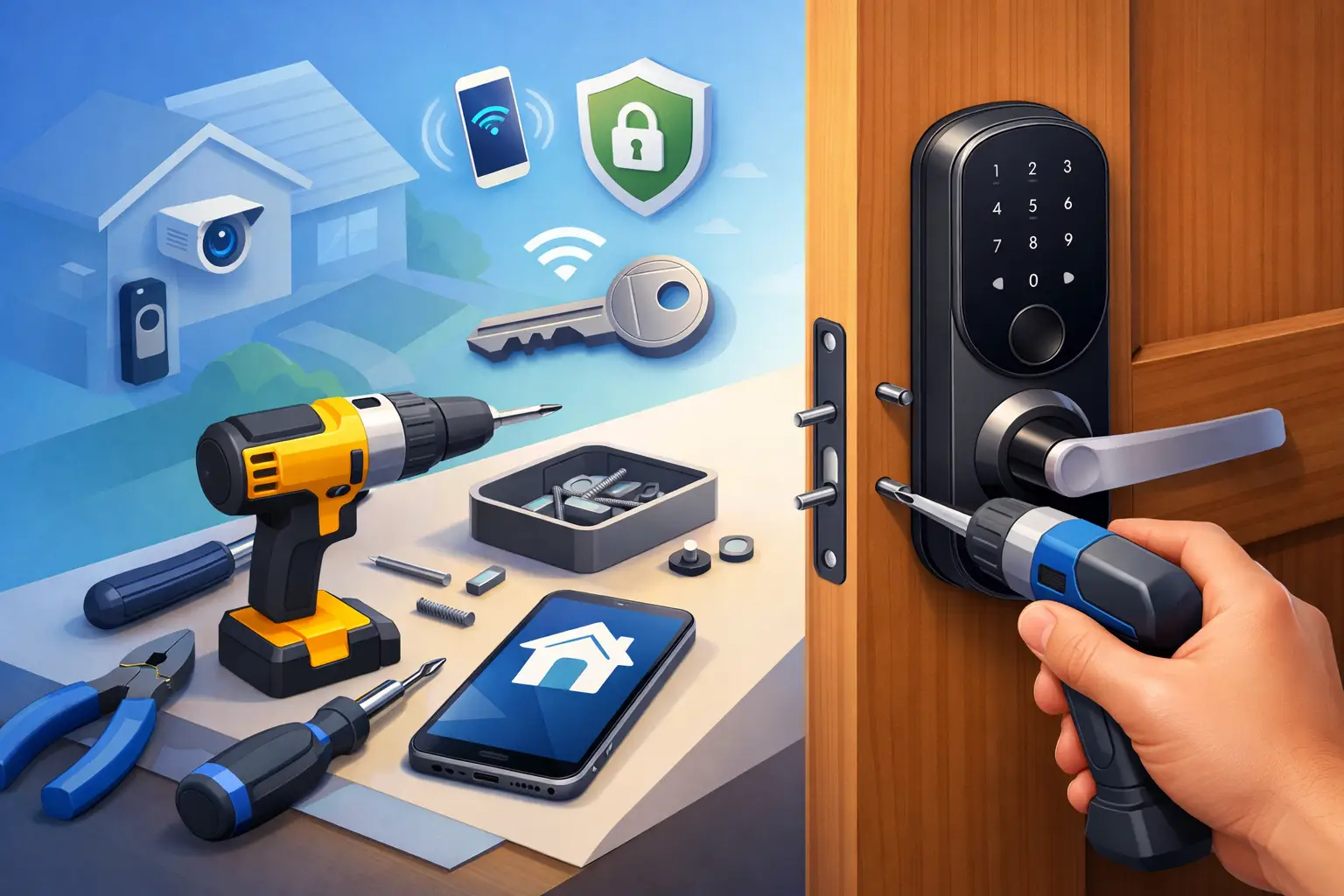
A front door is used more often than most homeowners realize. Family members arrive at different times, guests need access, deliveries are left outside, and service teams may require a temporary entry method. Smart lock installation for home turns that daily friction into controlled, visible access without compromising the look or security of the door.
The right smart lock does more than replace a key. It can provide keypad codes, mobile app control, activity alerts, temporary access for visitors, and connection to a wider home automation system. But the best result depends on more than choosing an attractive lock. The door type, existing hardware, connectivity, power strategy, and installation quality all matter.
Start With the Door, Not the Device
A smart lock must suit the physical door before it can perform reliably. This is especially relevant in custom homes, luxury apartments, and villas where doors may use oversized handles, decorative hardware, narrow frames, pivot mechanisms, mortise locks, or multipoint locking systems.
A standard deadbolt door is usually the most straightforward installation. Many smart locks are designed to replace the interior thumb-turn assembly while retaining the existing exterior key cylinder, which can preserve the door’s original appearance. Other models replace the complete deadbolt and add a keypad, fingerprint reader, or touch interface on the exterior.
More complex doors need closer review. A mortise lock, for example, has an internal lock body fitted into a pocket in the door. A multipoint door locks at several points along the frame and may require a compatible smart lock solution rather than a simple retrofit. Aluminum, glass, metal, and solid wood doors can each introduce different fitting, drilling, alignment, and cable-routing considerations.
Before selecting a model, a professional installer should verify the door thickness, backset, borehole size, latch alignment, strike plate condition, handing, and available clearance around the handle. A lock that technically fits but binds against the frame or handle will not deliver the dependable experience a premium property requires.
Choose Access Methods Around Real Household Habits
The most useful smart lock is one that works naturally for the people who use it. A household with young children, regular staff, elderly relatives, or frequent guests may need a different setup than a second home that is often vacant.
Keypad access is practical for families and visitors because each person can receive a separate code. Codes can be changed or removed without collecting physical keys. Fingerprint access offers fast entry for residents who prefer not to use a phone or code, although performance can vary based on the sensor and environmental conditions. Mobile access gives homeowners the ability to check status, issue permissions, and receive notifications remotely.
Physical key access remains valuable as a backup. It is also worth considering an emergency power option, such as an external battery contact or USB-C connection, depending on the lock model. Smart locks are battery powered in many residential applications, and a low-battery alert should be treated as an action item rather than ignored until access becomes inconvenient.
For a well-managed home, access should be organized by role. Residents can have permanent credentials, housekeepers and maintenance teams can receive scheduled access, and guests can receive codes that expire after a chosen date. This approach is more controlled than sharing a single keypad code with everyone who enters the property.
Smart Lock Installation for Home and System Integration
A stand-alone lock can be a strong improvement over a traditional key, but integration adds another level of control. When connected to one intelligent system, the lock can work alongside the intercom, CCTV cameras, lighting, curtains, air conditioning, and security sensors.
For example, a homeowner can receive an intercom call, view the entrance camera, speak with a visitor, and grant access from the same control interface. When a resident enters, selected lights can turn on and the climate settings can shift from away mode to occupied mode. When the property is secured at night, the automation system can confirm door status as part of a broader security routine.
The right level of integration depends on the property. An apartment may benefit from a simple smart lock with app control and video intercom coordination. A large villa may require multiple access points, including the main entrance, service entry, garage-to-home door, private office, and outdoor gate. In that case, centralized management provides clearer oversight and a more consistent user experience.
Connectivity should be planned carefully. Wi-Fi-enabled locks can be convenient, but wireless signal strength at the door must be reliable. Bluetooth may provide local phone control, while a dedicated hub can support remote access and connection to other smart home devices. For high-value properties, the objective is not to add technology for its own sake. It is to build a stable system that remains easy to use every day.
Security Is More Than a Mobile App
A smart lock should strengthen security, not create a new weak point. That begins with selecting quality hardware suited to the door and fitting it correctly. The deadbolt, latch, strike plate, and frame must work together under normal use and under force. A premium digital lock cannot compensate for a loose strike plate or an improperly aligned door.
Digital security also deserves attention. Homeowners should use strong account passwords, enable multi-factor authentication where available, and avoid sharing a primary account login with staff or guests. Individual guest codes and time-limited permissions are safer and easier to manage than shared credentials.
Activity records can be useful, but they should be viewed in context. A lock log may show that a code was used at a certain time, while a camera can provide visual confirmation of who arrived. Combining access control with a properly placed entry camera provides better awareness at the point where it matters most.
For households with domestic staff or properties used as short-term rentals, make credential review part of the operating routine. Remove access immediately when a service arrangement changes. Update codes after contractor work is completed. These simple habits are often more meaningful than adding increasingly complex features.
A Professional Installation Process Protects the Finish
Smart lock installation can appear simple in product videos, particularly on a standard residential deadbolt. Yet a clean, reliable result requires careful measurement, alignment, testing, and configuration. This is especially true for painted doors, custom timber finishes, imported hardware, and doors with expensive handles or decorative plates.
A professional process usually begins with a site consultation. The installer reviews the entry points, door construction, existing locks, user requirements, power and network conditions, and desired integration level. The result should be a clear recommendation, not a one-size-fits-all product choice.
After approval, the installation team prepares the hardware, fits the lock without unnecessary modifications, checks the mechanical operation, and confirms that the latch engages smoothly. The digital setup follows: connecting the lock to the approved app or automation platform, creating resident access, setting temporary credentials if needed, and confirming notifications and remote control.
Testing should cover more than opening the door once. The installer should test locking and entry from inside and outside, app commands, keypad or biometric access, mechanical key backup, low-battery notifications, and any linked intercom or automation scenes. At handover, every resident should understand how to use the system and what to do if the battery is low or phone access is unavailable.
Questions to Ask Before You Commit
A short planning conversation can prevent the most common smart lock frustrations. Ask whether the chosen model is designed for your specific lock type, whether it works during an internet outage, and how remote access is managed. Confirm the expected battery life, available emergency power method, and whether the exterior unit is rated for the weather conditions at your entrance.
It is also useful to ask who will manage the system after installation. A homeowner may prefer full control, while a property manager may need authorized administrative access for a residence that is rented or serviced regularly. For larger automation projects, access permissions should sit within a clear system design rather than being spread across several unrelated apps.
Finally, consider future expansion. A lock installed today should not limit plans for a video intercom, gate control, cameras, or a centralized automation platform later. Choosing compatible technology and allowing for proper network coverage can save time and avoid unnecessary replacement work.
A well-planned smart lock should fade into the background of daily life. Residents enter comfortably, visitors are managed with confidence, and the property remains protected by access rules that fit the way the home is actually used.

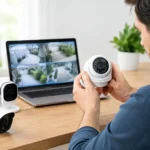
CCTV & Access Control Integration Guide
[…] a private residence, a straightforward setup may combine smart locks, gate access, video intercom, selected perimeter cameras, and app-based alerts. Residents can grant […]