
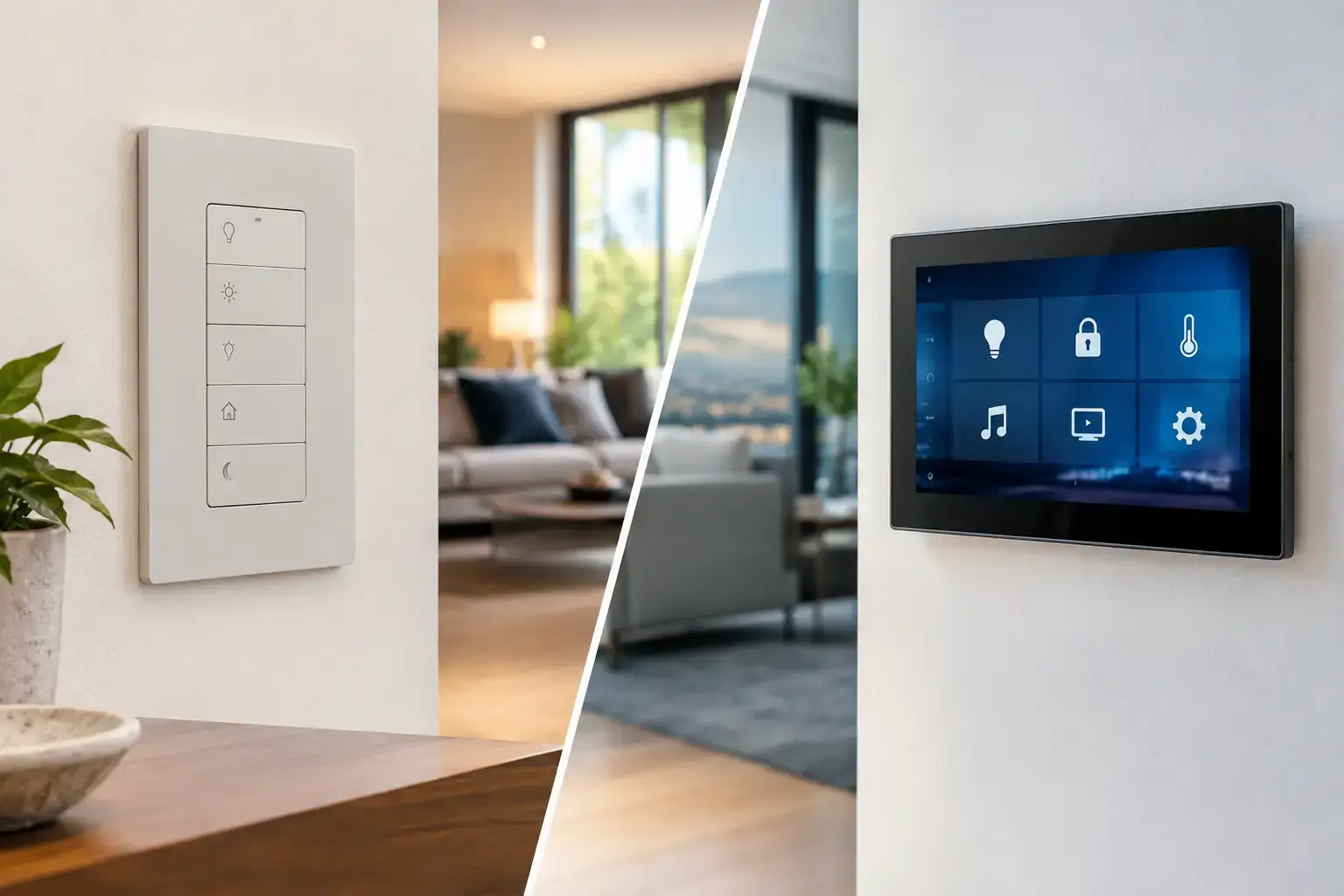
A beautiful villa can have exceptional finishes, dramatic lighting, motorized curtains, premium audio, and advanced security – yet still feel complicated if every system has its own remote, app, and operating routine. The decision between Lutron versus Control4 systems is really a decision about what you want your property to control first, how widely you want to integrate technology, and how the system should grow over time.
Both are respected premium platforms used in high-value homes and commercial spaces. They are not interchangeable, however. Lutron is widely known for outstanding lighting and shading control, while Control4 is designed as a broader automation platform that can bring many property technologies into one intelligent system. The right choice depends on the experience you expect every day, the systems already planned for the property, and the quality of design and programming behind the installation.
Lutron Versus Control4 Systems: The Core Difference
Lutron began with lighting control and remains a benchmark for it. Its systems are built to make lighting feel natural, precise, and dependable, whether that means setting a relaxed evening scene, brightening a kitchen workspace, or coordinating automated shades with the changing daylight. For homeowners who place lighting design, dimming quality, keypad aesthetics, and shading at the center of the project, Lutron is often a compelling foundation.
Control4 takes a wider view of the property. It can coordinate lighting, climate, entertainment, multi-room audio, TVs, CCTV, door stations, smart locks, gates, and selected third-party devices through a single interface. A Control4 project can still deliver sophisticated lighting scenes, but its primary strength is the ability to connect separate technologies into a coordinated experience.
This distinction matters in practice. If your main goal is exceptional lighting and window treatment control, with a refined wall-control experience, Lutron may be the more direct fit. If you want one app, one set of touchscreens, and one automation logic layer across multiple categories, Control4 may provide the broader control environment.
That said, many premium properties do not need to choose one brand for every task. Lutron lighting and shades can be integrated within a Control4-controlled home, allowing each platform to handle the work it does best. This approach can be ideal for large villas, penthouses, hospitality spaces, and projects where lighting quality cannot be compromised but whole-property control is also required.
Where Lutron Stands Out
Lutron is particularly strong when the lighting plan is a major architectural feature rather than an afterthought. In a luxury residence, lighting affects artwork, textures, ceiling details, outdoor landscaping, dining, and the atmosphere of every room. A well-designed Lutron system gives occupants simple access to carefully programmed scenes without exposing the complexity behind them.
Its wired HomeWorks solutions are often considered for new-build villas, major renovations, and high-specification properties. Wired infrastructure supports a clean, scalable installation and can reduce reliance on batteries or individual wireless devices. Lutron also offers wireless options that can be suitable for completed apartments or upgrades where opening walls is impractical.
Lutron shading is another major consideration. Automated roller shades, curtains, and blinds can respond to time schedules, sunlight, occupancy, or a selected scene. In the UAE, this has practical value beyond visual comfort. Proper shading control can help manage glare, protect furnishings from strong sunlight, support privacy, and reduce the cooling load placed on air-conditioning systems.
The trade-off is scope. Lutron can support integration with other systems, but it is not generally chosen as the single, all-encompassing control platform for every possible entertainment, security, and smart-device requirement. If those categories are central to the brief, the system design needs to account for that from the beginning.
Where Control4 Stands Out
Control4 is designed for clients who want technology to behave as one connected service. A single action can set lights, lower shades, adjust climate, turn on a TV or audio source, and arm selected security settings. For example, a “Good Night” command might turn off common-area lights, close curtains, lower the temperature in bedrooms, switch off entertainment equipment, and send a confirmation to the homeowner’s phone.
This breadth is valuable in properties with multiple subsystems and users. A family may want easy room-by-room control; a villa manager may need practical access to gate, CCTV, and outdoor zones; a hotel operator may need consistent control across public areas and guest spaces. Control4 gives a professional integrator a flexible platform for organizing these experiences around the way a property is actually used.
Control4 is also well suited to multi-room entertainment. Audio can follow occupants from a living room to a terrace, while different areas play different sources. Televisions, streaming devices, AV receivers, and projectors can be brought into an interface that is simpler than managing a collection of manufacturer remotes.
The trade-off is that Control4’s final experience depends heavily on thoughtful engineering, device compatibility, programming, and long-term support. Adding every available smart device is not always the answer. The best projects prioritize reliable, useful integrations and make the controls feel intuitive for everyone in the property.
Consider the Property Before the Brand
The most effective way to choose is to start with the property and lifestyle requirements, not a product list. A new luxury villa under construction offers an opportunity to plan structured wiring, centralized panels, keypads, shade pockets, network coverage, and equipment locations before finishes are completed. In this case, a wired Lutron lighting system, Control4 automation, or a combined architecture can all be assessed properly.
A finished apartment presents a different challenge. The goal may be to add intelligent lighting, curtain control, AC management, and security without disruptive construction. Wireless solutions can make this possible, but the choice should account for wall materials, network quality, device placement, power availability, and the limitations of the existing electrical layout.
Commercial and hospitality properties require another level of planning. A restaurant may prioritize lighting scenes, music zones, curtain schedules, and simple staff control. An office may focus on room booking, energy-conscious climate scheduling, access control, and presentation-room AV. A hotel may need different permissions for guests, operations staff, and management. In these settings, reliability, serviceability, and clear user access matter as much as visual impact.
Key Questions That Shape the Right System
Before specifying either platform, define the outcome you want in daily use. Consider whether lighting and shades are the main investment, whether entertainment and security must appear in the same interface, and whether remote management is needed for a second home or investment property.
You should also decide how the system will expand. A property may start with lighting and curtains, then add audio, CCTV, smart locks, intercoms, or pool controls later. Scalable design means allowing for panel capacity, network performance, equipment space, and future cable routes at the first stage. Saving a small amount during construction can become costly if walls and ceilings must be reopened later.
Finally, consider the people using the system. A premium automation system should not require a technical manual for ordinary tasks. Wall keypads should be clearly labeled, essential functions should work even when a phone is not nearby, and the app should provide useful control without becoming the only way to operate the home.
Installation and Support Matter More Than Most Buyers Expect
A Lutron or Control4 system is not simply a box purchased and connected. Its performance depends on a coordinated project process: site consultation, system design, clear quotation, professional installation, programming, testing, and user handover.
For Lutron, this includes selecting the right load-control hardware, dimming type, keypad layout, shade solution, and scene programming. For Control4, it includes network design, compatible device selection, automation logic, user-interface configuration, and careful testing of every connected system. When the two platforms are combined, integration must be planned so commands respond consistently and the homeowner sees one clear experience.
Support after handover is equally valuable. Needs change: a new TV is installed, a room is repurposed, a tenant moves in, or a family wants revised scenes and schedules. Working with one accountable integration partner helps keep the technology organized as the property evolves.
For homes and businesses in Dubai and across the UAE, Esmartech approaches this decision as a tailored property-technology project rather than a one-size-fits-all package. The right system begins with how you live, operate, entertain, and secure your space – then turns those requirements into controls that remain simple long after installation day.
Choose the platform that serves the property you have today, while leaving room for the way you intend to use it tomorrow.




Leave a comment