
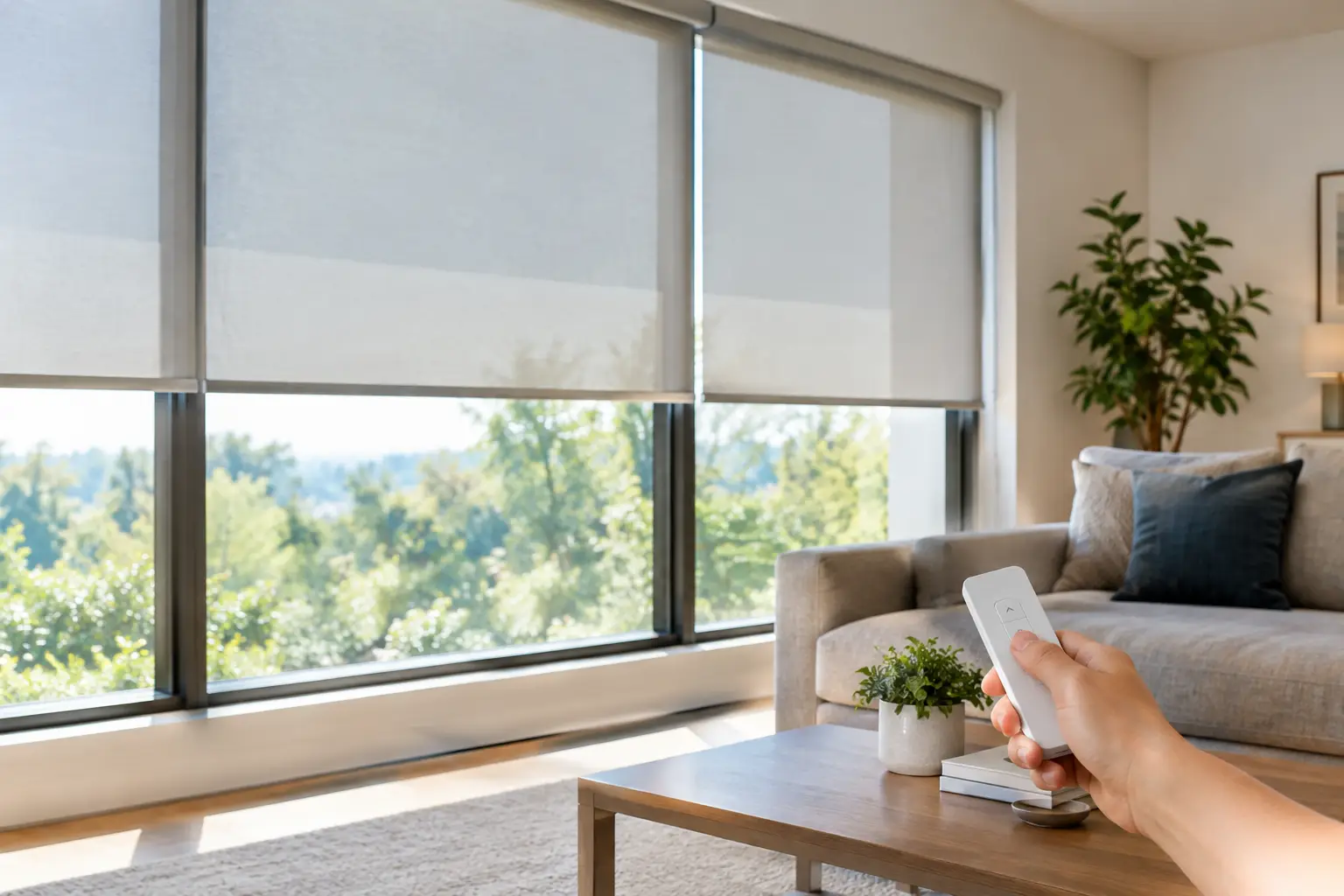
The afternoon sun can turn a beautiful room into the part of the house everyone avoids. In a villa with expansive glazing, a penthouse with west-facing windows, or an office with a glass façade, air conditioning often works hardest because sunlight is entering at the wrong time. So, do automated blinds save energy? Yes, when they are properly selected, positioned, and programmed around how the space actually receives heat and light.
Automated blinds are not a replacement for efficient glazing, insulation, or a well-designed HVAC system. They are a responsive layer of control that helps protect those investments. By lowering before solar heat builds up, opening when natural light is useful, and coordinating with climate control, they can reduce unnecessary cooling demand while making a property more comfortable to occupy.
Do Automated Blinds Save Energy? The Short Answer
They can, particularly in cooling-dominated properties. The main opportunity is limiting solar heat gain through windows before that heat reaches the room. Once direct sun warms flooring, furnishings, walls, and air, the AC system must remove that stored heat. Closing blinds after the room has already overheated still improves comfort, but it misses part of the energy-saving benefit.
Automation changes the timing. Instead of relying on someone to notice glare or heat and close every shade manually, the system can react before peak exposure. A schedule may lower blinds on west-facing windows in the afternoon, while a sun-position setting can adjust them based on the actual location of the sun. Light and temperature sensors can add another level of response where appropriate.
The result depends on the building. A small apartment with limited direct exposure will see a different outcome than a Dubai villa with floor-to-ceiling glass, multiple orientations, and high AC usage. The largest benefits usually come from spaces with significant sun exposure and frequent cooling requirements.
How Blinds Reduce Cooling Demand
Windows do more than provide a view. They are also a major path for solar radiation. Even high-performance glass can admit a meaningful amount of heat, especially when sunlight strikes it directly for several hours.
Interior roller shades, Roman blinds, and curtains help by blocking light and reducing radiant discomfort. Exterior shading is generally more effective at stopping heat before it passes through the glass, but it is not always practical or suited to the architecture. Automated interior blinds are often the more achievable solution for finished homes, hospitality spaces, and commercial interiors because they can be integrated cleanly with the design.
Material matters. A light-filtering fabric may reduce glare and preserve the view while allowing some heat into the room. A blackout fabric provides stronger light control and privacy but may not be necessary everywhere. Solar screen fabrics are commonly chosen for living spaces and offices because they balance visibility, daylight, and heat management. The right openness factor, fabric color, and mounting method should be selected for each elevation, not chosen as one blanket specification for the whole property.
There is also a human comfort benefit that is easy to overlook. A room can be technically at the correct thermostat setting yet still feel too warm when sunlight falls directly on seating, desks, or beds. Blinds reduce that radiant effect, which can make occupants comfortable at a more moderate cooling setting.
The Automations That Make a Real Difference
Motorized blinds offer convenience. Automated blinds create energy value when their movement follows a sensible strategy. In most homes and commercial spaces, that strategy combines scheduled scenes with sensor-based adjustments rather than relying on one method alone.
A morning scene might open east-facing shades gradually to welcome daylight without exposing the room to sharp glare. Before the hottest part of the afternoon, west-facing blinds can lower automatically. When the property enters away mode, blinds can move to a heat-protection position while the climate system shifts to an efficient setpoint. In the evening, they can close for privacy and reduce the sensation of heat coming from glass surfaces.
For larger properties, blind control works best as part of one intelligent system. The window treatments, AC, lighting, occupancy sensors, and wall keypads should follow coordinated rules. For example, if a meeting room is unoccupied, the system can lower shades on the sunny façade and avoid overcooling an empty space. When a room is in use, it can prioritize natural daylight until glare or heat reaches a set threshold.
This coordination is more valuable than opening and closing shades remotely from a phone. Remote access is useful, especially for second homes or property managers, but a well-programmed system should handle routine conditions without requiring daily attention.
Where Energy Savings Are Most Likely
Automated blinds are especially worthwhile in rooms that receive direct morning or afternoon sun, contain large areas of glass, or are used throughout the day. Living rooms, primary bedrooms, home offices, media rooms, hotel suites, boardrooms, and restaurant dining areas are common examples.
They are also helpful where glare affects productivity or guest comfort. In an office, people may lower blinds manually and leave them closed all day, which then increases dependence on electric lighting. A programmed system can manage this more precisely by lowering only the affected shades, tilting blinds to redirect light, or reopening them when direct exposure has passed.
In the UAE, the case is often stronger because cooling is a year-round operational concern. However, the same principle applies in many hot, sunny US markets. The more solar heat a property receives and the longer its AC operates, the more value there is in managing windows intelligently.
What Automated Blinds Cannot Do
It is worth setting realistic expectations. Blinds do not correct poor insulation, undersized AC equipment, leaking ducts, or inefficient glazing. They will not produce dramatic savings in every room, and their financial return is influenced by fabric selection, window size, orientation, local energy costs, and how the property is used.
They can also work against efficiency if programmed poorly. Closing all blinds throughout the day may reduce heat but force lights on in rooms that could have used daylight. Opening blinds during a hot afternoon just because the home is occupied can create a cooling spike. The goal is not to keep shades permanently closed. It is to control solar gain while preserving daylight, views, privacy, and the character of the space.
Battery-powered options can be suitable for smaller retrofits, but hardwired motors are often the stronger choice for major villas, new builds, hotels, and commercial projects. They avoid routine battery changes, support reliable integration, and are easier to manage at scale. Wireless systems remain valuable where wiring is impractical, provided signal coverage and power planning are assessed properly.
Designing a Better Blind-Control Strategy
The best projects begin with the property, not the product catalog. A professional assessment should consider the window orientation, glazing type, room function, existing AC zones, interior design requirements, and available power routes. A bedroom needs different privacy and blackout behavior than a living room, while a restaurant may need to protect guests from low sun without hiding the view.
For a new build or renovation, plan motorized shades early. Concealed pockets, power supplies, wiring paths, and control locations can be included cleanly before finishes are completed. For an occupied property, a wireless or hybrid solution may provide the right balance of performance and minimal disruption.
Programming deserves equal attention. Start with a few reliable scenes: morning, afternoon heat protection, evening privacy, away mode, and entertainment mode. Live with those settings, then fine-tune timing and positions by season. If sensors are added, set practical limits so the blinds do not move constantly in response to minor changes in light.
Esmartech approaches this as part of a tailored automation design, coordinating shades with lighting and climate control rather than treating them as an isolated upgrade. The process should remain clear from site consultation and quotation through installation, testing, user guidance, and ongoing support.
Common Questions About Energy-Saving Blinds
Are automated blinds better than manual blinds for energy efficiency?
The fabric and coverage determine much of the physical heat reduction, but automation improves consistency. Manual blinds only help when someone closes them at the right time. Scheduled or sensor-based control protects the room even when nobody is home or when occupants are busy.
Should blinds be closed during the day or at night?
For cooling, close sun-exposed blinds before or during direct sunlight. At night, they can provide privacy and improve perceived comfort near windows. The ideal position depends on the season, the façade, and whether daylight is still useful in the room.
Can automated blinds work with an existing smart home system?
Often, yes. Compatibility depends on the motor, control protocol, existing automation platform, and electrical setup. A site review can determine whether the project should use wired integration, wireless control, or a combination of both.
Automated blinds save the most energy when they quietly prevent a problem rather than reacting to one. A thoughtful program lets the property admit the daylight you want, block the heat you do not, and keep comfort under control without adding another task to your day.

Leave a comment