
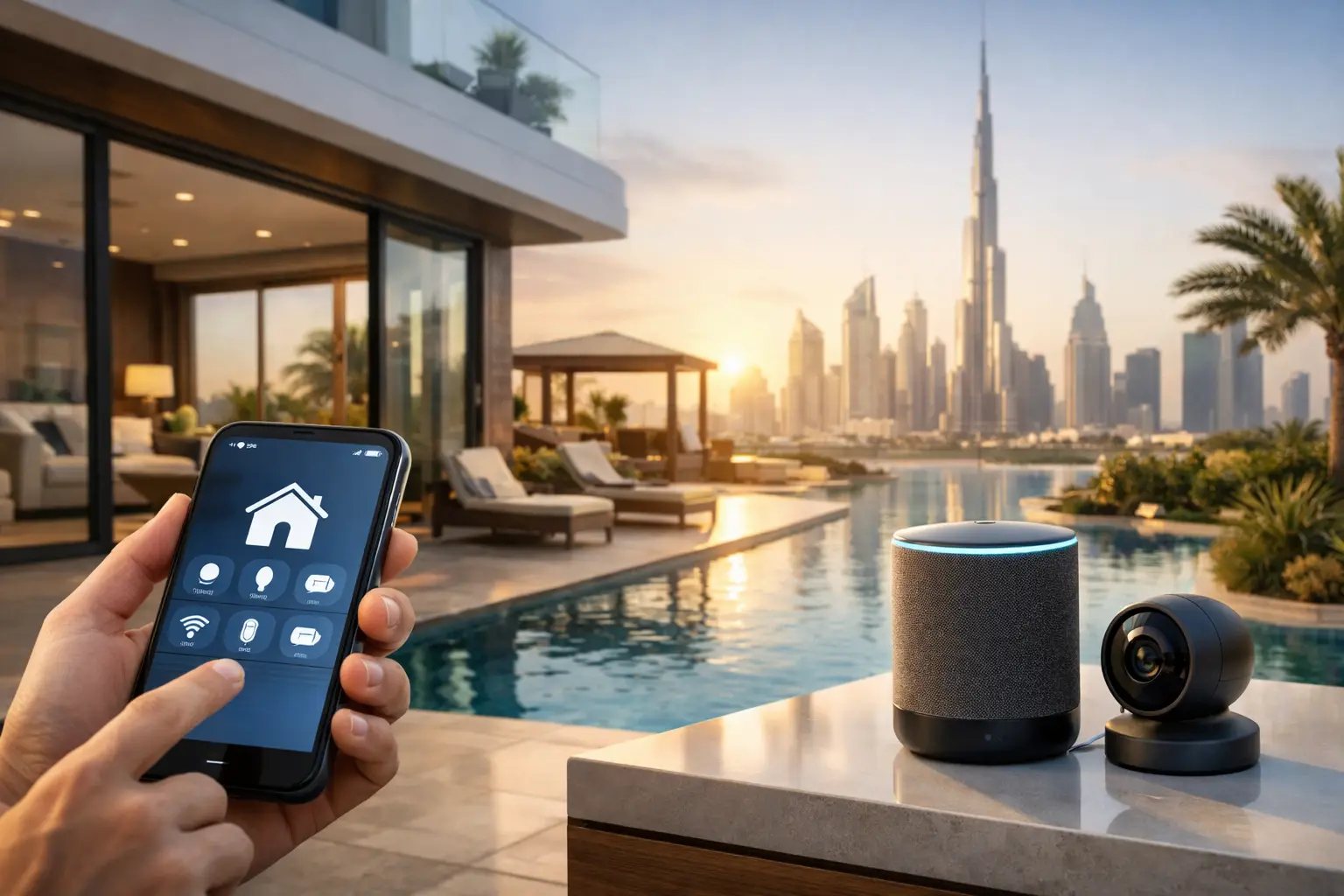
A Dubai villa can have beautiful lighting, powerful air conditioning, motorized curtains, CCTV cameras, and premium audio – yet still feel complicated when each system needs a different remote, app, or technician. Smart home solutions Dubai property owners choose should solve that problem: bringing essential functions into one intelligent system that feels natural to use from the first day.
For a penthouse owner, that might mean setting the ideal lighting, temperature, and privacy mode before arriving home. For a hotel or restaurant operator, it can mean managing guest comfort, staff access, energy use, and security from a clear central interface. The technology matters, but the planning behind it matters more.
Planning Smart Home Solutions in Dubai
The best automation projects start with how the property is actually used, not with a list of devices. A family villa has different priorities from a rental apartment, an office, or a hospitality venue. Someone who travels frequently may place remote monitoring and smart locks at the top of the brief. A homeowner with young children may care most about climate zones, lighting scenes, and simple wall controls that anyone can operate.
Dubai’s climate is also a practical design consideration. Air conditioning is not a minor add-on. It is one of the property systems that has the greatest effect on comfort and operating cost. Intelligent climate control can manage temperatures by room, respond to schedules or occupancy, and allow the owner to make adjustments remotely. The result is more considered cooling rather than running every zone at full capacity when the property is empty.
During a professional site consultation, the right questions go beyond “Which brand do you prefer?” The integrator should ask where family members spend time, which rooms need privacy, how the property will be occupied, whether staff need controlled access, and what should happen when the home is vacant. These answers shape a system tailored to the space and needs of its users.
Start With the Experiences You Want
Automation is most useful when it removes repeated decisions. Instead of turning off lights, lowering curtains, adjusting the AC, and arming security separately every evening, a single Good Night scene can manage the routine with one command. Likewise, an Away mode can switch off selected circuits, adjust cooling, close curtains, and notify the owner if a door or motion sensor is triggered.
Think through everyday moments before deciding on hardware. Arrival, entertaining, movie time, bedtime, prayer time, work-from-home hours, cleaning, and travel are all useful scenarios to discuss. In commercial settings, consider opening and closing routines, meeting-room use, staff access schedules, after-hours monitoring, and guest comfort.
A well-designed system usually combines several connected layers:
- Lighting control for scenes, dimming, schedules, and room-by-room operation.
- Climate control for AC zones, thermostats, and energy-conscious scheduling.
- Security features such as CCTV, video intercoms, access control, sensors, and smart locks.
- Comfort and entertainment including curtains, blinds, multi-room audio, television control, and voice control.
Not every property needs every feature on day one. A focused system with reliable lighting, AC, curtains, and security may provide more value than an oversized specification that is difficult to understand or maintain. The advantage of a scalable design is that additional rooms, access points, audio zones, or monitoring features can be added when the property’s needs change.
Wired or Wireless: Choose for the Property, Not the Trend
Wired and wireless automation both have a place in Dubai properties. The best choice depends on the building stage, construction access, system scope, and expectations for long-term expansion.
A wired architecture is often the stronger option for new villas, major renovations, hotels, and commercial projects. It allows structured control of multiple systems, supports a large number of devices, and keeps key automation functions within a planned infrastructure. Because wiring is installed before finishes are completed, it can produce a clean result with fewer visible compromises.
Wireless systems are valuable in completed apartments, occupied villas, and properties where opening walls is not practical. They can make it possible to add smart switches, curtain control, sensors, and selected security features with less disruption. Wireless does not automatically mean limited, but signal coverage, device compatibility, and future maintenance must be assessed carefully.
Many successful projects use a combination. A villa may have wired lighting and climate control in main areas, alongside wireless additions in a guest room or renovated extension. The objective is not to follow a single technology approach. It is to create a dependable system that suits the property now and can grow responsibly later.
Avoid the app-by-app problem
Buying individual smart products can appear less expensive at first. A smart lock, Wi-Fi camera, speaker, and thermostat may each work well on their own. But separate apps, inconsistent notifications, unreliable Wi-Fi coverage, and unclear support can quickly become frustrating in a larger property.
Professional integration creates one coordinated experience. A doorbell event can appear on an indoor panel or phone, exterior lights can respond to motion, and a departure scene can coordinate security and cooling. This is where system design has more impact than any single device.
Security Should Be Designed Around Real Access
Security automation is about more than watching cameras from a phone. It is about knowing who can enter, when they can enter, and what happens when an unusual event occurs. For homeowners, that can include video intercoms, smart locks, perimeter sensors, gate control, CCTV, and alerts for doors left open. For businesses and hospitality properties, it may extend to staff credentials, restricted zones, visitor management, and centralized monitoring.
The appropriate level of security depends on the property. A family apartment may need a video doorbell and controlled lock access. A large villa may need gate intercoms, multiple camera zones, and monitored external areas. A restaurant or office needs access rules that reflect staff roles and operating hours.
Privacy should be considered from the beginning. Camera placement, user permissions, recording requirements, and remote-access settings need to be defined clearly. A premium system should give owners confidence without making residents, staff, or guests feel constantly managed.
Budget for Design, Installation, and Support
The cost of smart home automation in Dubai varies widely because the property, system scope, and finish level vary widely. A one-bedroom apartment with lighting, curtain, AC, and entry control will be very different from a multi-level villa with centralized audiovisual systems, extensive security, outdoor automation, and staff access management.
The lowest equipment quote is rarely the full picture. Good budgeting accounts for site assessment, system design, wiring or network preparation, installation, programming, testing, commissioning, and user training. It should also account for support after handover. A system is only premium if it remains clear and dependable after the installers leave.
Ask for a quotation that explains what is included, what is optional, and what can be phased. This makes it easier to protect the budget for foundational infrastructure while adding nonessential features later. For example, preparing cabling for future curtain motors, speakers, or cameras during a renovation can be far more cost-effective than revisiting completed walls and ceilings.
The Value of a Single Accountable Partner
Automation projects involve electrical work, low-voltage systems, networking, interior finishes, HVAC coordination, and user preferences. When these elements are handled separately, small gaps can become expensive delays. A single integration partner can coordinate the design and ensure that each system works as part of the larger property experience.
Esmartech approaches projects through consultation, a clear quotation and system design, clean installation and testing, then handover with user guidance. This process is especially valuable for busy homeowners, developers, and operators who need one team to manage technical details while protecting the design intent of the space.
Before handover, test the routines that matter most. Confirm that family members can use essential controls without relying on a phone, that remote access works correctly, that alerts reach the right users, and that staff permissions are appropriate. Wall keypads, touch panels, voice control, and mobile apps should complement one another, not force every user into a single method.
A thoughtfully planned smart property should feel quieter in the background, not more demanding. When lighting, climate, privacy, security, and entertainment respond to the way people actually live and work, the technology becomes a lasting part of the property’s value.


Leave a comment