
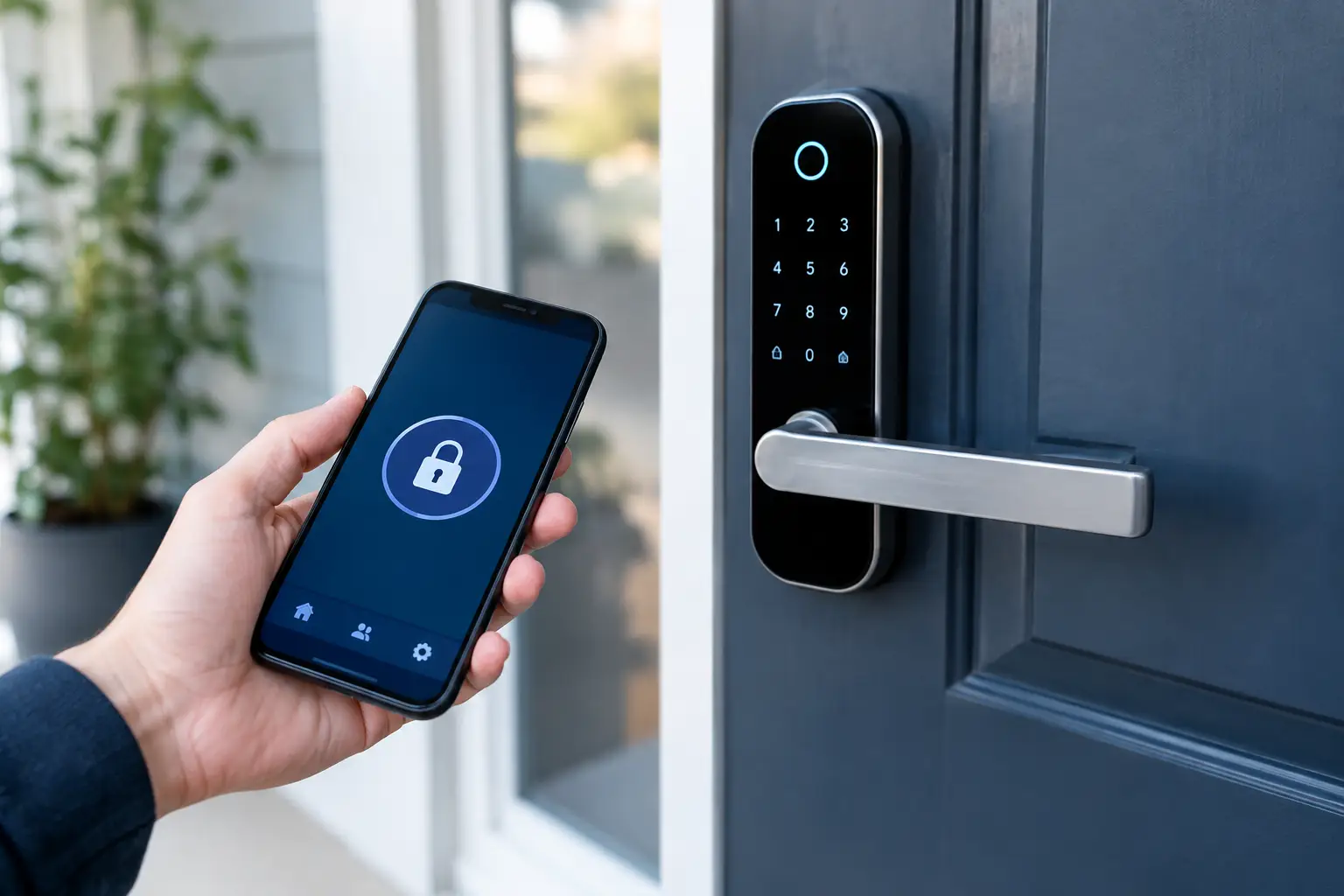
A smart lock should make arriving home easier, not leave you wondering whether your front door is exposed to someone with a laptop. So, are smart locks hackable? The honest answer is yes, as with any connected device. But the more useful answer is that a properly selected, professionally installed, and carefully managed smart lock is very difficult to compromise in real-world conditions.
For villa owners, apartment residents, and property managers, the question is not whether a lock has an app. It is whether the complete access system protects the property, remains dependable for daily use, and gives the right people control without creating unnecessary security gaps.
Are smart locks hackable in practice?
Smart locks can be targeted through their wireless connection, mobile app, account credentials, or physical hardware. Yet the headline risk often gets overstated. Most intruders do not attempt sophisticated digital attacks at a front gate or apartment door. They look for simpler opportunities: an unsecured side entrance, a hidden spare key, a weak mechanical cylinder, a door that does not latch properly, or a PIN that has been shared too widely.
A smart lock is not automatically safer than every traditional lock, and a traditional lock is not automatically safer because it is offline. Security depends on the quality of the lock, the door and frame, the installation, the credentials used, and the way access is managed over time.
Premium smart locks use encrypted communication between the lock, phone, keypad, hub, and cloud service. Many also use temporary access codes, activity logs, automatic locking, tamper alerts, and two-factor authentication. These features can give an owner greater visibility and control than a standard key ever could.
The trade-off is clear: connected access requires responsible setup. If an owner uses a recycled password, ignores software updates, or grants permanent access to too many people, the technology cannot compensate for those choices.
Where smart-lock security risks come from
Understanding the likely risks helps separate practical concerns from alarming headlines. A well-designed system addresses several layers of protection.
Weak account security
For many connected locks, the user account is a more realistic target than the lock itself. If someone obtains an owner’s email password or access to an unlocked phone, they may be able to sign into the lock app.
Use a unique, long password for the smart-home account and enable two-factor authentication when available. Avoid sharing one main login among family members, staff, tenants, or maintenance teams. Each person should have their own approved access method, so it can be removed without affecting everyone else.
Poorly managed PINs and digital keys
A keypad code written in a message thread or shared with multiple visitors can quickly become the digital version of a copied key. The issue is not the keypad. It is the lack of control over who has the code and for how long.
Create individual codes for household members and separate time-limited codes for guests, cleaners, contractors, and delivery access. For a vacation home, rental unit, or hospitality setting, access should align with arrival and departure times rather than remain active indefinitely.
Outdated firmware and low-quality products
Like routers, phones, and cameras, smart locks receive updates that can improve performance and address newly identified vulnerabilities. A lock from an established manufacturer with an active update program is generally a better long-term choice than an unknown product with limited support.
Before choosing a lock, look beyond its finish and app screenshots. Confirm how it communicates, whether it supports encrypted connections, how updates are delivered, what happens if internet service is interrupted, and whether the manufacturer will continue supporting the product. A lock is part of a security plan, not a short-term gadget purchase.
Installation weaknesses
A digital lock installed on a weak door is still protecting a weak door. Incorrect alignment can prevent the bolt from extending fully, drain batteries faster, cause unreliable locking, or create a false sense of security.
The lock must suit the door material, thickness, swing direction, mortise or deadbolt arrangement, strike plate, and frame condition. Gate access, outdoor exposure, and high-use commercial doors require additional consideration. Professional testing should include physical operation, emergency entry procedures, user permissions, alerts, and behavior during a power or network interruption.
What happens if Wi-Fi or power goes out?
This is one of the most common concerns, particularly for properties where access must remain reliable for family members, guests, or staff. Most quality smart locks run on batteries and do not depend on household power to physically lock or unlock the door.
Wi-Fi loss may prevent remote control, live notifications, or cloud-based access changes until the connection returns. Local entry methods, such as a keypad, fingerprint reader, NFC credential, or mechanical override key, may continue to work depending on the model. Bluetooth-controlled locks can also often operate when the phone is nearby, without relying on the internet.
Battery status deserves the same attention as any other essential property system. Select a lock that provides low-battery alerts, replace batteries on schedule, and keep the approved backup-entry option accessible to authorized occupants. In a larger automation project, the lock can be integrated with backup power planning, intercom access, CCTV verification, and centralized notifications.
How to make a smart lock far harder to compromise
Security is strongest when the lock is treated as one component within a considered access strategy. Start by choosing a recognized lock platform that supports current encryption, reliable firmware updates, and the entry methods your household or operation will actually use.
Then protect the account behind it. Use a password manager to create a unique password, enable two-factor authentication, and apply phone screen locks and biometric protection. If a phone is lost, remove its access immediately from another authorized device.
Access should be specific rather than casual. Give permanent privileges only to people who genuinely need them. Use scheduled permissions for service providers and guests, and review access after staff changes, tenant turnover, or a completed renovation. Activity records can help confirm when a door was used, but they should support good management rather than replace it.
Physical details matter just as much. Pair the lock with a solid door, secure frame, reinforced strike plate, and appropriate exterior lighting. A front entrance may also benefit from a video intercom or camera that lets residents verify visitors before granting access. For a villa, this can extend from the perimeter gate to the main entrance and selected internal areas, with different permissions for family, household staff, and contractors.
Smart locks for villas, apartments, and commercial properties
The right setup changes with the property.
In an apartment, a smart lock may be a focused upgrade that replaces key handovers with mobile access and temporary visitor codes. The priority is usually simple daily operation, reliable battery alerts, and a design that fits the existing door without disrupting building requirements.
For a villa, access often needs more structure. The main door, side entrance, gate, driver or service entrance, and internal staff areas may require different rules. Linking access with intercoms, cameras, lighting scenes, and notifications can create one intelligent system that is easier to manage than a collection of separate apps.
Commercial and hospitality properties need even clearer permission controls. Reception teams, managers, maintenance personnel, contractors, and guests should not all receive the same level of access. Scheduled credentials, audit trails, centralized oversight, and a defined process for revoking access become operational necessities, not optional features.
Why professional design makes a difference
A smart lock can be purchased quickly. Designing reliable access for a high-value property requires more care. The best solution considers the door hardware, occupant habits, internet coverage, backup access, privacy expectations, other security systems, and the possibility of future expansion.
Esmartech approaches smart access as part of the property rather than as an isolated device. Following a site consultation, the system can be specified around the building’s needs, installed cleanly, tested across normal and failure scenarios, and explained clearly at handover. That process matters because the owner should know not only how to open the door from a phone, but also how permissions work, who can administer them, and what to do if a battery, phone, or network fails.
A secure smart lock is not defined by a single feature or a marketing claim. It is defined by sensible technology, strong credential habits, sound physical installation, and access rules that match the way the property is used. When those details are handled properly, smart access can deliver the convenience people want while keeping control exactly where it belongs: with the property owner.
Leave a comment