
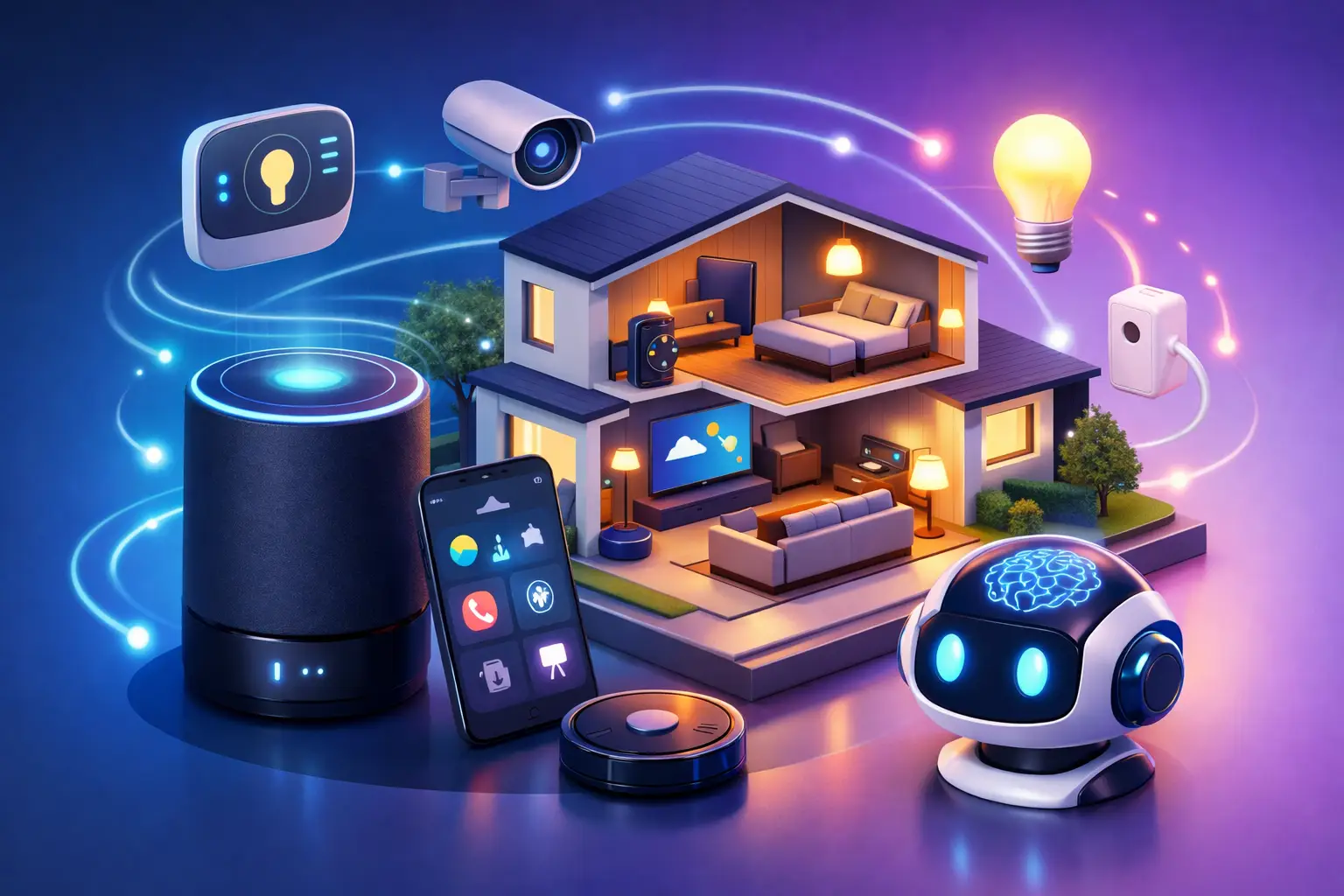
A villa should not need a wall of remotes, multiple disconnected apps, or a late-night call to reset the air conditioning. AI smart homes are changing that expectation by helping a property respond to the people inside it, the time of day, and real operating conditions. The goal is not technology for its own sake. It is a more comfortable, secure, and manageable home.
For homeowners, investors, and developers, the value comes from bringing essential systems into one intelligent system: lighting, climate, curtains, security, access, entertainment, sensors, and more. When designed professionally, the result feels natural. A single command can prepare the property for arrival, lower shades during intense afternoon sun, adjust cooling by zone, and confirm that doors are secured before bed.
What Makes AI Smart Homes Different?
Traditional home automation follows fixed instructions. For example, a hallway light turns on at 7:00 p.m., or a thermostat follows the same weekday schedule regardless of whether anyone is home. Those rules are useful, but they are limited.
AI adds the ability to use information from connected systems to make better decisions over time. It can recognize recurring occupancy patterns, use sensor data to avoid cooling empty rooms, identify unusual activity around an entrance, or suggest schedules that better match how a household actually lives. Rather than replacing homeowner control, it makes control more informed and less repetitive.
The distinction matters in large villas, penthouses, and hospitality properties. A home with several floors, guest rooms, outdoor areas, staff access, and multiple climate zones creates too many daily variables for simple timers alone. Intelligent automation helps organize those variables without asking the owner to manage every setting manually.
That does not mean every decision should be left to software. The best systems preserve clear manual control through elegant keypads, wall switches, a centralized app, and voice commands. AI should support the way a property operates, not make the property unpredictable.
Where Intelligent Automation Delivers Real Value
Climate control that responds to the property
Cooling is often one of the largest operating costs in warm climates. An AI-informed climate system can combine schedules, occupancy sensors, temperature readings, humidity levels, and door or window status to manage comfort with greater accuracy. It can reduce unnecessary cooling in unused areas while maintaining preferred temperatures in occupied rooms.
The right approach depends on the home. A family villa may prioritize bedroom comfort at night and efficient cooling during school and work hours. A holiday property may need remote pre-conditioning before the owners arrive. A hotel suite requires a different logic, balancing guest comfort with energy management between stays.
The benefit is not simply lower energy use. It is a home that feels consistently comfortable without constant thermostat adjustments.
Lighting that follows daily life
Lighting scenes have long been a core part of premium automation. AI can make them more responsive by using occupancy, daylight availability, and habits to refine how scenes operate. Exterior lighting can react to sunset and movement. Common areas can brighten when the home is active and soften later in the evening. Curtains and shades can help manage glare and heat during the day.
A well-designed system should still give every homeowner straightforward choices. “Morning,” “Entertain,” “Movie,” and “Good Night” scenes remain valuable because they are easy to understand and reliable to use. Intelligent adjustments work best in the background, while the homeowner retains immediate control whenever preferences change.
Security with more useful alerts
CCTV, video intercoms, smart locks, gate controls, and access management are stronger when they work together. AI can help distinguish between regular movement and activity that deserves attention, reducing the number of unhelpful notifications a homeowner receives.
For example, a system may identify a familiar arrival routine, alert the owner when a gate is opened outside expected hours, or provide a clearer event timeline when motion is detected near a restricted area. In commercial and hospitality settings, access data can also help managers review how spaces are being used.
Privacy must be part of the design from the beginning. Cameras should be placed carefully, user permissions should be defined clearly, and account security should not depend on a weak password. Intelligent security is only valuable when it is also responsible.
A better experience for guests and staff
Smart homes are especially effective when a property hosts visitors, employs household staff, or is operated as a short-term rental. Instead of explaining several remotes and switches, owners can provide simple room scenes and intuitive controls. A guest can adjust lights, curtains, and temperature without gaining access to private security settings.
For staff, authorized access can be scheduled and recorded without issuing permanent keys. The system can also simplify routine tasks, such as preparing selected rooms before guests arrive or confirming that entertainment and lighting are off after an event.
The Technology Is Only as Good as the System Design
An AI feature list can sound impressive, but a smart home succeeds or fails on design, installation quality, and long-term support. Disconnected devices from different brands may work individually while creating a frustrating daily experience. Multiple apps, unreliable Wi-Fi coverage, incompatible voice commands, and poorly placed sensors quickly remove the convenience that automation is meant to provide.
A professional integrator starts by understanding the property itself. How is the space used? Which rooms need independent climate control? Are there children, elderly family members, frequent guests, or staff? Does the owner want a discreet keypad-based system, phone control, voice control, or all three? Is the property under construction, being renovated, or already occupied?
These answers shape the architecture. Wired systems are often the preferred choice for new villas, luxury renovations, hotels, and larger commercial projects because they provide stable communication and can support extensive control requirements. Wireless solutions can be highly effective for completed apartments or phased upgrades where opening walls is not practical. Many properties benefit from a combination of both.
Scalability matters as well. A homeowner may begin with lighting, curtains, climate, and security, then add audio, pool controls, irrigation, or EV charging later. Choosing a system designed for expansion avoids expensive rework and protects the value of the original investment.
A Practical Path to an Intelligent Property
The smoothest projects follow a clear process. First comes a site consultation, where the technical team reviews the property, lifestyle needs, existing infrastructure, and priorities. This stage is where a homeowner can separate genuine requirements from attractive but unnecessary features.
Next, the project should move into a detailed quotation and system design. The proposal needs to explain what is being controlled, how users will interact with it, which equipment is included, and what future expansion is possible. Premium automation should not feel vague. Owners deserve clarity before installation begins.
Installation then needs to be clean, coordinated, and tested. This is particularly important when automation touches electrical systems, HVAC equipment, CCTV, networking, intercoms, and access control. Each subsystem must work properly on its own before it is expected to function as part of a larger platform.
Finally, handover is more than showing someone how to open an app. Homeowners and property teams should understand their primary scenes, everyday controls, user permissions, and support process. Esmartech manages this journey from consultation and design through installation, testing, and guided handover, creating systems tailored to the property and its operating needs.
Questions to Ask Before Adding AI Features
Before approving an AI-enabled automation project, focus on outcomes rather than product labels. Ask what data the system uses, where that data is stored, and which features will continue to work if the internet connection is interrupted. Ask whether key functions such as lights, cooling, locks, and curtains have simple local controls.
It is also wise to ask how the system handles updates and support. Some consumer devices depend heavily on a manufacturer’s cloud service or may become difficult to replace after a few years. Established automation platforms, properly commissioned by an experienced team, are generally better suited to high-value properties that require dependable operation over time.
Cost depends on the property size, the number of controlled systems, construction conditions, preferred brands, and the level of customization. The right budget is not necessarily the one with the most devices. It is the one that delivers reliable daily use, thoughtful security, and a platform that can grow with the property.
A well-planned intelligent home should become quieter in your life, not louder. When lighting, climate, security, and entertainment work around the way you live, the technology stops demanding attention and starts giving time back to you.





Leave a comment