
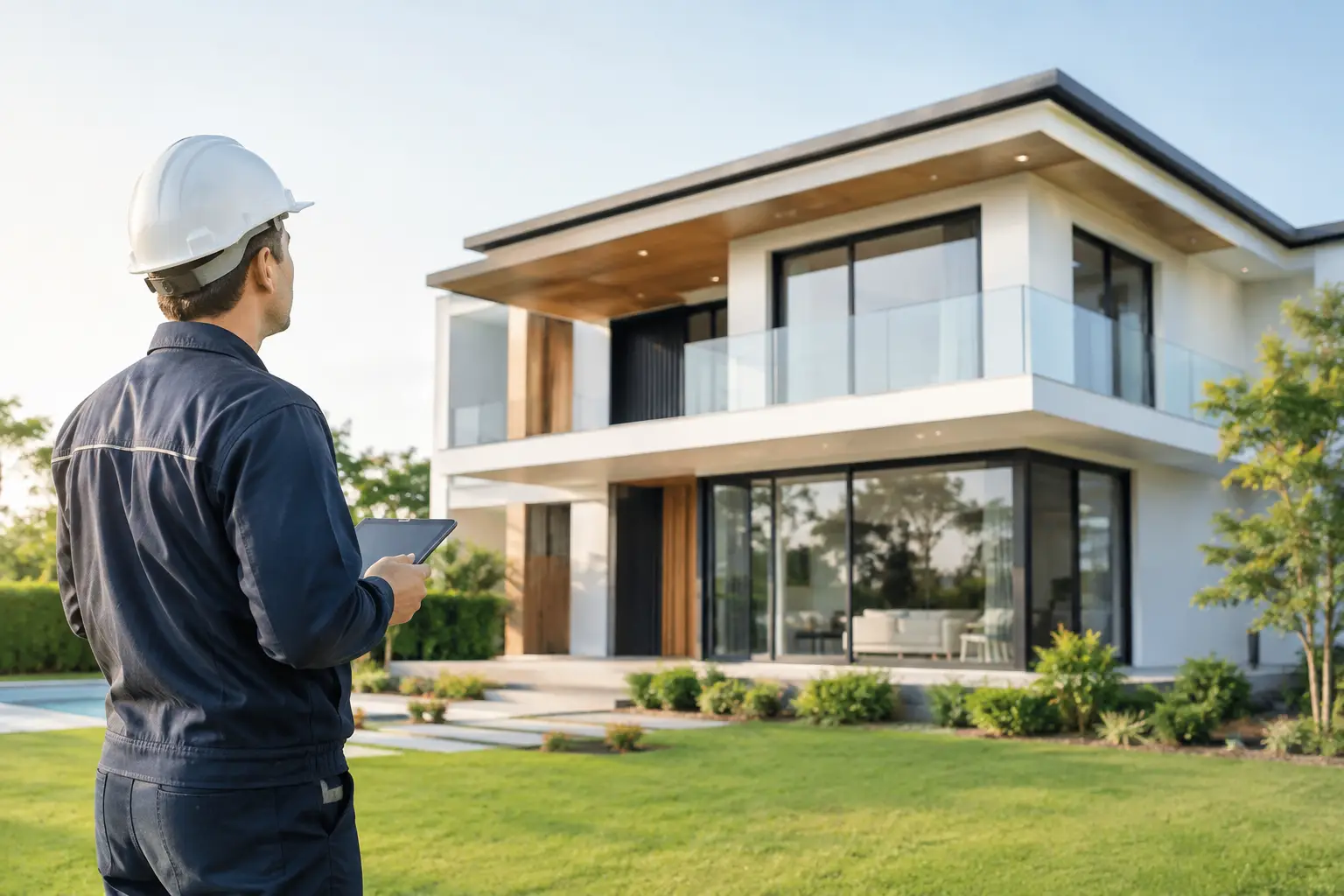
A luxury villa should not reach handover with lights that respond inconsistently, curtains that stop halfway, or an intercom that only works from one screen. Villa commissioning is the final, disciplined process that turns installed technology into a dependable home: every device is tested, every setting is refined, and every control is prepared for the people who will live there.
For homeowners, investors, and developers, this stage protects the value of the wider fit-out. It is where smart automation moves beyond impressive product specifications and proves its performance in real conditions. A well-commissioned villa feels intuitive from the first day. A poorly commissioned one can leave the owner managing avoidable callouts, unclear controls, and systems that never quite work together.
What Villa Commissioning Actually Covers
Commissioning is more than switching equipment on. It is the structured verification of the installed system against the approved design, the property’s daily routines, and the owner’s expectations. The process confirms that individual devices work, but it also tests how they work together.
In a smart villa, that may include lighting circuits and dimming scenes, HVAC controls, motorized curtains and blinds, CCTV cameras, door stations, access control, smart locks, audio zones, sensors, switches, network-connected equipment, and the central app. Voice control, where specified, must also be tested with practical commands rather than simply connected and left unverified.
The objective is straightforward: the home should be easy to control, secure to operate, and reliable whether the owner is inside the villa or checking it remotely. That requires technical testing, careful programming, and a final review of the living experience in each room.
Why Installation Is Not the Finish Line
An installation can look complete long before it is ready for handover. Devices may be mounted, cables terminated, and panels powered, yet important details can remain unresolved. A scene may activate the correct lights but leave the garden lighting on. A thermostat may communicate with the app but use temperature limits that are unsuitable for the room. A camera may record clearly during the day but have glare or poor coverage at night.
These are commissioning issues, not minor preferences. In a large villa, small inconsistencies quickly become frustrating because there are more rooms, more users, and more systems to coordinate. The commissioning team identifies those issues while the project team, drawings, and access to equipment are still available.
It also creates clear accountability. Instead of handing over a collection of separate products, a professional integrator validates one intelligent system tailored to the property. This is especially valuable when a villa includes multiple contractors, such as an MEP team, interior designer, security provider, AV installer, and landscape contractor.
The Core Stages of Villa Commissioning
1. Review the approved design and site conditions
The process begins by checking the installed solution against the agreed system design. The team verifies device locations, panel labeling, network connections, and equipment access. They also confirm that finishes, furniture placement, curtain tracks, AC grilles, and doors have not introduced practical limitations after the original design was approved.
This review matters because villas evolve during construction. A revised ceiling detail may affect a sensor’s coverage. A decorative wall finish may influence where a keypad is best positioned. A last-minute change to a guest suite can require adjusted lighting scenes or access permissions. Commissioning brings these site realities into the final configuration.
2. Test each system before testing the whole experience
Every installed component should be checked individually before it is included in broader automations. Lighting loads are tested for correct operation and dimming behavior. Curtain motors are calibrated for open and closed limits. Climate zones are checked for accurate response and sensible setpoints. Cameras, door stations, locks, and access credentials are tested at the entry points they protect.
For audio and entertainment, testing should cover source selection, volume control, room grouping, and the behavior of equipment after a power interruption. For network-dependent systems, stable connectivity is essential. A central app is only as dependable as the infrastructure supporting it.
The testing process should include the less obvious scenarios as well. What happens if internet service is temporarily unavailable? Can essential lights and local controls still operate? Does a smart lock alert the owner correctly? Are exterior cameras usable in darkness? These questions distinguish a polished installation from a system that performs well only during a demonstration.
3. Program scenes around real villa routines
The most visible part of commissioning is programming, but effective programming is not about adding as many scenes as possible. It is about making frequent actions faster and more comfortable.
A welcome scene might set the entrance, living area, climate, and curtains when the family arrives. A goodnight scene can turn off selected lighting, close curtains, arm designated security zones, and adjust bedroom temperatures. Entertaining scenes may balance interior and outdoor lighting while activating the relevant audio areas. Away mode can reduce energy use while maintaining the security and climate protections the owner wants.
The right scenes depend on the household. A family with young children may prioritize simple bedtime controls and safe access notifications. A frequently vacant property may need stronger remote monitoring and energy management. A developer preparing a show villa may focus on presentation scenes that demonstrate the property without making daily operation complicated.
This is why a single default setup is rarely enough. The best results come from programming that is tailored to the space and needs of the owner, then adjusted after practical testing.
4. Check security, privacy, and remote access
Security systems deserve focused commissioning because they affect both safety and privacy. Cameras must be aimed correctly, notifications need to be useful rather than excessive, and access permissions should match the people who require them. Staff, guests, family members, and maintenance providers may need different levels of access.
Remote access should be configured carefully. Owners should be able to check appropriate systems from their phone when away, but credentials, user accounts, and recovery information must be managed properly. Default passwords should never remain in place, and the owner should understand who can administer the system after handover.
For villas with gates, intercoms, and smart locks, it is worth testing the entire arrival sequence. A visitor rings the gate station, the homeowner receives the notification, communication is clear, and authorized access operates as expected. Testing this sequence from the driveway and not only from inside the house often reveals issues early.
5. Complete handover with clear user guidance
Commissioning is not complete when the technician leaves. The final handover should give the owner confidence to use the system without depending on a manual for ordinary tasks.
User guidance should cover the central app, wall controls, key scenes, climate adjustments, guest access, security notifications, and what to do if a device appears offline. It should also clarify which functions are best handled by the homeowner and which require support. A short, practical walkthrough is more valuable than an overwhelming technical explanation.
At Esmartech, the handover stage is treated as part of the project delivery, not an afterthought. The aim is for the owner to experience effortless control from day one, with a clear support path if requirements change later.
Commissioning Decisions That Need Early Attention
Some commissioning challenges are easier to solve before the villa is fully occupied. Wi-Fi coverage, equipment ventilation, rack access, and power backup should be confirmed early because changes after furniture and finishes are complete can be disruptive. The same applies to camera views that may be blocked by mature landscaping, signage, or parked vehicles.
There is also a trade-off between automation and control. Too few automations can make a premium system feel underused. Too many can make the home behave in ways the owner did not expect. For example, aggressive occupancy-based lighting may be useful in service corridors but irritating in a formal living room. The appropriate level of automation depends on how the villa is used, not on how many devices can be connected.
Scalability should be reviewed during commissioning as well. Even if the owner does not want every feature activated immediately, the team can confirm that the architecture allows future additions such as new audio zones, garden controls, EV charging integration, or expanded security coverage. This protects the investment without forcing unnecessary scope into the first phase.
What to Expect Before Sign-Off
Before final sign-off, the owner or project representative should be invited to experience the system in a realistic way. Walk through the main rooms. Operate scenes from both keypads and the app. Test entries, gates, cameras, and remote notifications. Check that labels are clear and that rooms are named in a way that makes sense to the household.
Any remaining items should be documented and resolved before the project is treated as complete. This final review is not about finding fault. It is about ensuring the villa performs as intended when the construction team is no longer on site.
A villa is at its best when technology stays quietly in the background until it is needed. Careful commissioning creates that confidence: lights respond as expected, comfort settings suit the room, security remains visible and manageable, and the owner is left with a home that feels considered rather than complicated.


Leave a comment