
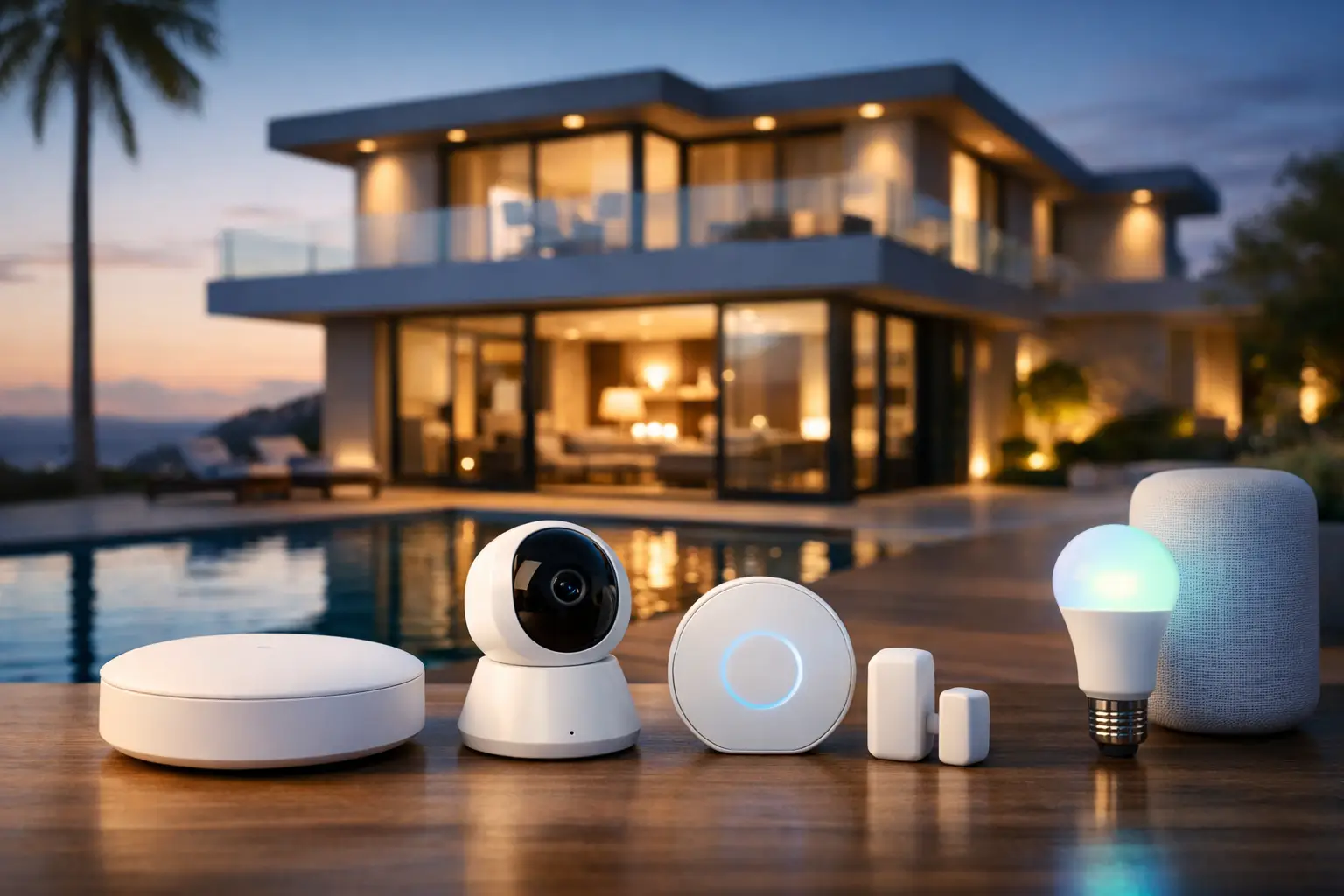
A villa can have excellent cameras, smart locks, and lighting control yet still miss the events that cause the most disruption: a hidden water leak, an air-conditioning fault, an open terrace door, or movement in an unused area. The best smart sensors for villas address these small but critical details, giving the property the awareness needed to respond quickly and intelligently.
For a large home, sensors should not be treated as isolated gadgets. They work best as part of one intelligent system that can trigger alerts, lighting scenes, climate adjustments, security actions, and notifications based on what is happening in each room or outdoor zone. The right selection depends on the villa layout, occupancy pattern, finishes, lifestyle, and level of protection required.
What Makes a Smart Sensor Right for a Villa?
A premium villa usually has more variables than an apartment: multiple entrances, staff areas, guest suites, landscaped outdoor spaces, pools, terraces, utility rooms, and several air-conditioning zones. A sensor needs to be dependable in the location where it is installed, not simply impressive on a product sheet.
Start with three questions. What risk or inconvenience should the sensor prevent? What system should react when it detects an event? And how will the sensor communicate within the property? A leak sensor in a guest bathroom may only need to send an alert, while one in a main plant room may need to close a connected water valve and notify the homeowner or facilities team immediately.
For new construction and major renovations, wired sensors are often the preferred option. They can be discreetly installed, do not rely on battery replacement, and suit properties where long-term reliability is the priority. Wireless sensors are valuable for completed villas, additions, and locations where opening walls would be impractical. A professional design can also combine both approaches without making daily operation complicated.
The Best Smart Sensors for Villas by Purpose
Motion and occupancy sensors for comfort and security
Motion sensors are among the most useful additions to a villa automation system, but placement matters more than quantity. In corridors, staircases, dressing rooms, pantries, garages, and powder rooms, they can turn lights on when needed and off after an appropriate delay. This provides practical convenience while reducing unnecessary energy use.
For living rooms and home offices, occupancy sensors are often a better choice than basic motion detection. They are designed to recognize that a person remains in the room even when sitting still. That distinction avoids lights switching off during a meeting, movie, or quiet evening at home.
When the security system is armed, selected motion sensors can also support intrusion detection. They should be planned carefully around pets, large windows, ceiling heights, and air-conditioning vents to reduce false alerts. Outdoor sensors require the same discipline, especially in gardens where heat, wind, and landscaping activity can affect performance.
Door, window, and gate contact sensors
Contact sensors provide a simple answer to a valuable question: is this opening secure? Installed on doors, windows, sliding panels, gates, and service entrances, they can send an alert when a protected opening is opened unexpectedly.
Their value extends beyond security. A contact sensor can tell the climate-control system to pause cooling in a bedroom when a balcony door has been left open. It can trigger pathway lighting when a side entrance is used after dark or alert a homeowner if a child accesses a pool gate.
In villas with expansive glazing and multiple terrace doors, it is worth identifying the openings that genuinely require monitoring. Covering every panel may be appropriate for a high-security property, while other homes may prioritize ground-floor doors, bedrooms, staff access points, and perimeter gates. The system should reflect the real operating pattern of the home.
Water leak sensors and automatic shutoff protection
Water damage can develop quietly and become expensive long before it is visible. Smart leak sensors are particularly valuable beneath sinks, behind washing machines, beside water heaters, near AC drain pans, in pump rooms, and around irrigation or filtration equipment.
A well-designed leak response does more than send a phone notification. It can activate an audible alert, illuminate a designated indicator, notify household staff, and close a smart water valve where appropriate. This is especially useful for owners who travel frequently or manage a villa as an investment property.
Not every water line should be shut off automatically. A villa may have pools, irrigation, staff quarters, or equipment that require a more considered response. The right approach separates critical domestic water zones from systems that need manual review, with a clear plan for what happens after an alert is received.
Temperature, humidity, and air-quality sensors
Climate sensors help a villa remain comfortable without relying on one thermostat reading for an entire floor. Temperature and humidity data can reveal rooms that receive strong afternoon sun, guest suites that are rarely occupied, or wardrobes and storage areas that need closer monitoring.
Humidity control is particularly relevant in warm climates and in homes with valuable finishes, art, leather furnishings, wine storage, or extensive joinery. In the right configuration, the system can adjust cooling settings, operate ventilation, or send an alert when conditions move outside the preferred range.
Air-quality sensors can add another layer of awareness by monitoring factors such as carbon dioxide, volatile compounds, or particulate levels. They are most useful in bedrooms, gyms, kitchens, home cinemas, and enclosed spaces with limited natural ventilation. However, they should be selected for a defined purpose. A sensor that generates frequent alerts without a connected ventilation response can become background noise rather than a meaningful improvement.
Smoke, heat, and carbon monoxide detection
Life-safety devices require careful selection and professional coordination. Smart smoke and heat detectors can provide alerts through the automation platform, helping homeowners respond even when away from the villa. Heat detectors can be suitable in kitchens, garages, and utility areas where steam or cooking activity could create nuisance alarms for traditional smoke detection.
Carbon monoxide detection is essential where fuel-burning appliances, fireplaces, generators, or enclosed garages create a possible risk. These devices should be installed according to applicable codes and manufacturer requirements, rather than positioned solely for app visibility.
Smart integration can support practical actions during an alarm, such as turning on selected lights for a safer exit, sending immediate notifications, or releasing designated access points for emergency response where appropriate. It should complement, not replace, a properly designed fire and life-safety system.
Glass-break, vibration, and perimeter sensors
For villas with high-value contents or exposed ground-floor glazing, glass-break and vibration sensors offer protection that contact sensors alone cannot provide. A contact sensor reports an opening. A glass-break sensor can identify the sound pattern of breaking glass, while vibration detection can recognize forced impact or tampering before a window or door opens.
These sensors need thoughtful testing. Open-plan interiors, large glass surfaces, fountains, outdoor entertainment areas, and active households can affect detection. The goal is not to create an alarm for every unusual sound. It is to build a layered security design that identifies credible threats while remaining manageable for the people living in the home.
Plan Sensors Around Daily Living, Not a Floor Plan
The most effective sensor design follows how the villa is used. Consider what happens when the family leaves for travel, when staff arrive, when guests stay overnight, and when the house is empty during the day. These routines reveal the moments where automation can provide real reassurance.
A practical example is an away scene. When activated, it can confirm that selected doors and windows are closed, turn off nonessential lights, adjust air-conditioning setpoints, arm relevant security zones, and send an exception alert if a leak or unexpected movement is detected. At night, bedroom and perimeter sensors can operate differently from daytime settings, preserving privacy and comfort while maintaining protection.
Room-by-room zoning also prevents over-automation. A formal dining room may need occupancy-based lighting only on occasion, while a garage, laundry room, and staff corridor may benefit from constant sensor-driven operation. The best installations are tailored to the property rather than applying the same rule everywhere.
Choose Integration, Reliability, and Service Over Gadget Count
A sensor is only as useful as the system behind it. Before selecting products, confirm how alerts will be received, whether sensors can trigger other systems, how battery status is monitored, and what happens if the internet connection is unavailable. Local control and professionally configured automation logic are particularly valuable for essential responses such as lighting, security, and water protection.
It is also wise to consider future expansion. A villa may begin with leak detection, security contacts, and climate sensors, then later add motorized curtains, smart locks, CCTV, audio, or energy monitoring. Choosing an architecture that supports both wired and wireless expansion protects the investment and keeps control within one interface.
Esmartech approaches sensor planning as part of the wider smart-home design, from site consultation and clear system design through installation, testing, user guidance, and support. This is valuable because sensor placement, automation programming, and handover all affect whether the system feels reliable in daily life.
The right sensors should make a villa feel more attentive, not more demanding. When each device has a clear purpose and is programmed around the household’s routines, the result is quieter confidence: the home can detect what matters, respond appropriately, and leave its owners free to enjoy the space.



Leave a comment