
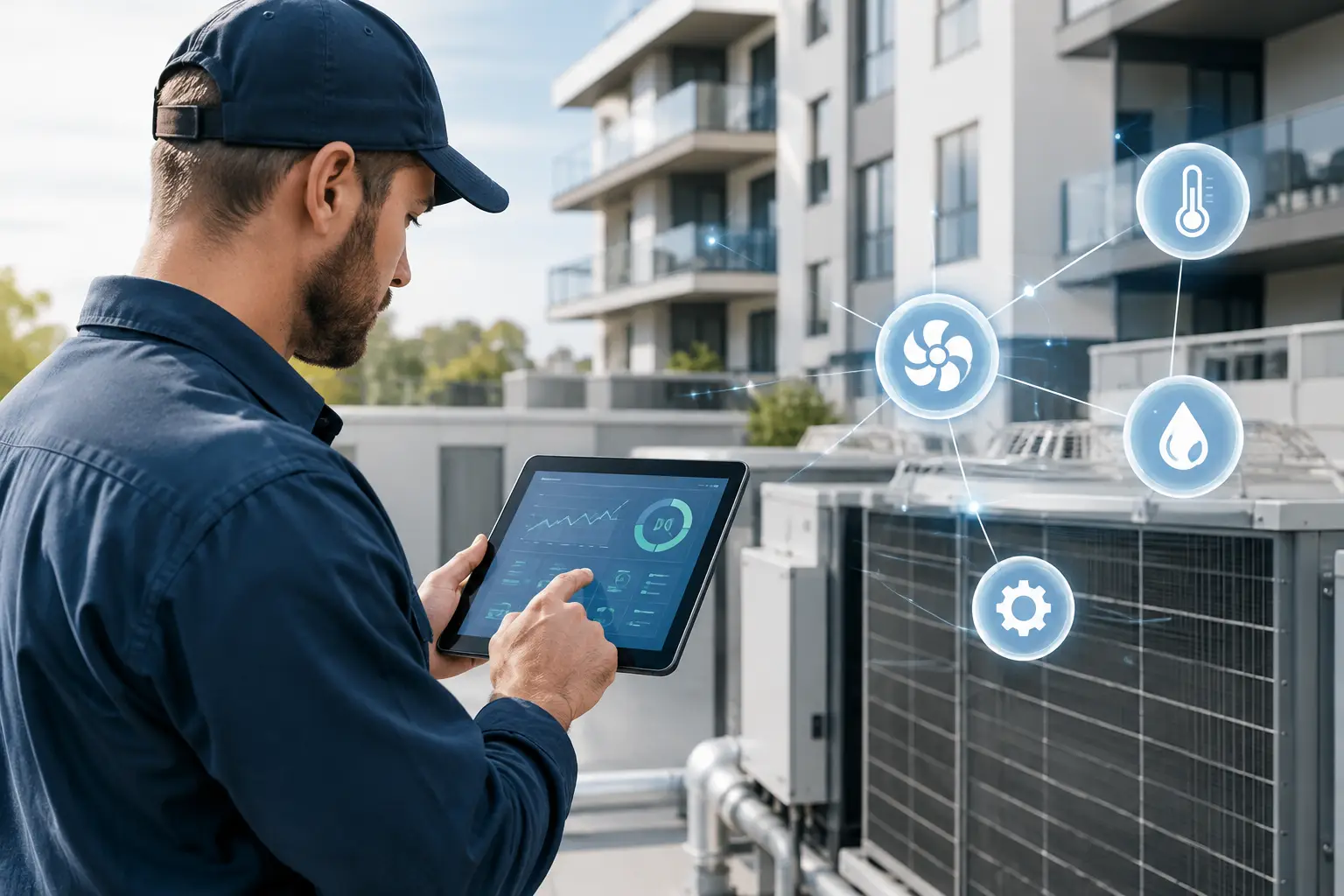
A villa’s air conditioning does not usually fail at a convenient time. A hotel’s water pump does not wait for a quiet weekday, and an office ventilation issue can become a comfort complaint before the facilities team sees an alarm. Predictive maintenance automation gives property owners and operators earlier visibility into the conditions that lead to these disruptions, so service can be planned before a small issue affects occupants, guests, or daily operations.
For premium residential and commercial properties, the goal is not to add another dashboard. It is to create one intelligent system that turns useful building data into clear action. When designed properly, predictive maintenance supports comfort, security, equipment life, and more controlled operating costs without placing more technical work on the owner or property team.
What Predictive Maintenance Automation Does
Traditional maintenance often follows one of two patterns: equipment is serviced on a fixed schedule, or it is repaired after it stops working. Scheduled servicing is necessary for many assets, but it can also mean inspecting equipment that is operating normally while missing changes that happen between visits. Reactive repair is more expensive in disruption, especially when it affects cooling, water, access, or guest-facing systems.
Predictive maintenance automation sits between these approaches. Connected sensors, equipment controllers, meters, and system logs monitor operating behavior over time. The automation platform identifies readings that suggest abnormal performance, then sends the right alert or triggers an approved response.
A smart HVAC control system, for example, can track temperature response, runtime, filter status, power consumption, and recurring fault signals. If an air handling unit runs longer than expected to achieve its setpoint, the system can flag a possible issue with airflow, refrigerant performance, controls, or maintenance needs. The technician arrives with context rather than starting from a complaint alone.
This is not the same as basic remote control. Being able to turn an air conditioner on from a phone is convenient. Predictive capability adds awareness of whether the system is operating as it should, whether its behavior is changing, and whether intervention is becoming necessary.
Where It Delivers the Most Value
The strongest use cases are assets where unexpected failure affects comfort, safety, revenue, or expensive finishes. In a luxury residence, that may include HVAC systems, water leak detection, pumps, smart electrical panels, pool equipment, and motorized curtains. In hotels, offices, restaurants, and retail spaces, it can extend to ventilation, refrigeration, lighting controls, access systems, generators, and critical network equipment.
Dubai and other UAE markets make HVAC monitoring particularly valuable. Extended cooling demand, dust exposure, and high outdoor temperatures place continuous pressure on equipment. Monitoring runtime, temperature trends, filter condition, condensate behavior, and unusual power use can help teams prioritize service before comfort levels fall or a system experiences a larger fault.
Water management deserves similar attention. A leak sensor under a sink provides a direct warning, but a broader automation design can also identify unusual water flow, trigger a shutoff valve when appropriate, and notify the correct person. In a vacant investment property or a frequently traveled villa, this can prevent a minor leak from becoming damage to joinery, flooring, or neighboring units.
The value depends on the property. A compact apartment may benefit most from leak detection, climate alerts, and smart electrical monitoring. A large villa or hospitality project can justify more detailed equipment analytics because the number of systems, zones, and consequences of downtime are much greater.
From Data to a Useful Maintenance Decision
Sensors alone do not create a maintenance strategy. A property can quickly become difficult to manage if every device sends frequent, low-priority notifications. The quality of the system design determines whether predictive maintenance feels helpful or distracting.
First, each monitored asset needs a clear operating baseline. The system must know what normal temperature, runtime, power draw, humidity, pressure, or usage looks like for that specific equipment and location. A lobby air conditioning unit should not be assessed by the same occupancy pattern as a rarely used guest suite.
Second, alerts need sensible thresholds and escalation rules. A brief temperature variation may require no action. Repeated faults, extended operation outside normal parameters, or a combination of warning signs may justify a service request. For higher-risk events, such as a confirmed leak or prolonged loss of cooling in a critical area, the system can notify the facilities manager immediately and execute a defined protective action.
Third, the alert should reach someone who can act. This sounds simple, yet it is where many installations lose value. A notification should identify the asset, location, condition, urgency, and recommended next step. It may go to an owner, a building manager, a maintenance provider, or different people based on the time of day and severity of the issue.
Finally, outcomes should be recorded. If a recurring alert repeatedly leads to a blocked filter, a failing actuator, or a user scheduling issue, the maintenance plan can improve. Over time, teams gain a more accurate view of recurring costs and equipment performance.
Predictive Maintenance Automation Needs the Right Foundation
A dependable system starts with suitable hardware and clean integration. Existing building management systems, HVAC controls, smart thermostats, access control, energy meters, and security platforms may already provide valuable information. The opportunity is to bring relevant data into a coordinated control environment rather than making staff check separate applications.
Wired systems are often the preferred choice for new construction and major renovations because they offer stable communication and can be planned around the property’s infrastructure. Wireless devices can be highly effective for retrofits, targeted monitoring, or spaces where opening walls is not practical. The right choice depends on the building, the equipment being monitored, network conditions, and the level of reliability required.
Not every asset needs a sensor, and not every reading needs advanced analysis. Monitoring should be selected around risk and return. A system that watches a few high-impact assets well is more useful than an oversized installation filled with data that no one reviews.
Security also matters. Connected controls should be configured with protected network access, managed user permissions, and clear ownership of the system. For hotels, offices, and multi-user properties, access levels should distinguish between occupants, front-of-house staff, facility teams, and administrators. Convenience should never weaken control over the property.
A Practical Implementation Approach
The most effective projects begin with a site consultation, not a product list. The first discussion should identify the equipment that causes the greatest disruption when it fails, current maintenance routines, common complaint areas, available control systems, and the people responsible for responding to alerts.
A professional integrator can then develop a system design and clear quotation that defines what will be monitored, which alerts matter, how notifications will be handled, and where automation is appropriate. For a new villa, this can be incorporated into the overall smart home design. For an operating hotel or office, installation may be phased to minimize disruption and focus first on critical systems.
Installation should include more than mounting devices. Each point must be tested against real operating conditions, and every automated response must be verified. If a leak detection system is intended to close a valve, the team should test the sensor, command, valve action, alert delivery, and reset process. If an HVAC performance alert is configured, it should be reviewed against normal daily operation to avoid unnecessary calls.
At handover, the owner or facilities team should understand what the system monitors, which alerts require action, and how to adjust approved preferences without affecting critical protections. Esmartech approaches these projects through consultation, design, installation, testing, and user guidance so the finished system remains practical long after commissioning.
What Predictive Maintenance Cannot Replace
Automation improves visibility, but it does not eliminate professional servicing. Certain equipment still requires manufacturer-recommended inspections, cleaning, calibration, and safety checks. A predictive alert may identify that an issue is developing; it does not replace the qualified technician who diagnoses and resolves it.
It also cannot compensate for poorly maintained equipment or inadequate system capacity. If an air conditioning system is undersized for a renovated space, monitoring may reveal the strain early, but the lasting solution could require design changes rather than more alerts. The same principle applies to aging pumps, poorly configured controls, and unstable network infrastructure.
The best result comes from combining planned maintenance with condition-based insight. Routine tasks continue where they are required, while automation helps the property team focus attention where performance data indicates a real need.
For property owners, the advantage is confidence: fewer surprises, better information, and a more comfortable space for the people inside it. The right system does its work quietly in the background, giving your team time to act before an inconvenience becomes an interruption.

Leave a comment