
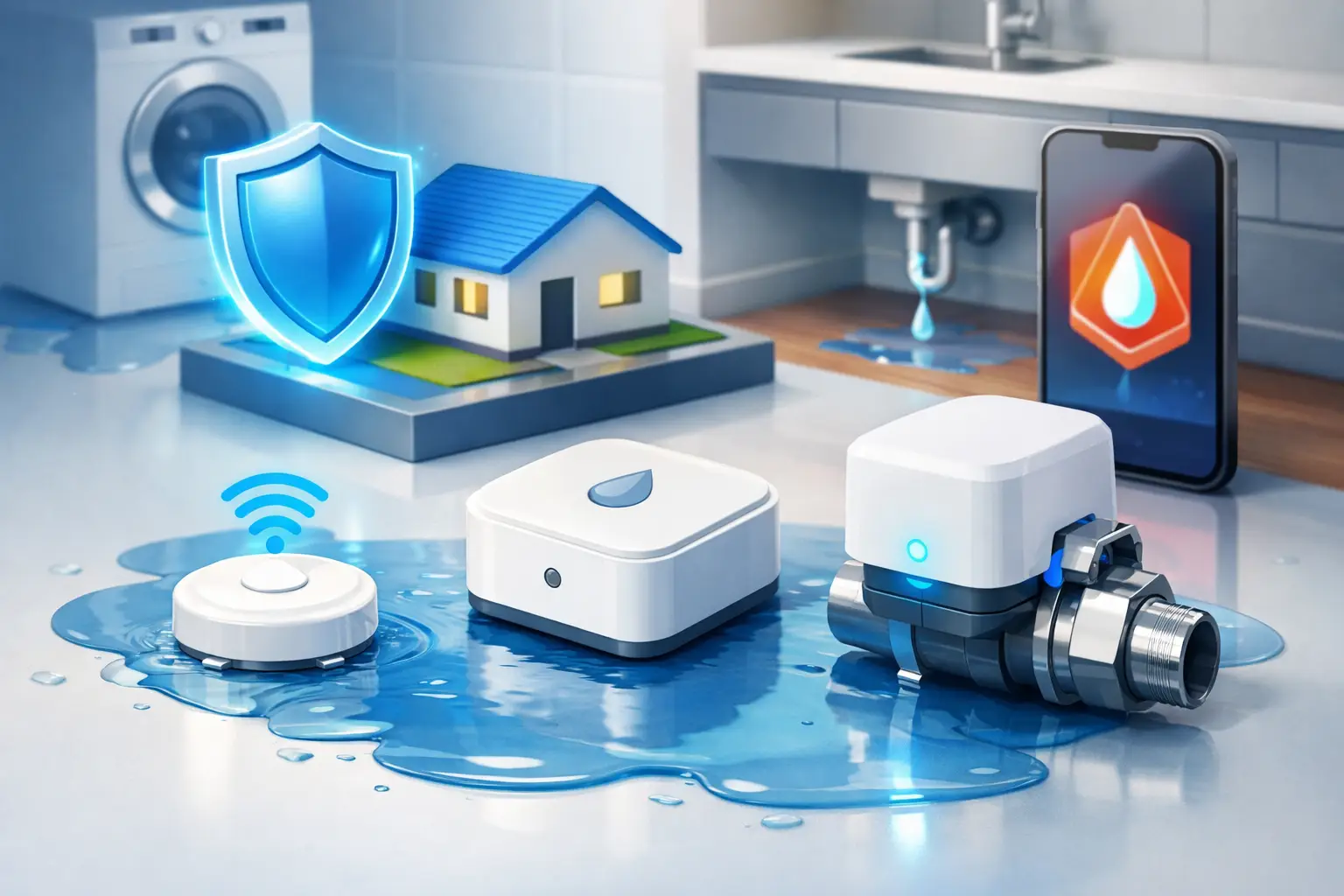
A small leak behind a washing machine, beneath a kitchen sink, or inside an AC drain line can cause far more disruption than the water itself suggests. The best leak sensors for homes identify moisture at the earliest stage, alert the right people immediately, and, when designed as part of a wider smart system, can help stop the water before damage spreads.
For villa owners, penthouse residents, and property managers, water detection is not simply another smart-home feature. It is a practical layer of property protection. Floors, cabinetry, ceilings, electrical systems, and valuable finishes can all be affected by a leak that goes unnoticed for a few hours. The right solution offers reassurance whether the property is occupied, vacant for travel, or managed remotely.
What Makes a Leak Sensor Worth Installing?
A leak sensor is a compact device that detects the presence of water where it should not be. Most use conductive probes on the base of the device or an external sensing cable. When water bridges the contacts, the sensor triggers an alert through its connected platform.
That basic function is useful, but not every device provides the same level of protection. The best systems combine reliable detection with instant notifications, clear room identification, dependable connectivity, and a plan for what happens after an alert is received.
A standalone sensor may sound an alarm in the room and send a phone notification. This can be enough for a small apartment where someone is usually nearby. In a larger villa, second home, hotel suite, or investment property, a more complete approach is often appropriate. Sensors can be integrated with a central automation platform, security notifications, and an automatic shutoff valve that closes the main water supply when a confirmed leak is detected.
The difference is significant: an alert informs you of a problem; an integrated response can limit the damage while you arrange service.
Best Leak Sensors for Homes: Features to Compare
When comparing leak sensors, start with the risks in the property rather than the product packaging. A luxury home with multiple bathrooms, a pool plant room, several AC units, and a utility area needs a different sensor plan than a one-bedroom apartment.
Accurate detection in the right form factor
Point sensors are designed for a specific location, such as underneath a dishwasher or beside a water heater. They are compact, cost-effective, and well suited to predictable risk points.
Rope or cable sensors cover a longer path. They are particularly useful beneath long runs of cabinetry, around mechanical equipment, inside AC drain pans, or in plant rooms where water may appear anywhere across a larger area. In some projects, a combination of point and cable detection gives better coverage without placing devices unnecessarily.
Look for sensors designed to detect shallow water quickly. A device that only reacts after water has accumulated may still provide a warning, but it is less effective at protecting finishes and equipment.
Dependable alerts, even when you are away
A notification is only helpful if it reaches the people who need to act. Quality leak detection should support app alerts and, where required, notifications to multiple users. This matters for families, property managers, and facilities teams who share responsibility for a property.
Consider the internet connection as well. Some wireless sensors communicate through a hub rather than connecting individually to Wi-Fi. This can improve battery performance and create a more stable system across a large home. Wired sensors are often preferred in new construction, major renovations, and high-risk plant areas because they avoid battery replacement and can be incorporated into a professionally planned control infrastructure.
For an unoccupied property, ask how the system behaves during a power outage or network interruption. The answer may influence whether you choose battery backup, local alarms, cellular backup, or a hardwired automation architecture.
Battery life and maintenance visibility
Wireless leak sensors are convenient, especially where adding cables would disrupt finished interiors. However, they require a maintenance plan. A sensor with a long stated battery life is valuable, but the central system should also report low-battery status before the device becomes unavailable.
Professional installation helps avoid a common problem: sensors are installed in concealed locations, then forgotten. The ideal setup makes each sensor visible in the app by room name, reports its health, and provides a clear schedule for testing and battery replacement.
Compatibility with an automatic shutoff valve
For many premium properties, the strongest protection comes from pairing detection with a smart water shutoff valve. When a leak is confirmed, the valve closes the main water supply or a selected zone. This can be especially valuable for vacation homes, rental properties, and villas left empty during summer travel.
Automatic shutoff is not suitable for every scenario without careful design. Some systems, including irrigation, pool equipment, fire protection, or water-dependent appliances, may need separate consideration. A qualified integrator can determine which water lines should be controlled and whether the valve should close automatically, require confirmation, or respond only to specific high-risk sensors.
Where Should Leak Sensors Be Placed?
Placement determines whether a leak sensor is useful when it matters. The most important locations are usually close to appliances, plumbing connections, and mechanical systems, not simply the rooms where water is most visible.
In a typical home, priority areas include the kitchen sink cabinet, dishwasher, refrigerator water connection, washing machine, water heater, and every bathroom vanity. In larger properties, add AC drain pans and condensate lines, central filtration equipment, pump rooms, boiler rooms, pool equipment areas, and any concealed plumbing manifolds that can be accessed safely.
Bathrooms require thoughtful positioning. A sensor beside a shower may trigger from ordinary splashing, while one inside a vanity cabinet can identify a supply-line leak without nuisance alerts. Similarly, a sensor beneath a washing machine should sit where a hose failure will reach it quickly but where routine floor cleaning will not cause unnecessary alarms.
For high-value interiors, consider the spaces below wet areas as well. A leak from an upstairs bathroom can appear first as damage to the ceiling below. Sensors cannot replace sound plumbing and regular maintenance, but they create an early-warning layer where visual inspection is delayed.
Standalone Devices vs. Integrated Protection
A standalone leak sensor is often the right starting point for a small property or a focused concern. It is relatively simple to install and can provide immediate phone alerts. The trade-off is that each device may operate independently, with separate apps, batteries, and settings.
An integrated system brings leak sensors into one intelligent system with lighting, climate control, security, and access features. Instead of searching through multiple applications, the homeowner can see alerts in one place, identify the exact zone, receive notifications remotely, and create response rules. For example, a detected leak can trigger an alert, close the water valve, illuminate a utility area for an occupant, and notify a property manager.
This approach is especially effective in villas, multi-unit properties, hospitality environments, and homes with several technical spaces. It also supports future expansion. A property may begin with kitchen, laundry, and AC detection, then add water metering, smart irrigation controls, or additional shutoff zones during a renovation.
Installation Details That Affect Reliability
Leak sensors are easy to underestimate because they are small, but their performance depends on proper selection, positioning, programming, and testing. A device placed on an uneven surface may not contact water soon enough. A wireless sensor located too far from its hub may have unreliable communication. An automatic valve installed without considering the property’s plumbing layout can create inconvenience during a false alert or maintenance visit.
A professional site assessment identifies the real risk points, confirms the practical wireless range, and accounts for access after installation. It also ensures devices are labeled clearly in the control app. “Sensor 12” is not useful at 2 a.m.; “Guest Bathroom Vanity” is.
Esmartech designs water-detection solutions around the property’s layout and operating requirements, from initial consultation through installation, testing, and handover. For homeowners, the goal is simple: protection that works quietly in the background and remains easy to manage.
A Practical Buying Decision
Choose point sensors for individual appliance and cabinet risks, cable sensors for extended mechanical or cabinetry areas, and an integrated shutoff solution where the cost of water damage is high. Prioritize dependable notifications and maintenance visibility over unnecessary features. Most importantly, design coverage around where water can escape, not only where it is easy to place a device.
A well-planned leak detection system is rarely noticed day to day. That is precisely its value: it gives your home the ability to respond early, protect its finishes, and keep a minor plumbing fault from becoming a major property event.





Leave a comment