
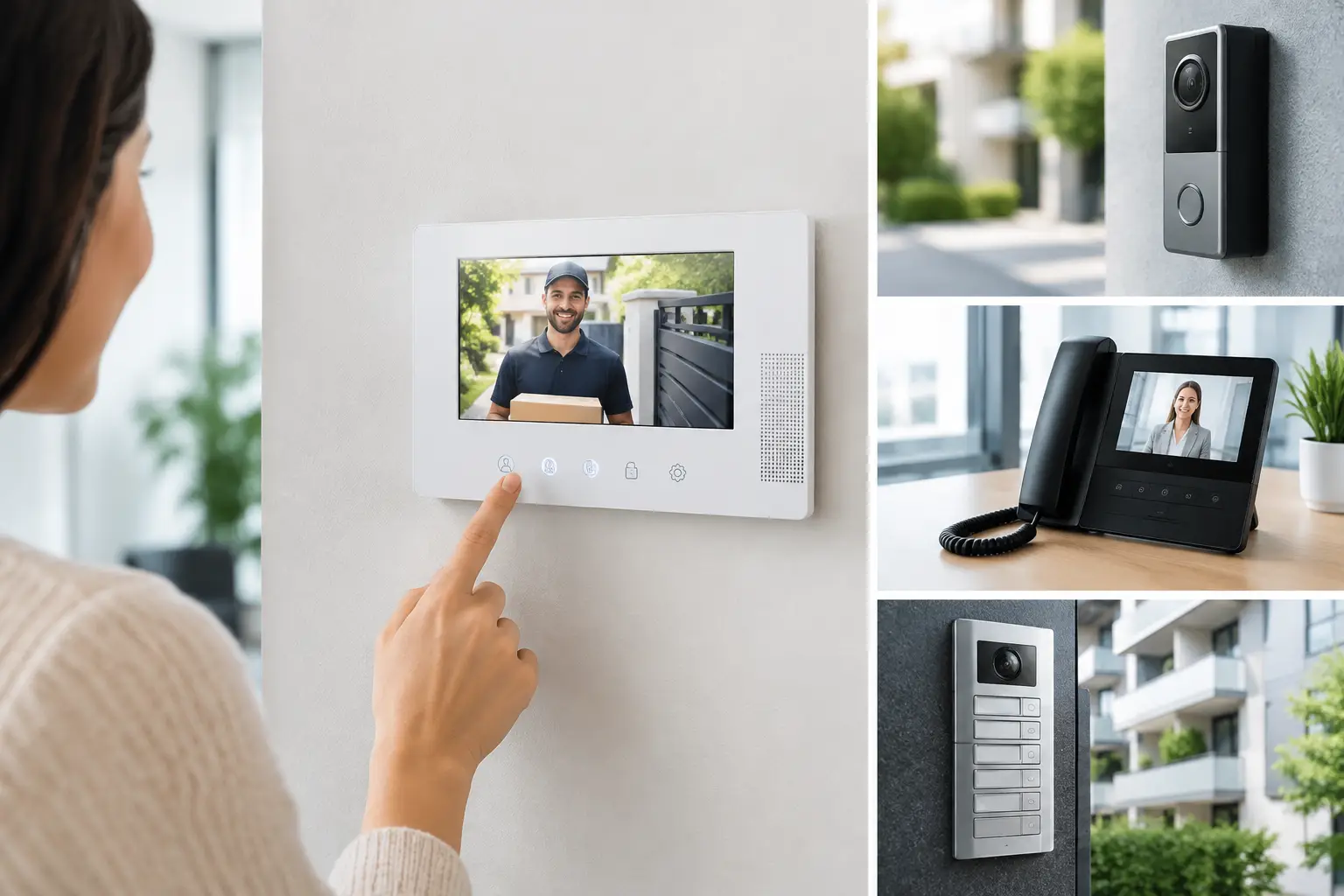
A front gate is only as useful as the decision made at it. The best intercoms let residents, staff, or security teams see who has arrived, speak clearly, verify access, and open the right door from one intelligent system. For a villa, that may mean answering the gate from a phone while away. For an apartment building, hotel, or office, it can mean managing hundreds of visitors without handing security control to separate, disconnected devices.
The right choice is not simply the unit with the largest screen or the longest feature list. It is the intercom system that matches the property layout, entry points, number of users, security policy, and wider automation plan. A professionally designed intercom should feel simple every day while providing reliable protection when it matters.
What Makes the Best Intercoms Different?
A quality intercom does four jobs well: it identifies visitors, provides clear two-way communication, controls authorized entry, and records or reports activity when required. Video quality, mobile access, touchscreen design, and smart-lock compatibility all matter, but they must work together reliably.
For premium residential and commercial properties, the strongest installations use IP-based video intercoms. These systems communicate over a network, support high-resolution video, and can connect to indoor monitors, mobile apps, gate motors, electric strikes, access-control readers, CCTV, and centralized automation platforms. They offer more flexibility than older audio-only systems, particularly when a property has multiple entrances or users.
Wired and wireless options both have a place. A wired system is often the best long-term choice for new villas, renovations, apartment developments, and commercial projects because it provides stable communication and clean integration. Wireless intercoms can be effective where opening walls is impractical, provided the Wi-Fi design, power supply, and device placement are assessed properly.
7 Best Intercom Options by Property Type
1. IP Video Intercoms for Luxury Villas
For a villa with a pedestrian gate, vehicle entrance, and several family members, an IP video intercom is usually the most complete option. A weather-resistant outdoor door station can provide a camera, call button, microphone, speaker, and access reader in one refined panel. Indoor touchscreens allow residents to answer calls and release the gate or door without walking to the entrance.
The real advantage is integration. The intercom can trigger driveway cameras on the home display, open an electric gate after approval, and send calls to authorized phones when no one is at the monitor. For larger villas, separate door stations can be installed at the main gate, service entrance, and pool or guest access point.
2. Intercoms With Mobile App Access for Busy Homes
Mobile access is one of the most requested features for homeowners who travel frequently or spend long hours away from the property. When a visitor presses the door station, the system sends a call to a smartphone. The resident can view the visitor, speak to them, and grant access when appropriate.
This is useful for receiving deliveries, admitting pre-approved guests, or speaking with service staff. However, mobile control should not replace sensible security design. Residents need permission settings, strong account passwords, and an installation that maintains local operation if an internet connection becomes unavailable. A good system allows the wall-mounted monitors and gate release to continue working within the property.
3. Multi-Unit Intercoms for Apartment Buildings
Apartment intercoms need to serve many residents without becoming difficult to manage. The best configuration typically includes a common entrance station with a directory, touchscreen or keypad, camera, and access-control reader. Visitors can search for a resident, place a video call, and be granted entry remotely.
For developers and property managers, centralized administration is essential. New residents should be added easily, former tenants removed promptly, and access permissions controlled without replacing keys or reprogramming every device manually. A well-planned multi-unit system can also connect with lobby doors, parking barriers, elevators, and common-area CCTV.
A basic consumer doorbell may appear less expensive at first, but it rarely offers the user management, durability, access integration, and support expected in a managed residential building.
4. Access-Control Intercoms for Offices
Office intercoms must balance a welcoming reception experience with controlled entry. A video door station at the main entrance lets reception staff verify visitors before opening the door. Where no permanent receptionist is present, calls can ring designated employees, a front-desk tablet, or a remote security team.
The most effective office systems combine the intercom with staff credentials such as cards, fobs, PIN codes, or mobile passes. This separates visitor access from employee access and creates a clearer record of who entered and when. For offices with restricted rooms, the same access platform can manage server rooms, executive areas, meeting spaces, and storage areas.
5. Vandal-Resistant Intercoms for High-Traffic Entrances
Retail spaces, warehouses, schools, service entrances, and public-facing commercial properties need hardware designed for heavier use. Look for a metal faceplate, tamper-resistant mounting, an appropriate weather rating, and buttons or touch interfaces suited to the environment.
Camera position matters as much as the panel itself. A door station mounted too high, aimed into direct light, or installed beside a noisy road will not produce useful verification. Professional site planning considers the visitor’s face height, nighttime illumination, background noise, wheelchair accessibility, and the route to the controlled door or barrier.
6. Concierge Intercom Systems for Hospitality
Hotels, serviced residences, and high-end developments benefit from intercoms that support a central concierge or security desk. Instead of routing every visitor directly to a guest room, the property can apply its own arrival process. The concierge can verify a delivery, contact the guest, direct a visitor, or grant controlled access to a designated area.
These systems are particularly valuable where guest privacy, staff movement, and service coordination are priorities. They can be integrated with access control and CCTV so the team has clear information at the point of decision. The trade-off is that hospitality workflows require detailed programming and staff training, not just hardware installation.
7. Smart Intercoms Integrated With Home Automation
An intercom becomes more valuable when it works with the systems already used in the property. In a smart villa or penthouse, a visitor call can appear on selected wall touchscreens, phones, or a central control panel. The resident can view entry cameras, speak to the visitor, and release a gate or smart lock from the same interface used for lighting, climate, curtains, and security.
Integration should be purposeful. Not every screen needs to receive every call, and not every family member should have the same access rights. A thoughtful design defines who can open which entrance, when mobile calling is active, and how visitor events are recorded. This creates convenient control without compromising privacy.
How to Choose Between Wired, Wireless, and IP Systems
Start with the building, not the product catalog. New construction and major renovation projects are ideal for structured cabling, centralized power, and professionally located door stations. This approach generally delivers the most dependable performance and the cleanest appearance.
A wireless system can be a practical alternative for a finished apartment or smaller property where cable routes are limited. Yet wireless performance depends on strong coverage at the entrance, reliable power, and careful configuration. A gate intercom positioned far from the main building may need a dedicated network solution rather than relying on standard household Wi-Fi.
IP does not automatically mean cloud-only. Many premium systems can operate locally while also offering secure remote access. That distinction is worth discussing before selection, especially for owners who prioritize privacy, low latency, and continued function during an internet interruption.
Features Worth Paying For
Clear video at night, reliable two-way audio, multiple user permissions, and quality door-release hardware are usually worth the investment. A high-resolution camera is valuable only if it handles glare, low light, and motion at the entry point. Likewise, a stylish indoor monitor has limited value if the gate motor, electric lock, and network infrastructure are poorly specified.
For villas, consider guest PINs, temporary access credentials, separate service-entry control, and a camera view at both pedestrian and vehicle gates. For commercial sites, audit trails, timed access schedules, reception call routing, and integration with existing access control are often more important than a residential-style mobile app.
Avoid selecting an intercom based on price alone. Low-cost systems can become expensive when replacement parts, compatibility limits, poor audio, unreliable notifications, or weak outdoor durability create problems later. The better investment is a scalable system with professional programming and support.
Installation Is Where Performance Is Decided
Intercom installation involves more than mounting a panel beside the gate. It requires correct cable routes or network coverage, suitable power, lock and gate-motor interfaces, camera angles, user permissions, and full testing of every call path. If the system connects to automation, CCTV, or smart locks, each connection must be programmed around how the property will actually operate.
At Esmartech, the process begins with a site consultation and system design tailored to the property. After a clear quotation, the team completes installation, testing, and user guidance at handover. This is especially valuable when an intercom needs to work as part of a wider residential, hospitality, or commercial control system.
The best intercom is the one residents and staff trust without having to think about it. Choose a system that suits the property today, leaves room for future expansion, and gives every arrival the right balance of convenience, visibility, and control.

Leave a comment