
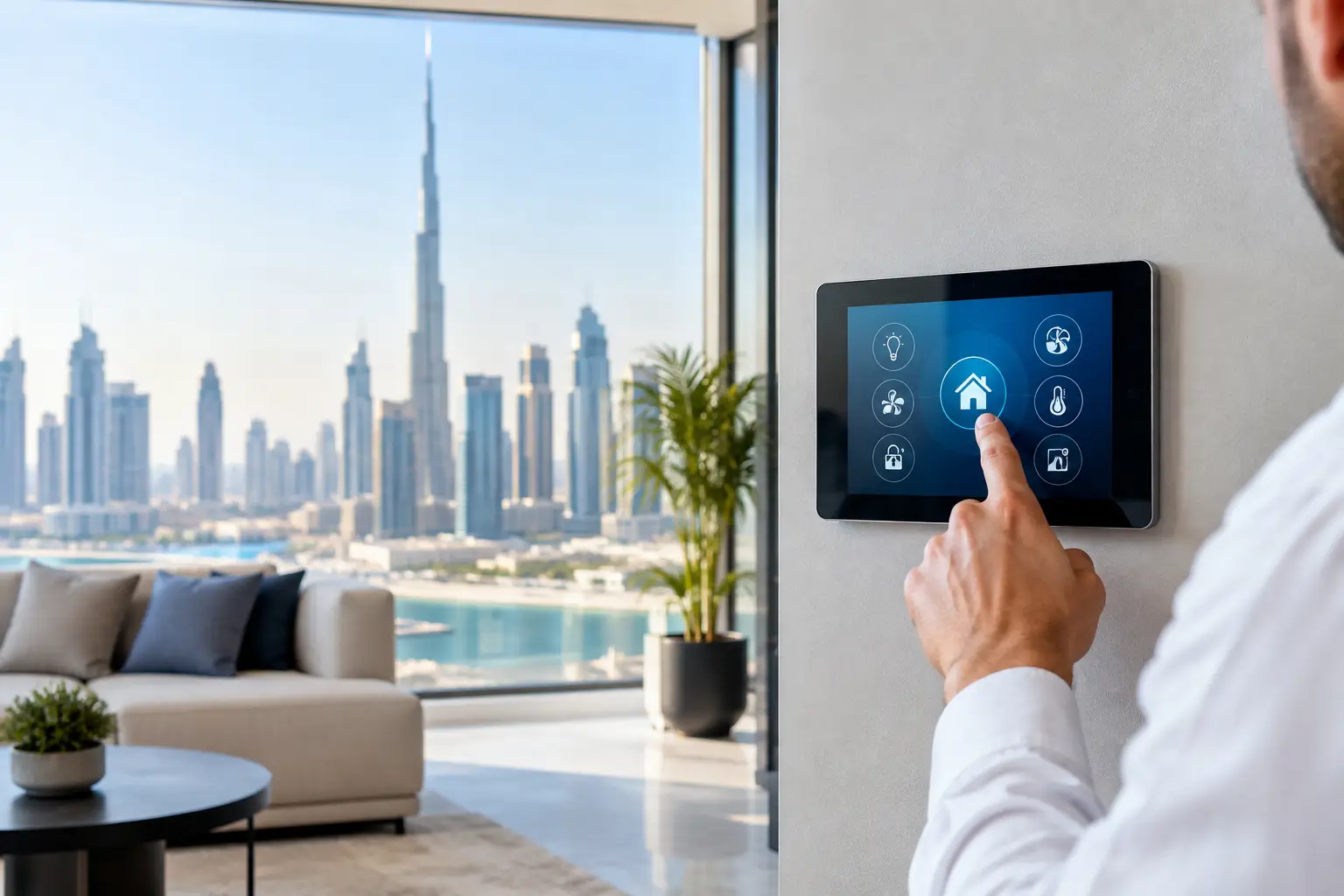
A villa should not require separate remotes for the lights, air conditioning, curtains, gates, cameras, and entertainment system. Nor should a hotel manager need to visit each floor to understand whether rooms are occupied, temperatures are appropriate, or access points are secure. Building automation brings these daily functions into one intelligent system, giving property owners and operators clear control without adding complexity.
For luxury homes, commercial spaces, and hospitality properties across the UAE, the value is not simply being able to control a light from a phone. It is creating a property that responds appropriately to the people using it, protects what matters, manages energy more carefully, and remains straightforward to operate for years after installation.
What Building Automation Actually Controls
Building automation is the centralized control of connected property systems. Depending on the project, it can bring lighting, climate control, motorized curtains, CCTV, intercoms, access control, smart locks, sensors, audio, and entertainment under a single app, wall keypad, touchscreen, or voice-enabled interface.
The system is designed around everyday behavior. A resident can select a “Welcome Home” scene that opens the gate, switches on selected lighting, adjusts the air conditioning, and closes curtains for privacy. A restaurant can schedule lighting and climate settings for opening and closing hours. A hotel can give staff visibility over room status while allowing guests simple, intuitive control from bedside panels.
Centralization matters because isolated smart devices rarely deliver the same experience. A smart thermostat, video doorbell, and wireless speaker may each work well independently, but they often require separate applications, separate logins, and separate support channels. A professionally designed system coordinates these functions so the property operates as one connected environment.
Where Building Automation Delivers Real Value
The right solution depends on the type of property and how it is used. A penthouse owner may prioritize privacy, entertainment, and remote access, while a developer may focus on scalable infrastructure, energy performance, and a consistent handover experience across multiple units.
Homes, Villas, and Penthouses
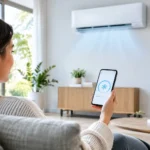
In residential settings, convenience is usually the first benefit people notice. Lighting scenes can match different times of day, curtains can respond to sunlight, and climate can be adjusted before anyone arrives home. The deeper value is consistency. Instead of relying on several household members to remember every switch, lock, and thermostat setting, the home can follow simple routines.
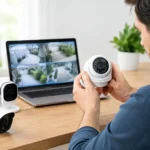
Security is another major consideration. Cameras, door stations, gate controls, smart locks, and occupancy sensors can be viewed and managed from a central interface. When traveling, owners can check access events, receive alerts, and confirm that the property is in the intended state. This is particularly useful for second homes, rental properties, and villas that may have household staff or frequent visitors.
Offices, Retail, and Restaurants
Commercial automation helps managers reduce unnecessary energy use while creating a more controlled customer and employee experience. Lighting and air conditioning can operate according to business hours, occupancy, and specific zones rather than running at full capacity across the entire property.
A meeting room, for example, can activate its presentation display, lighting, blinds, and preferred temperature with one command. In a retail store, lighting can support merchandise displays during open hours and move to a reduced security setting after closing. Restaurants can set the right mood for lunch, dinner, and private events without asking staff to adjust multiple controls every day.
Hotels and Hospitality Spaces
Hospitality projects require a higher level of coordination. Guest rooms need control that feels simple, while operations teams need reliable oversight behind the scenes. Automated room scenes, occupancy sensing, climate management, and integrated access can improve comfort for guests and help teams manage resources more efficiently.
The best approach does not overload guests with technology. A guest should be able to adjust lights, curtains, and temperature easily from a familiar control point. Behind that simple experience, the system can help reduce energy use in unoccupied rooms and notify staff when attention is required.
Designing Building Automation Around the Property
A successful project starts with the property, not a catalog of devices. The number of rooms, construction stage, available wiring, daily routines, security requirements, and future plans all influence the recommended design.
New construction and major renovations are ideal opportunities for wired automation. Wired systems can offer extensive control, long-term reliability, and a clean finish because infrastructure is planned before walls and ceilings are completed. They are especially appropriate for large villas, hotels, offices, and properties with many integrated systems.
Wireless automation can be an excellent choice for completed apartments, occupied homes, or projects where opening walls is impractical. It allows meaningful upgrades with less disruption, although device placement, signal strength, battery maintenance, and the size of the system need careful planning. Wireless is not automatically less capable, and wired is not automatically necessary. The right architecture depends on the building and the performance expected from it.
Scalability should also be discussed early. A homeowner may begin with lighting, curtains, and climate control, then add audio, access control, or cameras later. A developer may need a standard platform that can be adapted across unit types. Choosing compatible technologies and leaving room for future expansion prevents costly redesigns later.
The Details That Separate a Good System From a Frustrating One
Automation is only as good as its programming and handover. A property can contain premium equipment and still feel difficult if scenes are confusing, keypads are poorly placed, or the app has not been organized around the owner’s routines.
Controls should be positioned where people naturally need them: near entrances, beside beds, in living areas, and at practical staff access points. Naming matters too. “Outdoor Lights” is clearer than an unfamiliar technical label. Scenes should solve real situations such as Arrival, Away, Entertain, Good Night, Cleaning, or Meeting Mode rather than exist as features that no one uses.
Security and reliability deserve equal attention. Access permissions should be assigned carefully, particularly where household staff, contractors, tenants, hotel teams, or multiple business managers use the property. Network planning, secure remote access, quality hardware, and ongoing support all contribute to dependable performance.
There is also a practical trade-off between full integration and unnecessary complexity. Not every device needs to be automated. A well-designed system focuses on the controls used most often and the functions that make the property safer, more comfortable, or more efficient. This keeps the experience intuitive and helps protect the project budget.
A Professional Process Makes the Difference
Building automation involves electrical systems, low-voltage infrastructure, networking, software programming, interior finishes, and user experience. That is why a single accountable integration partner is valuable, especially on high-value residential and commercial projects.
The process should begin with an on-site consultation to understand the space, user requirements, construction timeline, and budget. From there, the integrator can prepare a clear quotation and system design that identifies what will be controlled, how users will interact with it, and what infrastructure is required.
Installation must be coordinated cleanly with the wider project team. After equipment is fitted, every function should be tested, programmed, and refined before handover. The final step is often overlooked but essential: user guidance. Owners, family members, staff, or facilities teams should know how to use everyday controls, manage access, and request support when needed.
Esmartech follows this consultation, quotation, installation, and handover approach to create tailored systems for homes, villas, hospitality venues, offices, and retail spaces. The objective is straightforward: advanced control that feels natural from the first day of use.
Questions to Ask Before You Invest
Before selecting a building automation solution, ask whether the proposed system can grow with the property, whether it works with the systems you already own, and who will provide support after installation. It is also worth asking how the system will function if internet service is interrupted, how access is managed for staff and guests, and whether the controls have been demonstrated in a real setting.
Cost varies widely because every project is different. A focused apartment upgrade may center on lighting, curtains, and climate, while a large villa or hotel can involve extensive wiring, security, audio, access, and customized programming. A detailed site assessment is the most reliable way to match the system scope to the desired outcome.
The most effective building automation is rarely the one with the longest feature list. It is the system that makes a property easier to live in, easier to manage, and more prepared for whatever comes next.
Leave a comment