
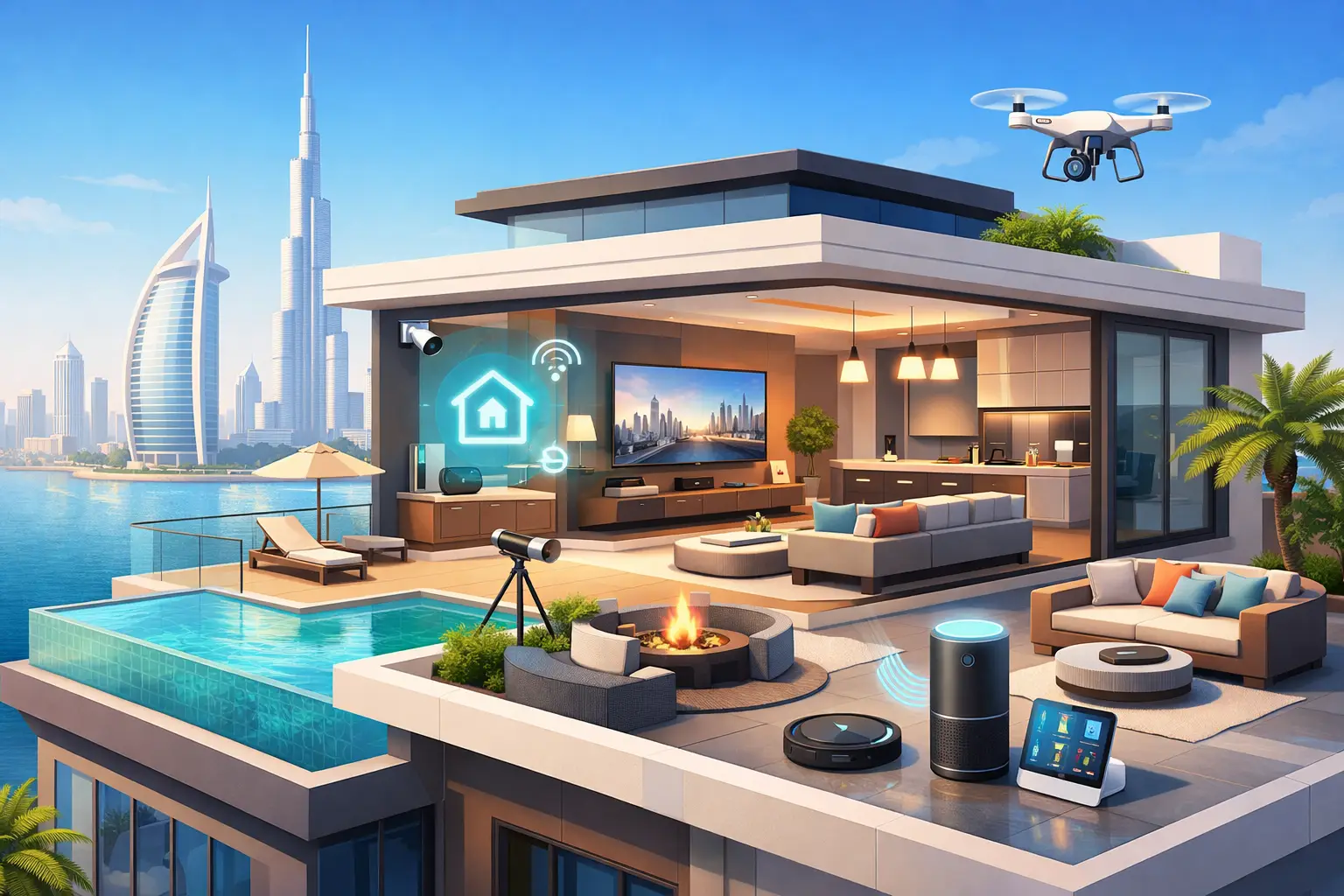
A penthouse should feel exceptional the moment its doors open – not because every surface is filled with technology, but because the home responds naturally to the people living in it. The best top penthouse upgrades combine refined design with intelligent control, giving residents command of light, comfort, privacy, entertainment, and security without adding visual clutter or daily complexity.
For penthouse owners in Dubai, the right choices also need to account for intense sunlight, high cooling demand, large glazing, multiple terraces, staff access, and periods when the property is unoccupied. A well-planned automation system addresses these realities through one intelligent system tailored to the space and the owner’s lifestyle.
Start With a Single Control Strategy
A high-specification penthouse can quickly accumulate disconnected systems: separate remotes for air conditioning, curtains, televisions, audio, cameras, and access control. That arrangement may work at handover, but it becomes frustrating over time. The most valuable upgrade is often the one that brings these functions together.
A centralized app, elegant wall keypads, and voice control can manage the core systems from one consistent interface. For example, an “Arrive Home” setting can turn on selected lights, adjust the temperature, raise the curtains, and disarm designated interior security zones. A “Goodnight” setting can switch off nonessential lighting, close shades, lower the temperature, and confirm that doors are secured.
This is not about replacing every physical switch with a phone. In a luxury residence, reliable wall controls remain essential for guests, children, and everyday use. The goal is to provide convenient control in the way each household prefers, while keeping the technology discreet and easy to operate.
Lighting That Enhances Architecture
Lighting is among the highest-impact penthouse upgrades because it changes how finishes, art, views, and room proportions are experienced after sunset. A considered lighting-control system allows one room to serve several purposes without relying on a crowded bank of switches.
Layer the Lighting, Then Set the Scenes
Rather than treating a room as simply on or off, divide lighting into useful layers. Ambient lighting establishes the overall mood, task lighting supports activities such as cooking or reading, and accent lighting highlights artwork, stone, joinery, or architectural details. Each layer should be independently controllable and dimmable.
Scene control makes those layers practical. In an open-plan living and dining area, a daytime setting might emphasize natural light and keep decorative fixtures low. An evening entertaining setting can bring up feature lighting and dining illumination while reducing glare near the windows. A cinema setting can dim the room, close the curtains, and activate the entertainment system with a single command.
For Dubai properties with panoramic glass, lighting design should also consider reflection. Bright fittings positioned directly behind a viewing area can reduce the effect of a city or sea view at night. Professional planning solves this before installation, when fixture placement and control zones can still be adjusted.
Automated Curtains and Shades for Privacy and Heat Control
Floor-to-ceiling windows are a defining penthouse feature, but they create a practical challenge. Solar heat gain can place extra demand on air conditioning, while evening privacy may require residents to close multiple curtains throughout the home. Motorized curtains, roller shades, and blackout treatments make this routine effortless.
Automated shading can follow a schedule, respond to sunlight, or be activated as part of a scene. Sheer curtains may close during the strongest afternoon sun to soften glare while maintaining the view. Blackout curtains can close automatically in bedrooms at night. When the penthouse is vacant, shades can support energy-conscious climate management and provide a more private appearance from outside.
Fabric, track design, and motor selection matter as much as automation. Heavy drapery, curved glazing, double-height windows, and concealed ceiling pockets all require proper site measurement and coordination with the interior designer. Wireless motors can suit selected retrofit projects, while wired solutions are usually preferable for a larger new-build or full renovation where long-term performance is the priority.
Climate Control Built for Real Living Patterns
A penthouse climate system should do more than provide remote thermostat access. It should make each zone comfortable without wasting energy on rooms that are empty, overly sunny, or occupied at different times of day.
Smart climate control can manage living areas, bedrooms, dressing rooms, staff rooms, and entertainment spaces independently. Residents can set preferred temperatures by room, schedule cooling around their routine, and make adjustments before arriving home. When integrated with window and door sensors, the system can also alert the owner or adjust operation if a terrace door has been left open while cooling is active.
The trade-off is that advanced climate control must be designed around the existing AC infrastructure. Different buildings use different fan coil units, thermostats, and control protocols. A site consultation is the right time to confirm compatibility, identify any required interface modules, and determine whether a complete room-by-room solution or targeted upgrades will deliver the better return.
Security That Does Not Feel Intrusive
Penthouse security requires a balance between strong protection and a welcoming home environment. Smart locks, video intercoms, CCTV, door contacts, motion sensors, and access control can work together without turning the residence into a visibly commercial space.
A video intercom lets residents verify visitors from an indoor touchscreen or smartphone before granting access. Smart locks can create temporary access for household staff, service providers, or guests, removing the need to distribute and recover physical keys. Access activity can be logged, which is particularly useful for owners who travel frequently or manage a second residence.
CCTV should be placed carefully to protect entry points, private lift lobbies, corridors, and terraces while respecting the privacy of the household and neighboring properties. The best systems provide clear footage, sensible notifications, and secure remote viewing. Constant alerts from poorly configured cameras create noise rather than confidence.
Entertainment Designed Around the Room
A penthouse deserves audio and video that perform well without dominating the interior. In-ceiling speakers, architectural speakers, concealed subwoofers, and professionally calibrated televisions or projectors can preserve clean lines while delivering a more immersive experience.
Multi-room audio is particularly effective in larger residences. Music can follow residents from the kitchen to the living room and terrace, or different areas can play independently. During entertaining, selected zones can play the same playlist at balanced volume levels. For a dedicated media room, lighting, shades, AV equipment, and climate can be grouped into one cinema scene.
Not every room needs the same specification. A formal lounge may need subtle background audio, while a family room may justify premium surround sound. Matching the system to how the space will actually be used is what protects both the budget and the design intent.
Don’t Overlook Terrace Automation
Private terraces are one of a penthouse’s greatest assets, especially during Dubai’s cooler months. Yet exterior spaces are often left out of the automation plan until late in the project. That can mean separate controls, exposed equipment, and missed opportunities for comfort and safety.
Outdoor lighting, landscape lighting, weather-rated speakers, motorized awnings, pool equipment, and irrigation can all be coordinated within the broader system. A terrace entertaining scene might activate pathway and dining lights, set audio to an appropriate level, and turn on selected water features. Weather sensors can help protect motorized shading or awnings when wind conditions change.
Outdoor equipment must be selected for heat, dust, moisture, and sun exposure. What looks suitable in an indoor showroom may not last in an exposed rooftop environment. Product selection and installation methods should reflect the actual site conditions.
Plan the Upgrade Before Finishes Are Finalized
The right time to plan penthouse automation is before ceilings close, joinery is finalized, and decorative lighting is installed. Early planning makes it easier to conceal wiring, position sensors discreetly, coordinate curtain pockets, and provide power and network points where they are needed.
That said, existing penthouses can still benefit from smart upgrades. Wireless control options can reduce disruption for lighting, shades, sensors, and selected security devices. It depends on the building structure, available wiring routes, reliability expectations, and the scope of the project. A hybrid wired and wireless design is often the practical answer.
Esmartech manages this process from site consultation and clear system design through installation, testing, user guidance, and support. The essential question is not which device looks most impressive on its own. It is whether every selected element works together reliably and remains simple for everyone in the home to use.
A penthouse upgrade is most successful when technology fades into the background. When the view is protected from glare, the temperature feels right, the doors are secure, and the room is ready for the evening at the touch of a button, the home feels precisely as it should: considered, comfortable, and entirely yours.


Leave a comment