
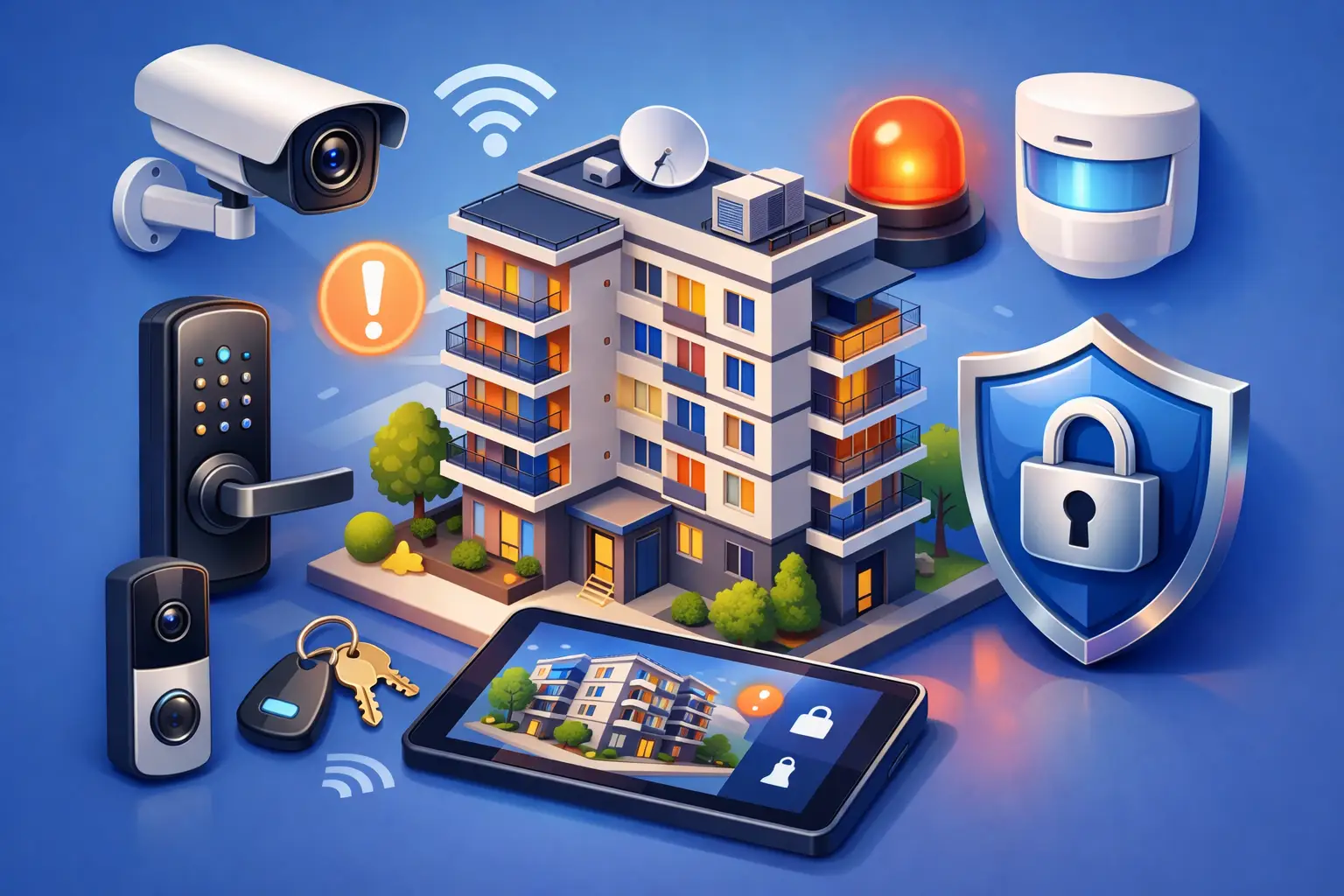
A package left outside the door, a service visit while you are away, or a child arriving home before you do can expose the gaps in a standard apartment security setup. The right top apartment security upgrades do more than add devices. They create clear awareness of who enters, what happens at your door, and whether your home is secure, all from one intelligent system.
For apartment owners, tenants, investors, and penthouse residents, the best approach is rarely to buy every available device. Building rules, door hardware, network quality, daily routines, and the level of concierge or access control already in place all affect the right design. A tailored system protects the apartment without creating clutter, complicated apps, or avoidable installation work.
Start With the Apartment’s Real Security Gaps
Apartment security has a different profile from villa security. The main entry door is often the primary point of concern, while shared corridors, elevators, parking areas, and building entrances are managed by the property. This means your private system should strengthen your own perimeter and provide fast, useful information rather than duplicate the building’s security infrastructure.
Begin with a site assessment. Review the entrance door and lock type, the availability of a peephole or existing intercom, balcony and sliding-door access, storage areas, and any windows that open onto accessible terraces. Also consider how the building manages visitor access and delivery personnel.
A ground-floor apartment with a patio needs a different solution from a high-rise unit with one controlled entry. Likewise, a landlord may require reversible wireless upgrades, while an owner renovating a premium apartment may prefer a concealed wired installation integrated with lighting, curtains, climate control, and audio.
Smart Locks for Controlled, Trackable Entry
A smart lock is often the most practical first upgrade because it replaces the uncertainty of physical keys with managed access. You can lock or unlock the door from a phone, check its status remotely, and create individual access for family, housekeepers, dog walkers, or maintenance teams.
The benefit is not simply convenience. It is accountability. Instead of issuing a spare key that can be copied or misplaced, you can assign a time-limited code or digital credential and remove it as soon as it is no longer needed. For investors managing a furnished apartment, this can simplify staff access between guest stays or maintenance visits.
Lock compatibility matters. Some apartment doors use multipoint locking hardware, mortise cylinders, or fire-rated assemblies that should not be altered without professional review. A smart lock must preserve proper mechanical operation, comply with building requirements, and retain a reliable manual access option for emergencies. Battery alerts, secure user permissions, and professional configuration are equally important.
Video Intercoms That Let You Verify Visitors
A video intercom gives residents a direct view and conversation channel at the door, whether they are inside the apartment or away from it. When integrated correctly, it can send a call to an indoor touch panel and an authorized mobile device, allowing you to speak with a visitor before deciding whether to grant access.
This is particularly valuable in buildings where the lobby intercom only confirms access to the tower, not the apartment itself. It provides a second point of verification for deliveries, contractors, and unexpected visitors.
Camera position and privacy need careful attention. A device should focus on your doorway and immediate approach, not capture neighboring doors or shared corridors beyond what is appropriate. In many luxury developments, common-area equipment and exterior-facing devices are governed by management policies. A professional installer can recommend a compliant location and a finish that suits the interior rather than looking like an afterthought.
The Most Effective Apartment Security Upgrades for Visibility
A door camera is useful, but it should not be treated as a complete surveillance strategy. The most effective apartment security upgrades use cameras where they solve a specific visibility problem: the entry, a private terrace, a balcony door, or a dedicated storage room.
For interior monitoring, residents should decide in advance when a camera is meant to operate. Some prefer coverage only while the apartment is in away mode. Others use cameras in entry areas when domestic staff or contractors are present. Bedrooms, bathrooms, and other private spaces should remain off limits.
High-resolution video, low-light performance, motion detection, and secure recording all influence results. So does network design. A camera that frequently disconnects or records only brief clips can create a false sense of security. In larger apartments and penthouses, a properly planned Wi-Fi network or wired connection can be as important as the camera itself.
Sensors That Detect Problems Before They Escalate
Door and window sensors provide a quiet but valuable layer of protection. They can notify you if an entry point opens unexpectedly and can also trigger useful actions within the home. For example, opening a balcony door can pause the air conditioning, while an open main door after bedtime can generate an alert.
Motion sensors add another layer, especially in entrance halls, living rooms, and areas near balcony access. Their placement should account for pets, air-conditioning airflow, and normal household movement to reduce unnecessary notifications. The objective is meaningful alerts, not a phone that alarms every time someone walks to the kitchen.
Water leak sensors also deserve a place in a serious apartment security plan. Install them near washing machines, water heaters, under-sink cabinets, and AC drain points. A small leak can damage finishes, affect a neighboring unit, and become expensive very quickly. An automated shutoff valve may be appropriate for owner-occupied apartments or investment properties, but compatibility with the plumbing layout must be confirmed first.
Connect Security to Lighting, Shades, and Daily Routines
Standalone products can work well, but separate apps soon become difficult to manage. A centralized smart home platform brings access control, cameras, sensors, lighting, curtains, and climate into one controlled experience.
When you leave, an Away scene can lock the door, turn off selected lights and entertainment systems, close motorized shades, adjust the thermostat, and arm relevant sensors. At night, a Good Night scene can confirm that the main door is locked, switch off common-area lighting, and leave a low-level path light active. If a door sensor is triggered, the system can turn on selected lights and send an alert.
Automation should support the way you live, not surprise you. A family with teenagers may want distinct access permissions and arrival notifications. A frequent traveler may prioritize remote status checks and leak detection. A penthouse owner may need integration with multiple entrances, private lifts, staff areas, and building intercoms. The right system is tailored to the space and needs of the resident.
Choose Wired or Wireless Based on the Property
Wireless security devices are often ideal for completed apartments because installation is faster and requires less disruption to walls and finishes. They can be a strong option for tenants, provided the landlord and building management approve any required changes.
Wired systems generally suit renovations, new developments, and high-value properties where long-term reliability, hidden cabling, and extensive integration are priorities. They may cost more at the installation stage, but they can provide a cleaner result and greater flexibility as the property evolves.
Neither approach is automatically better. The decision depends on the building structure, access to ceilings or conduits, the number of devices, expected ownership period, and the desired level of control. A hybrid design is often the practical answer, combining wired infrastructure where available with carefully selected wireless devices where it is not.
Build Security Around Professional Design and Support
The most successful security projects begin with a clear plan rather than a collection of disconnected products. The process should cover a site consultation, a transparent quotation and system design, clean installation and testing, then a proper handover that shows every household member how to use the system.
At Esmartech, this approach helps apartment residents bring security, access, lighting, climate, and monitoring into one platform without sacrificing the design of the home. It also creates a system that can expand later, whether that means adding a camera, connecting motorized curtains, or integrating a new smart lock.
Before approving a system, ask who will configure permissions, test alerts, document device locations, and provide support after installation. Security only feels effortless when it has been set up correctly and the people using it trust what will happen when an alert arrives.
A well-designed apartment security system should fade into the background on ordinary days. When a visitor rings, a door opens, or water begins to leak, it should give you the right information and the right control at exactly the moment you need it.


Leave a comment