
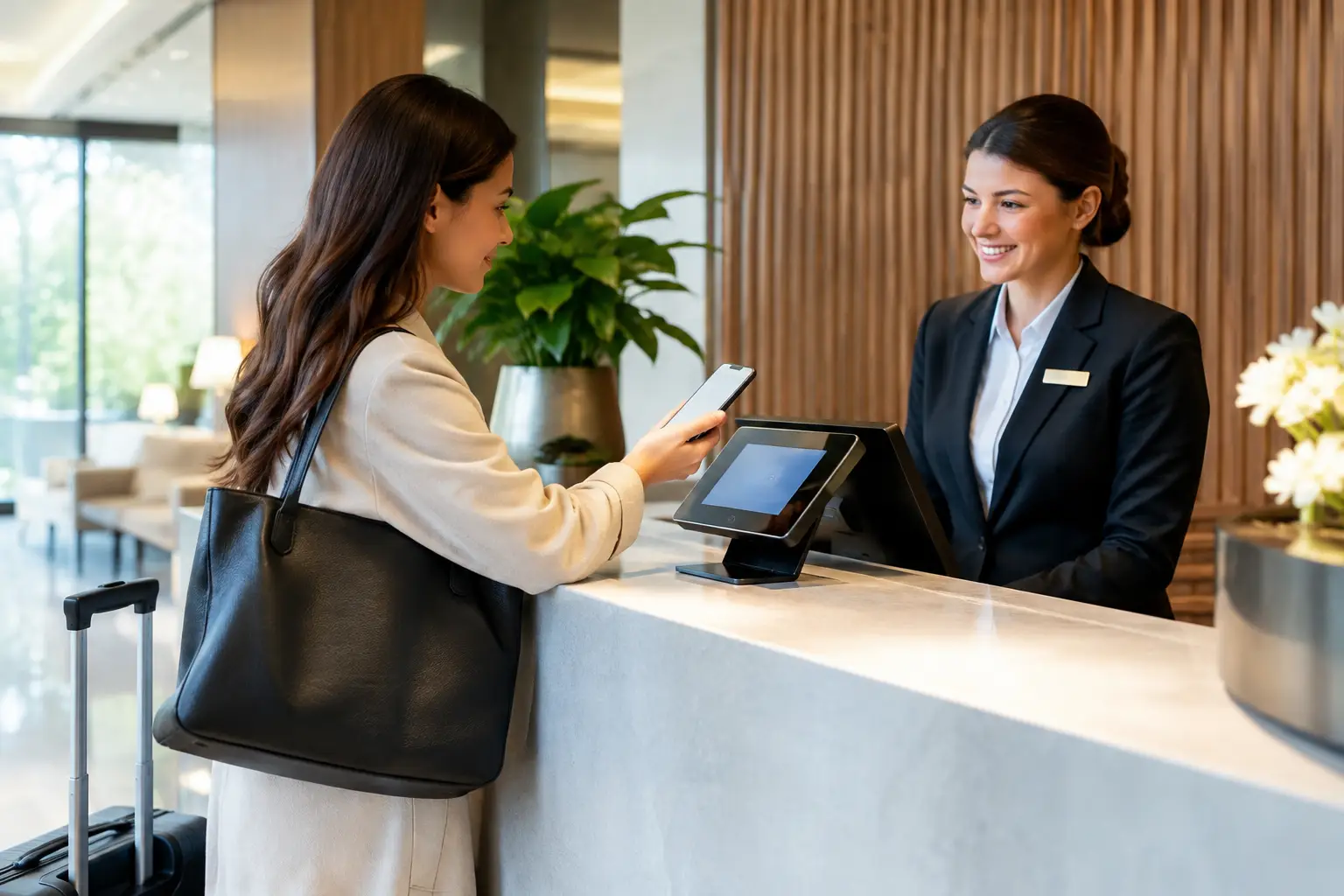
A guest who arrives after a long flight does not want to wait behind a desk while details are re-entered, cards are encoded, and room status is confirmed. The best hotel check in technology reduces that friction without making hospitality feel impersonal. It gives guests a faster, more controlled arrival while giving hotel teams better visibility over access, room readiness, and service requests.
For a boutique hotel, resort, serviced apartment, or large urban property, the right approach is rarely one device at the reception desk. It is a connected arrival journey: reservation data, identity verification, payment authorization, room assignment, mobile or smart-lock access, and staff communication working as one intelligent system. The objective is not to remove people from the experience. It is to let staff spend less time on repetitive administration and more time delivering genuine service.
What Makes the Best Hotel Check In Technology?
The best hotel check in technology is dependable under real operating conditions. It must support busy arrival periods, changing reservations, early check-ins, late departures, lost phones, guests who prefer physical key cards, and rooms that are not yet ready. A polished tablet interface is useful, but it cannot compensate for unreliable door access, disconnected systems, or a confusing recovery process when something goes wrong.
A strong solution should connect with the hotel property management system, or PMS, so guest records and room assignments are accurate. It should also work with access control, smart locks, payment tools, and housekeeping status where appropriate. When these systems operate independently, staff often need to repeat tasks, correct errors manually, and manage exceptions across multiple screens.
Security is equally central. Guest access should be encrypted, time-limited, and easy to revoke or update. Hotel management needs a clear audit trail showing when access credentials were issued, used, changed, or canceled. For properties with villas, residences, private lounges, parking, or staff-only areas, the system should apply different access permissions without creating a complicated experience for guests.
The Main Hotel Check-In Technology Options
There is no single best setup for every hotel. The right choice depends on the property type, guest profile, staffing model, existing infrastructure, and level of service the hotel wants to provide.
Mobile check-in and digital keys
Mobile check-in lets guests complete registration before arrival, often through a branded app or secure web journey. Once the room is ready, the guest receives a digital key that can open the room door through Bluetooth, NFC, or another approved credential method.
This model is especially effective for business hotels, serviced apartments, extended-stay properties, and guests arriving outside standard peak hours. It can reduce desk queues and create a more flexible arrival experience. However, it should not assume every guest wants to use a phone. A reliable physical key option and a staffed support path remain essential, particularly for international travelers, families, and guests who are less comfortable with mobile access.
Self-service check-in kiosks
Kiosks give guests a physical self-service option in the lobby. They can verify a booking, scan identification where permitted, complete payment steps, issue a key card, and provide basic directions or property information.
For high-volume hotels, kiosks can absorb peak demand without requiring a larger front-desk footprint. They work best when placed in a well-designed arrival area with a team member nearby for assistance. A kiosk should feel like a convenient choice, not a barrier placed between the guest and a human welcome.
Tablet-assisted reception
Tablet check-in keeps hospitality personal while modernizing the process. Instead of guests standing at a fixed counter, staff can greet them in the lobby, lounge, or even curbside, review the reservation, verify details, and issue access credentials from a mobile device.
This option suits luxury hotels and resorts where personal recognition matters. It also supports a more flexible lobby design, with fewer traditional counters and more welcoming social spaces. The trade-off is that staff training and device management become more important. Tablets need secure user permissions, charging procedures, durable cases, and clear processes for handling guest information.
Smart locks and integrated access control
Smart locks are the physical foundation of a modern arrival process. They can support RFID key cards, mobile keys, PIN access in selected environments, and centralized credential management. The strongest installations connect room doors with elevators, parking gates, amenity areas, meeting rooms, and staff access points.
An integrated platform helps hotel teams issue the right credential once rather than managing separate cards or codes for every zone. It also improves operational control when a guest extends a stay, changes rooms, or loses a key. Hardware selection matters here: door type, fire-rating requirements, battery management, wireless coverage, and local safety regulations must all be assessed before installation.
Why Integration Matters More Than Features
A hotel can purchase an attractive kiosk, smart locks, and a guest app, yet still create frustration if the systems do not share information. If a room is marked clean in housekeeping but not updated in the PMS, a guest may be unable to complete check-in. If a mobile credential is sent before payment or identity requirements are cleared, the property introduces unnecessary risk.
The operational value comes from defined workflows. A reservation should trigger the appropriate pre-arrival communication. A verified arrival should issue only the access rights needed for the confirmed stay. A room change should automatically end the old credential and activate the new one. A checkout should remove access promptly while alerting housekeeping and other relevant teams.
This is also where hotels should avoid overbuilding. A full mobile-key program may be ideal for a new upscale property with a compatible PMS and a digitally confident guest base. A smaller independent hotel may gain more immediate value from modern smart locks, tablet-assisted reception, and simple automation between room status and front-desk operations. Technology should match the operating model, not force the hotel into one.
Designing a Check-In Journey Guests Will Trust
Guests adopt technology when it is clear, optional, and reliable. Before arrival, explain what they can complete remotely, what identification may be required, and how they will receive room access. Keep instructions short and provide a direct way to reach the hotel if they need help.
At the property, signage should make the next step obvious. Guests should be able to identify whether to proceed to reception, use a kiosk, or open their mobile key. For mobile access, staff need a quick fallback plan when a phone battery is low, Bluetooth is disabled, or the guest has changed devices.
Privacy should be visible in the experience as well as in the system design. Avoid displaying sensitive guest details on open screens. Use protected staff logins, role-based permissions, and automatic session timeouts on shared devices. A guest is more likely to trust digital check-in when the property handles personal information with care.
A Practical Implementation Plan
The most successful hotel technology projects start with an operational review rather than a product catalog. Map the arrival process from booking confirmation to room entry, including exceptions such as group arrivals, VIP stays, early arrivals, payment issues, and room changes. This reveals where delays occur and which integrations will have the greatest impact.
Next, define the access strategy. Decide which doors, elevators, parking areas, and amenities need to be included; whether guests will use mobile keys, key cards, or both; and how staff and contractors will be managed. Confirm compatibility between the PMS, locks, access-control platform, and guest-facing tools before committing to hardware.
Then plan the installation around hotel operations. Existing properties may need a phased rollout by floor or wing to avoid unnecessary disruption. New developments benefit from designing power, network coverage, door hardware, and control locations early, before finishes are complete. Wired and wireless architectures each have a place, depending on building conditions, scale, and future expansion plans.
Finally, test real guest scenarios before launch. Test a late arrival, a family with multiple room keys, a room move, an extended stay, a lost phone, a network interruption, and a staff override. Training should cover not only normal use but also recovery steps. A system earns confidence when the team knows exactly what to do on a busy evening.
For hotel owners and developers, a professional integrator can coordinate these requirements from site consultation and system design through installation, testing, staff guidance, and handover. Esmartech approaches hospitality automation with this end-to-end view, bringing access, smart locks, climate control, lighting, sensors, and central management into a solution tailored to the property.
The right check-in technology should make the first minutes of a stay feel calm and considered. Choose the system that supports your service standard, gives staff control when exceptions arise, and leaves guests free to begin enjoying the property rather than figuring out how to enter it.

Leave a comment