
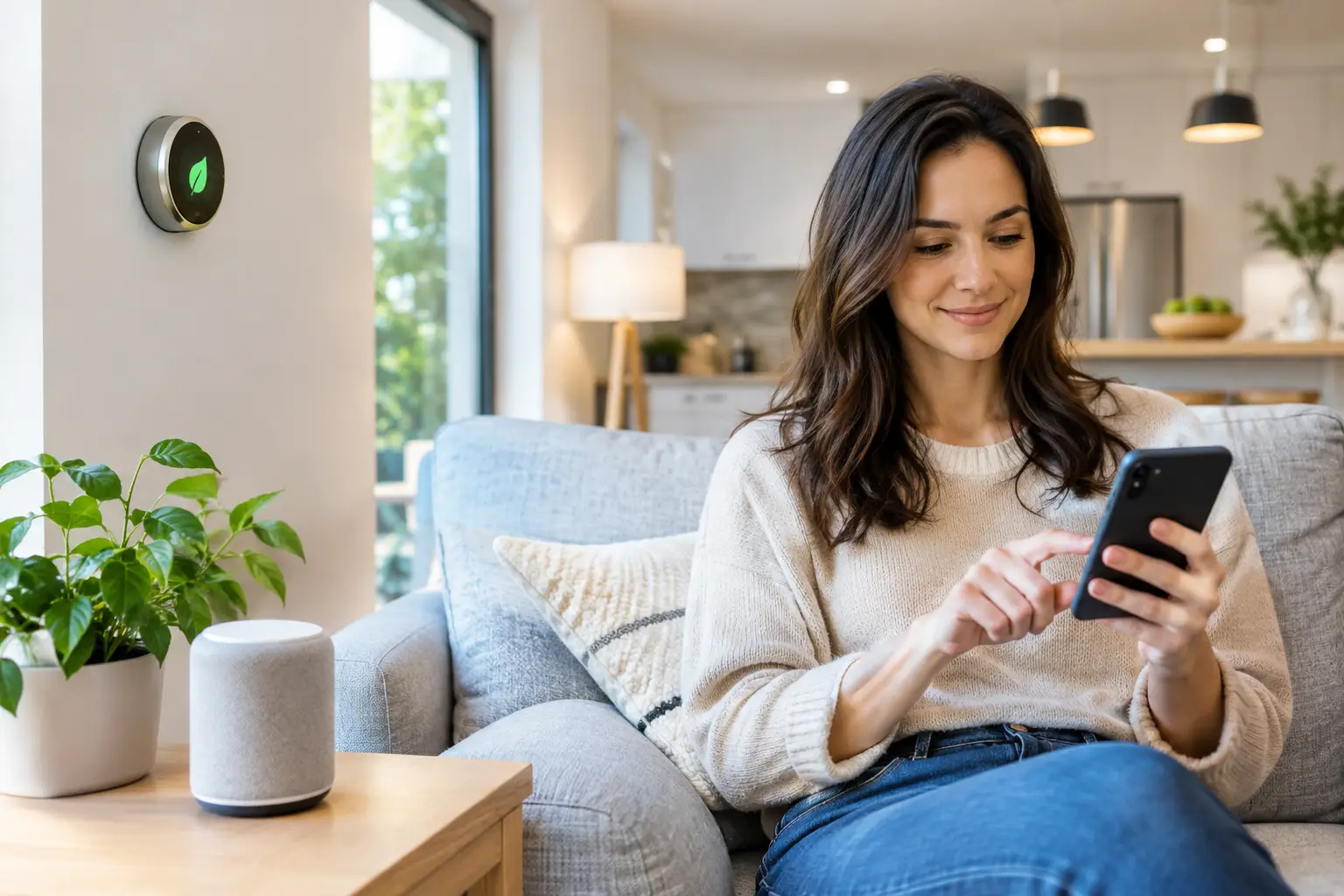
A villa can waste significant energy while nobody is doing anything wrong. Air conditioning runs against afternoon heat, lights remain on in rarely used rooms, and curtains stay open while the sun warms the glass. The practical way to reduce energy with automation is to let one intelligent system respond to how the property is actually used, not simply leave every device operating on a fixed setting.
For homeowners, property investors, and hospitality operators, the goal is not a home that feels technical. It is a property that stays comfortable, looks considered, and uses energy with more discipline in the background. The best results come from connecting climate, lighting, shades, sensors, and scheduling into a design tailored to the space and its daily patterns.
How to Reduce Energy With Automation
Automation reduces consumption by removing unnecessary runtime. Rather than asking residents, guests, or staff to remember every switch, thermostat setting, and curtain position, the system applies rules consistently. A room can cool before it is occupied, return to an energy-saving temperature when empty, and receive only the lighting it needs.
This is especially valuable in large villas, penthouses, offices, restaurants, and hotels, where small inefficiencies multiply across many rooms and long operating hours. Centralized control also gives owners and managers a clearer view of what is happening across the property, whether they are on site or away.
The strongest approach is not to automate everything at once. Start with the systems that consume the most energy or are most often left running: HVAC, lighting, and solar control. Then build a control strategy that suits the building, occupancy, and comfort expectations.
Start With Climate Control
In UAE properties, air conditioning is usually the largest energy opportunity. Smart climate control does more than let users change the temperature from a phone. Properly designed automation can manage temperature by zone, occupancy, time of day, and selected scenes.
A bedroom does not need the same cooling profile as a formal living room, home office, corridor, or unused guest suite. With zone-based control, each area follows its own schedule and setpoint. Bedrooms can be comfortable at night, common areas can prepare for expected use, and seldom-used rooms can remain at a more economical setting until needed.
Occupancy sensors add another layer of intelligence. If an office meeting room has been empty for a defined period, the system can adjust cooling automatically. In a hotel or short-term rental, an unoccupied room can return to a preset energy-saving mode while still being brought back to comfort before arrival.
There is a balance to maintain. Aggressive temperature setbacks may reduce runtime, but they can make a room slow to cool in extreme heat. A professional system design accounts for the size of the room, insulation, glazing, HVAC equipment, and how quickly each zone responds. The objective is efficient comfort, not a thermostat that constantly overcorrects.
Use sensors, not assumptions
A fixed schedule is useful, but it cannot recognize an early departure, a late meeting, or a room that was never used. Motion and occupancy sensors give the system a better signal. Door and window contacts can also prevent wasted cooling by notifying the user or adjusting the relevant zone when an opening is left open.
For premium residences, the experience should remain discreet. Sensors and controls can be selected and positioned to complement the interior rather than interrupt it. The technology should support the design of the property while improving its daily performance.
Make Lighting Respond to the Room
Lighting automation reduces energy most effectively when it combines occupancy detection, daylight awareness, and scene control. A passageway, dressing room, pantry, restroom, or back-of-house area often does not need lights operating at full brightness for long periods. Sensors can switch lights off after vacancy or dim them to an appropriate level.
Daylight harvesting is particularly useful in rooms with substantial glazing. When natural light is sufficient, connected lighting can reduce output rather than operate at maximum brightness. The result is a more comfortable visual environment and less unnecessary power use.
Scenes offer a practical advantage over controlling each circuit individually. A “Morning” scene might raise selected lights, open curtains, and set the living area to its preferred temperature. An “Away” scene can turn off nonessential lighting, close motorized shades, and place climate zones into an efficient standby mode. At night, a low-level pathway scene can improve safety without illuminating the entire home.
Not every light requires advanced control. Decorative fixtures used occasionally may only need reliable dimming and a central off command. High-traffic areas and spaces with variable daylight are usually better candidates for sensors and automated adjustments. A tailored plan avoids adding complexity where it brings little return.
Use Curtains and Shades as Thermal Controls
Motorized curtains and blinds are often chosen for convenience and visual impact, but they can also support climate efficiency. Solar gain through windows can raise indoor temperatures quickly, particularly in rooms with broad west- or south-facing glass. Automated shades can close during the hottest part of the day, reducing the burden placed on air conditioning.
The rules should reflect how the space is used. In a waterfront apartment with a view, closing every blind during daylight may not suit the owner’s lifestyle. The system can instead use partial shading, sun-position logic, room temperature, or a manual override. Residents should always be able to take control immediately when they want the view, additional daylight, or a different atmosphere.
At night, curtains can close as part of a bedtime or security scene. This provides privacy while helping moderate heat transfer through glazing. The energy effect depends on the fabric, window specification, orientation, and existing insulation, so shades should be treated as one part of a broader strategy rather than a replacement for efficient HVAC design.
Build an Away Mode That People Will Use
An effective away mode is one of the simplest ways to prevent waste. With one command from a wall keypad, app, or voice control, the property can shift from normal living operation to an efficient vacant setting. Lights switch off, selected plugs can be disabled, curtains move to the preferred position, and climate zones adjust to preset limits.
For villas and second homes, this can be more reliable than depending on a long checklist before departure. It is also valuable for commercial properties at closing time, when staff may otherwise leave equipment and nonessential lighting operating.
The away mode should be carefully commissioned. Refrigerators, security equipment, network hardware, pool systems, and other essential loads must remain protected. Some properties also need careful humidity management when vacant. This is why a generic “all off” command is rarely appropriate for a high-value property.
Centralize Control Without Creating Complexity
Energy-saving automation works best when occupants can understand it. A centralized app, elegant keypad, or voice-enabled control platform should make common actions simple: adjust a zone, activate a scene, check whether lights are on, or prepare the property before returning home.
Centralization is also useful for managers of offices, restaurants, and hospitality spaces. Authorized users can monitor key systems, apply schedules, and make adjustments without visiting every room. For multi-area properties, this improves operational consistency and can help identify patterns such as cooling that runs outside normal hours.
However, remote control alone does not create savings. If every system is available in an app but no operating logic has been designed, users still need to make every decision manually. The value comes from combining convenient control with sensible automation rules, reliable sensors, and clear handover guidance.
Plan the System Around the Property
The right architecture depends on whether the project is a new build, renovation, occupied home, or commercial fit-out. Wired automation is often ideal during construction because it supports extensive integration and long-term scalability. Wireless solutions can be highly effective for completed properties where minimizing disruption is a priority.
A professional process begins with a site consultation and a discussion about how the property operates. Which rooms are occupied daily? Where does afternoon heat create discomfort? What needs to continue running when the property is vacant? What level of control is expected by family members, guests, staff, or facility teams?
From there, the system should be designed, quoted clearly, installed cleanly, tested thoroughly, and demonstrated at handover. Esmartech approaches automation as a complete project, so the final system is not a collection of disconnected devices but one coordinated environment tailored to the property.
The most valuable energy-saving setup is rarely the one with the greatest number of devices. It is the one that quietly makes the right decisions in the rooms that matter, while leaving owners and occupants in control whenever their routine changes.
Leave a comment