
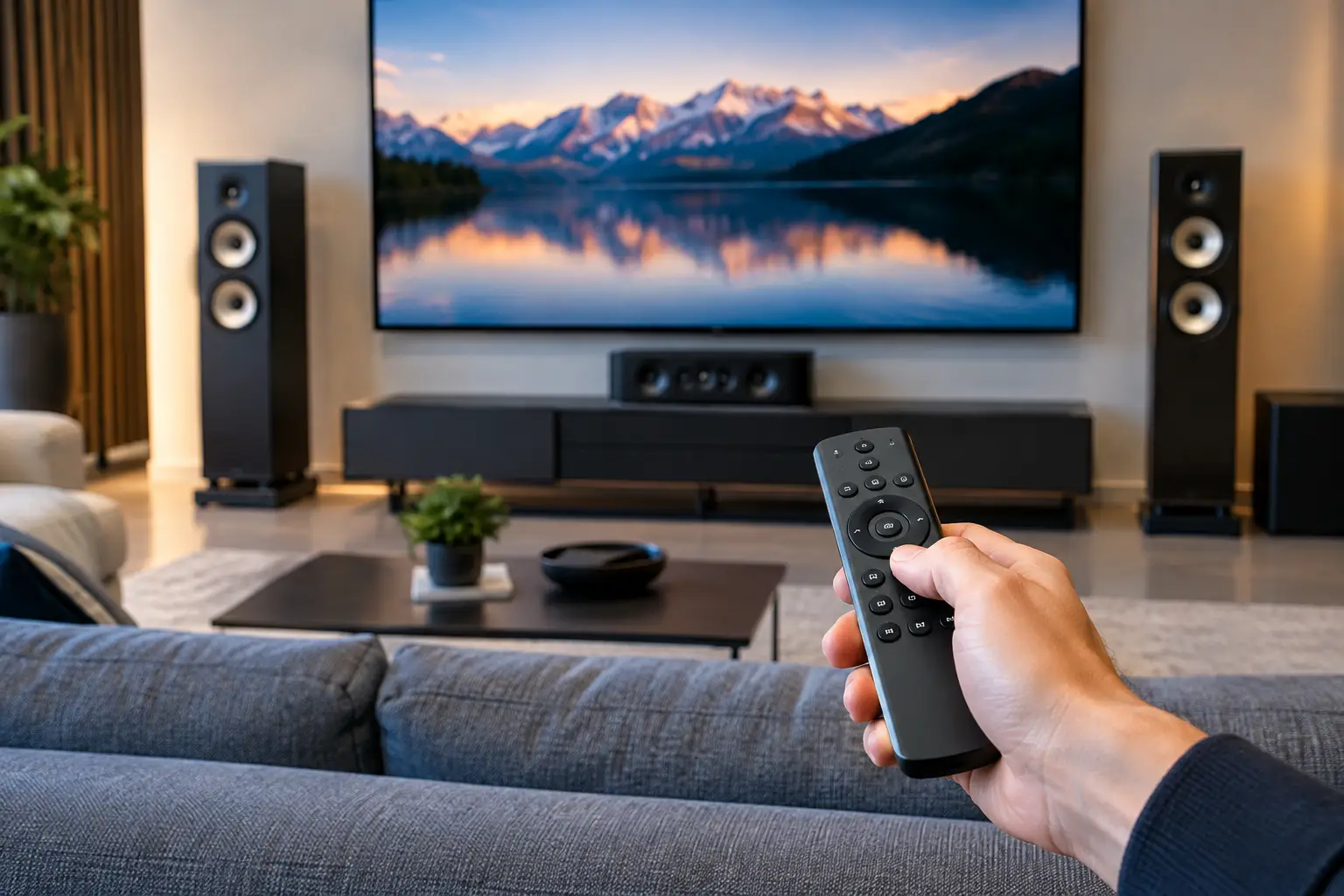
A dedicated theater should not begin with a pile of remotes on the armrest. The best home theater control systems bring the projector, TV, surround sound, streaming, lighting, shades, climate, and even security into one clear experience. Press “Movie,” and the room prepares itself: the lights lower, the shades close, the display powers on, and the correct source appears without a sequence of manual steps.
For a premium home, villa, penthouse, or hospitality lounge, the right platform is less about adding technology and more about removing friction. The best choice depends on the size of the project, the equipment already in place, the level of personalization required, and whether the theater needs to connect with the rest of the property.
What a theater control system should actually do
A proper control system is the operating layer for the room. It should let every household member or guest use the theater through a wall keypad, handheld remote, touchscreen, mobile app, or voice command without needing to understand the equipment behind the scenes.
At a minimum, the system should control power, source selection, volume, lighting scenes, and shades. In larger installations, it can also manage multi-room audio, temperature, motorized seating, video distribution, CCTV viewing, door intercom calls, and automated routines. A “Welcome Home” scene, for example, can prepare the living areas while a separate “Cinema” scene sets the theater exactly as intended.
The equipment itself still matters. A control platform does not improve the image quality of a projector or the sound of a speaker system. Its value is in making high-performance equipment simple and consistent to operate.
7 best home theater control systems for premium projects
There is no single winner for every property. These are the leading platforms to consider, each with a different strength and project fit.
1. Control4
Control4 is often a strong choice for whole-home projects where the theater needs to work alongside lighting, climate, shades, security, and distributed audio. Its interface is familiar, polished, and suitable for a wide range of residential requirements, from a refined media room to a large villa with multiple entertainment zones.
It offers considerable third-party integration potential, which is valuable when the home includes products from several manufacturers. The trade-off is that results depend heavily on system design and programming. A well-planned Control4 installation feels natural; an overloaded interface can make simple tasks harder than they should be.
2. Savant
Savant is positioned toward design-conscious luxury homes and is particularly attractive for clients who value an elegant app experience and Apple-oriented environments. It can bring audiovisual equipment, lighting, climate, and scenes together with a high-end visual presentation.
Savant is an excellent fit when the homeowner wants carefully designed rooms and intuitive personalized control. It may be less suitable when a project relies on highly specialized legacy equipment or requires the broadest possible range of custom integrations. Early equipment selection is important.
3. Crestron Home
Crestron Home is built for substantial residences and sophisticated projects that demand a high level of system capability. It is widely associated with premium automation, complex AV environments, and properties that need control across many rooms and systems.
For a large villa, penthouse, or entertainment space with advanced video distribution and custom requirements, Crestron Home can be a very capable option. It is typically best delivered by an experienced integration team because the design, programming, commissioning, and long-term support all influence the final user experience.
4. URC Total Control
URC Total Control is well known for AV-focused control and reliable handheld remote options. It can be especially practical for clients who want a theater that feels easy for guests and family members to operate, without relying only on a phone or tablet.
This platform works well in dedicated theater rooms, media rooms, and projects where dependable physical controls are a priority. It can also support broader smart-home functions, although homeowners seeking extensive estate-wide automation may prefer a platform designed around larger multi-system projects.
5. RTI
RTI is valued for its flexibility, particularly in custom audiovisual installations. It can support tailored interfaces and detailed control logic, making it a strong candidate for theaters with unusual equipment combinations or specific operating needs.
The flexibility is also the consideration. RTI benefits from clear programming standards and thoughtful documentation, especially if the property will expand later. For a theater built around bespoke control screens and specialized AV hardware, that extra design effort can be worthwhile.
6. Josh.ai
Josh.ai focuses on natural voice control with a strong emphasis on privacy and purposeful smart-home interaction. Rather than issuing rigid phrases, users can ask for actions in more natural language, such as lowering the lights or starting a specific activity in the theater.
It is especially compelling as part of a premium automation ecosystem where voice should feel refined rather than novelty-driven. Josh.ai may serve as the voice layer alongside another main control platform, depending on the equipment and desired feature set. Physical controls and touch interfaces should remain available for reliable everyday use.
7. ELAN
ELAN offers integrated control for entertainment, lighting, climate, security, and more. It can be a suitable choice for homeowners who want a unified system with accessible daily operation and a clean interface.
As with any dealer-programmed platform, local integration expertise and available support should be considered before choosing it. The right system is not simply the one with the longest feature list. It is the one that can be installed, maintained, and expanded with confidence over time.
How to choose among the best home theater control systems
Start with the room, not the app. A family media room used every evening has different needs from a dedicated cinema with a projector, acoustic treatments, a surround processor, and motorized seating. Likewise, a hotel lounge or restaurant screening area requires controls that staff can operate quickly and consistently.
Consider how many systems should join the theater experience. If the goal is simply to manage an AVR, display, and streaming devices, a focused AV controller may be sufficient. If the theater is part of a property-wide plan involving lighting, air conditioning, curtains, access control, CCTV, and multi-room audio, a broader automation platform will create a more coherent result.
The preferred control method also matters. A handheld remote remains the fastest option for many movie nights. Wall keypads are useful at the entrance and near seating. Touchscreens can show detailed controls and camera feeds, while a phone app gives the owner access from anywhere. The strongest projects use each interface where it makes sense instead of forcing every action through one device.
Finally, plan for expansion. A control system should accommodate a future projector upgrade, new streaming service, additional speakers, or a second media space without requiring the entire installation to be replaced. This is particularly important in new villas and renovation projects, where structured wiring can protect flexibility for years.
Wired, wireless, and hybrid installation choices
Wired control and network infrastructure are usually the preferred foundation for dedicated theaters and new-build properties. They provide stable communication for fixed equipment, support professional network design, and make it easier to manage future upgrades. Wireless devices can still be valuable for retrofit projects, portable controls, and locations where running new cables would disrupt finished interiors.
In many properties, a hybrid approach is the sensible answer. The central AV rack, network, displays, and critical controls can use wired connections, while selected lighting controls, sensors, or remotes operate wirelessly. The important point is that the architecture is designed around reliability, not chosen only because it is convenient during installation.
A professional integrator should review the room layout, equipment list, electrical points, network coverage, rack location, and user requirements before recommending a platform. At Esmartech, this process covers consultation, clear system design and quotation, clean installation and testing, followed by user guidance at handover.
The best theater control system is the one that disappears into the experience. When every scene works as expected and every family member can start a film without asking for help, the technology has done its job.


Leave a comment