
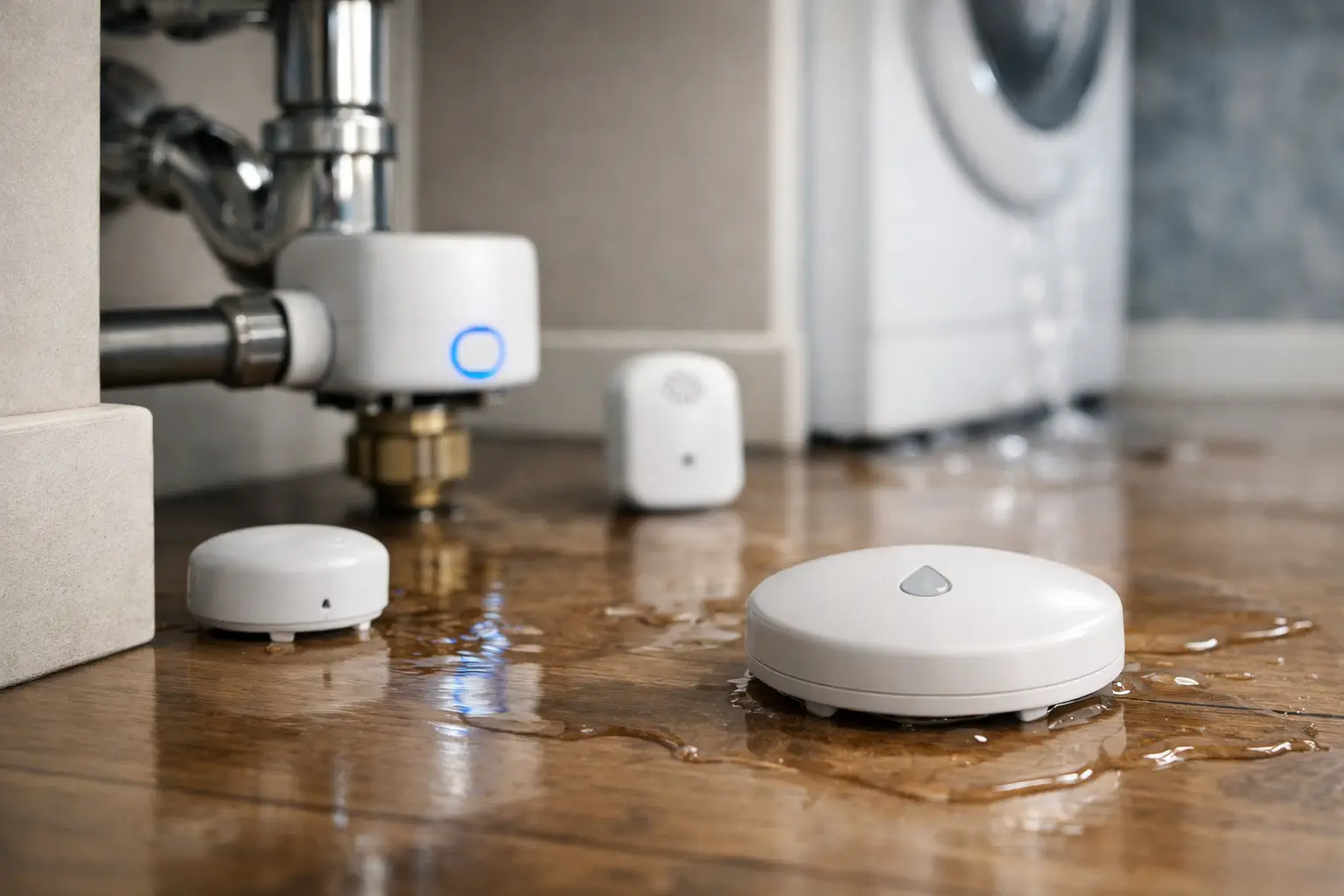
A small leak beneath a kitchen sink can run unnoticed for hours. In a villa, that may affect cabinetry, flooring, ceilings, and adjacent rooms. In an apartment or hotel, it can also damage the property below. Understanding which sensors prevent water damage is therefore less about adding another smart device and more about protecting finishes, equipment, and occupancy from an avoidable disruption.
The most effective solution is not one sensor placed near a visible pipe. It is a tailored water-protection system that detects leaks early, identifies abnormal water use, and, where appropriate, shuts off the supply automatically. For luxury homes, managed properties, and commercial spaces, these safeguards can operate as part of one intelligent system alongside security, climate, lighting, and remote access.
Which Sensors Prevent Water Damage Most Effectively?
Water-damage prevention usually relies on three sensor types: point leak sensors, water flow sensors, and water pressure sensors. Each looks for a different warning sign, and the right design often combines more than one.
Point leak sensors detect water where it should not be
Point leak sensors, also called flood or moisture sensors, are compact devices installed close to the floor or inside areas where leaks are likely to appear first. When water bridges their sensing contacts, they trigger an alert immediately.
They are the most practical starting point for apartments, villas, and retrofit projects because they can be installed discreetly in high-risk locations without extensive plumbing work. Depending on the system design, a detected leak can send a notification to the owner’s phone, activate an audible alert, notify facility staff, or command a motorized shutoff valve to close the water supply.
These sensors are particularly valuable beneath sinks, behind washing machines, beside water heaters, under dishwasher connections, and near AC drain pans. In Dubai and other hot climates, AC-related moisture deserves special attention. A blocked condensate drain can cause ceiling or wall damage long before a resident notices the issue.
Point sensors are highly effective for localized leaks, but they only protect the area they can reach. A sensor under the kitchen sink will not identify a concealed leak in a remote bathroom wall. That is why larger properties benefit from broader monitoring as well.
Water flow sensors identify unusual consumption
A water flow sensor is installed on a water line to measure how much water is moving through it. Instead of waiting for water to reach the floor, it looks for a pattern that does not match normal use.
For example, a system may recognize continuous flow overnight when the property is unoccupied, or an unusually long flow period after irrigation, a washing cycle, or bathroom use should have ended. The automation platform can then issue an alert or close a connected smart valve, subject to the rules agreed during programming.
This approach is especially useful for villas, vacation homes, penthouses, and investment properties that may be empty for extended periods. It can also support hotel and commercial operations, where a slow hidden leak can waste a significant amount of water before it becomes visible.
The trade-off is that flow monitoring needs careful configuration. A large household, staff accommodation, spa area, irrigation zone, or commercial kitchen can have legitimate periods of extended water use. The system must be programmed around how the property actually operates, rather than using a generic threshold that creates false alarms.
Water pressure sensors reveal plumbing abnormalities
Pressure sensors monitor changes in pressure within a plumbing system. A sudden pressure drop may point to a burst pipe or major leak, while irregular pressure behavior can help indicate a developing issue in certain installations.
They are more common in comprehensive villa, hospitality, and commercial monitoring designs, particularly where the plumbing network is larger or where plant rooms need closer supervision. Pressure data can add useful context to flow data. If a system sees continuous flow and an unexpected pressure change at the same time, it has a stronger indication that immediate action may be required.
Pressure sensors are not always necessary for a smaller apartment with a straightforward plumbing layout. However, they can be valuable in high-value properties where concealed services, multiple floors, water pumps, filtration equipment, or extensive landscaping increase the consequences of a failure.
Temperature and humidity sensors provide early supporting warnings
Humidity and temperature sensors do not directly detect a water leak, but they can reveal the conditions that lead to moisture damage. Persistently high humidity in a bathroom, laundry room, wardrobe, basement, or plant room may indicate inadequate ventilation, condensation, or a slow leak that has not yet reached the floor.
In properties with smart climate control, these sensors can also support a response. An intelligent system may increase ventilation, adjust cooling settings, or notify the property manager when humidity remains outside the preferred range. This is useful for protecting wood finishes, artwork, textiles, and high-end interiors, but it should complement direct leak detection rather than replace it.
Where Should Water Sensors Be Installed?
Placement determines whether a sensor protects the property or simply adds a notification after damage has already started. The highest-priority locations are where water connections, drainage equipment, or concealed mechanical systems are present.
In a residence, this commonly includes kitchen cabinets beneath sinks, dishwasher spaces, refrigerators with water lines, laundry areas, washing machines, water heaters, bathrooms, guest bathrooms, and AC units. For villas, consider pump rooms, filtration systems, outdoor kitchens, irrigation manifolds, and any lower-level utility area. In a penthouse, sensors near terrace drainage points and concealed AC equipment can be equally important.
Commercial and hospitality projects require a more operational approach. Hotel bathrooms, housekeeping pantries, ice machines, bar stations, commercial kitchens, server rooms with cooling equipment, plant rooms, and mechanical risers all deserve assessment. The goal is to protect not only the space with the leak but also the rooms, equipment, and tenant areas that could be affected next.
A professional site consultation helps identify risks that are not obvious from a floor plan. Pipe routes, equipment access panels, drainage slopes, cabinetry design, and network coverage can all influence the final sensor layout.
Automatic Shutoff Is the Critical Next Step
Alerts are useful when someone can respond quickly. Automatic shutoff is what protects a property when nobody is present.
A motorized water shutoff valve is typically installed on the main incoming water line or on selected zones. When a designated leak sensor detects water, the automation system sends a command to close the valve. It can also notify the owner, security team, property manager, or maintenance contact with clear information about the affected area.
Zone-based shutoff is often the preferred choice for larger properties. A detected leak in an outdoor kitchen, for instance, should not necessarily cut water to every bathroom in an occupied villa. Separating irrigation, guest areas, staff quarters, kitchens, or specific floors gives the system a more precise response.
There is no single rule for every property. A vacant vacation home may prioritize immediate whole-property shutoff. A hotel or restaurant may need carefully planned zones and escalation rules to avoid disrupting operations unnecessarily. This is where system design and programming matter as much as the hardware itself.
Wired or Wireless Sensors: Which Is Better?
Both options can provide dependable water protection when selected and installed correctly. Wired sensors are often ideal during construction or major renovation, when cables can be routed discreetly and integrated into a centralized control panel. They do not depend on batteries and are well suited to extensive, permanent installations.
Wireless sensors are an excellent choice for finished apartments, occupied homes, and targeted upgrades. They can be placed in difficult-to-wire locations with minimal disruption, then connected to the wider automation platform. Their batteries need periodic checking or replacement, and signal quality must be verified during installation.
The better choice depends on the property, the access available, and the desired level of integration. Many premium projects use both: wired protection in core plant and utility areas, with wireless sensors added where flexibility is needed.
Design Water Protection Around the Property, Not the Device
The best water-protection systems are designed around real routines. Who occupies the property? Is it vacant during summer travel? Are there staff areas, multiple kitchens, valuable finishes, or remote plant equipment? Is the owner comfortable with automatic shutoff, or should certain alerts require confirmation first?
At Esmartech, this begins with a site consultation and a clear understanding of the property’s plumbing, risk points, and daily operation. The selected sensors, valves, notifications, and control rules are then integrated into one intelligent system, tested thoroughly, and explained at handover.
A water sensor is a small component. Properly planned, it becomes a quiet layer of protection that can save a property from a very expensive surprise.




Leave a comment