
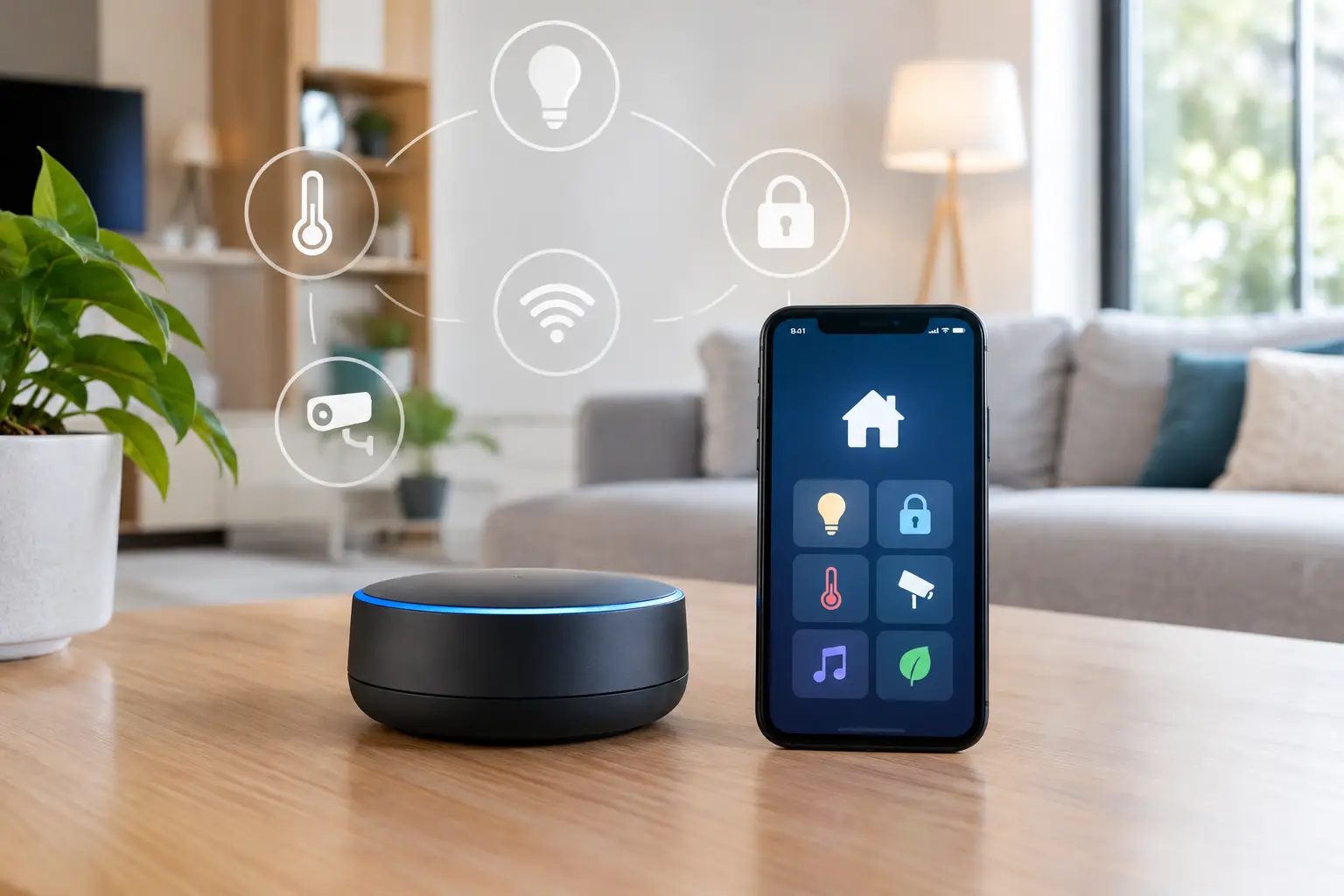
A beautiful villa can have the finest lighting, motorized curtains, climate control, CCTV, and audio equipment, yet still feel complicated if every system requires a separate app, remote, or wall panel. This home automation controller review focuses on the component that turns those individual technologies into one intelligent system – and on the decisions that determine whether daily control feels effortless or frustrating.
What a Home Automation Controller Actually Does
A controller is the central decision-maker in an automation installation. It receives commands from keypads, touchscreens, mobile apps, voice assistants, sensors, and scheduled events. It then tells connected devices what to do: dim lights, close curtains, set the AC temperature, arm security zones, display camera feeds, or begin an entertainment scene.
That role is more significant than it sounds. A controller does not simply put device controls on one screen. A properly designed system coordinates them. For example, a “Good Night” command can switch off selected lighting, close bedroom curtains, lower the temperature, lock configured doors, and send cameras into the preferred monitoring mode. The experience should be simple for the user, while the programming behind it accounts for the property’s actual routines.
For apartments, this may mean intuitive control of lighting, AC, curtains, and access. For large villas, hotels, and offices, the controller may also manage multiple zones, guest settings, audiovisual systems, energy-saving schedules, and security events. The right choice depends less on the number of devices and more on how reliably they must work together.
Home Automation Controller Review: The Criteria That Matter
A controller should be assessed as the foundation of the property, not as another gadget. Premium finishes and impressive app screens have value, but they cannot compensate for poor integration, weak network planning, or limited after-installation support.
Reliability when the internet is unavailable
One of the first questions to ask is whether essential functions work locally. Lighting, climate control, scenes, and security-related actions should not depend entirely on an external cloud connection. Internet access is useful for remote control and notifications, but a temporary service outage should not leave occupants unable to operate their home.
Local processing also tends to reduce command delays. When a homeowner presses a keypad at the entrance, lights should respond immediately. This is especially relevant in larger properties, where a lagging system quickly undermines confidence in the installation.
Compatibility with the systems you already have
No controller is universally compatible with every product. The practical question is whether it integrates properly with the equipment planned for your property. This includes lighting drivers, dimmers, HVAC interfaces, curtain motors, gate controls, intercoms, CCTV recorders, smart locks, sensors, televisions, audio equipment, and voice control platforms.
A reliable review process looks beyond whether a device can technically connect. It asks what level of control is available. Can the controller provide two-way status, so the app knows whether a curtain is open or closed? Can it adjust AC setpoints and fan modes rather than only switching a unit on and off? Can access control events trigger useful actions, such as turning on entry lighting after a trusted user arrives?
For renovations, compatibility may shape the entire design. Existing wired systems can often be retained or expanded, while wireless devices may offer a cleaner route for areas where opening walls is not practical. Neither approach is automatically better. Wired solutions are often preferred for permanent, high-demand functions, while wireless technology can be an effective option when selected and installed for the right use case.
Control methods for every user
Phone control is convenient, particularly for checking a property while traveling. It should not be the only way to use the home. A well-planned automation controller supports a mix of wall keypads, touchscreens, remotes, voice control, and mobile access.
This matters because different situations call for different interfaces. Guests should not need an app to operate bedroom lights. Children and household staff may prefer clearly labeled keypads. A property manager may need remote alerts and access controls. In a hospitality setting, staff require a straightforward operational view without exposing technical settings or guest data.
The best interface is usually the one that feels obvious at the moment it is needed. That is why custom scene names, logical room groupings, and carefully selected keypad functions matter as much as the controller itself.
Security and long-term support
A controller connects systems that affect privacy, access, and safety. It should therefore be installed with secure user accounts, protected network configuration, appropriate permissions, and controlled remote access. Camera feeds, locks, and intercoms require particular care.
Support also deserves serious attention. Automation is not a one-time purchase. A home may be renovated, a tenant may change, new devices may be added, or operating preferences may evolve. Select a system with a clear path for updates, expansion, and professional troubleshooting. A lower initial price can become expensive if the installer cannot service the system or if essential equipment has no viable upgrade route.
Comparing Controller Types
There are three broad approaches to controller selection. Consumer smart-home hubs are often attractive for smaller apartments because they are accessible and can work well with common wireless devices. Their limitations can appear when a project requires complex climate integration, multi-room AV, advanced security logic, or a tailored user interface.
Professional automation controllers are designed for larger residences, premium apartments, commercial spaces, and hospitality environments. They are generally better suited to custom programming, hardwired integration, centralized equipment racks, and multi-zone control. They require a qualified design and installation team, but that professional planning is often what protects reliability over time.
Then there are single-brand ecosystems, which can provide a consistent experience when most components come from one manufacturer. This can simplify compatibility, although it may reduce flexibility if the owner later wants to add specialized products from other brands. An open or carefully integrated professional platform can offer more choice, provided the project team has proven experience with the required equipment.
There is no universal winner. A two-bedroom apartment with lighting, AC, and curtains has different needs from a waterfront villa with gate access, outdoor areas, multiple entertainment zones, and staff accommodation. The controller should fit the property’s operating requirements, not force the property into a preset package.
Questions to Ask Before You Commit
Before approving a proposal, ask the integrator to explain what happens if the internet fails, how the system is controlled without a phone, and which functions will work locally. Request a clear device schedule showing what is included in each room and what each scene will do.
It is also useful to ask whether the system can expand in stages. A homeowner may begin with lighting, curtains, and climate control, then add security, audio, or pool controls later. Developers and hotel operators should ask about user permissions, handover documentation, staff training, and the process for supporting multiple rooms or units.
Finally, look for a complete project approach. The strongest result comes from site consultation, system design, transparent quotation, clean installation, testing, programming, and guided handover. A controller can be excellent on paper, but the installation quality determines how it performs in the real property.
The Right Choice Is Designed, Not Picked Off a Shelf
The most successful automation systems make a property feel calmer and easier to manage. They reduce the number of decisions required at the door, beside the bed, during a busy workday, or while away from home. They also preserve manual control where it makes sense.
For a luxury home, office, restaurant, or hotel, the controller should be selected after understanding how people use the space, which systems are essential, and how the property may change in the future. Esmartech approaches that decision through consultation, design, installation, testing, and handover, so the final system is tailored to the space and the people who rely on it.
Choose the controller that makes everyday actions feel natural, keeps critical functions dependable, and leaves room for the next stage of your property rather than limiting it.


Leave a comment