
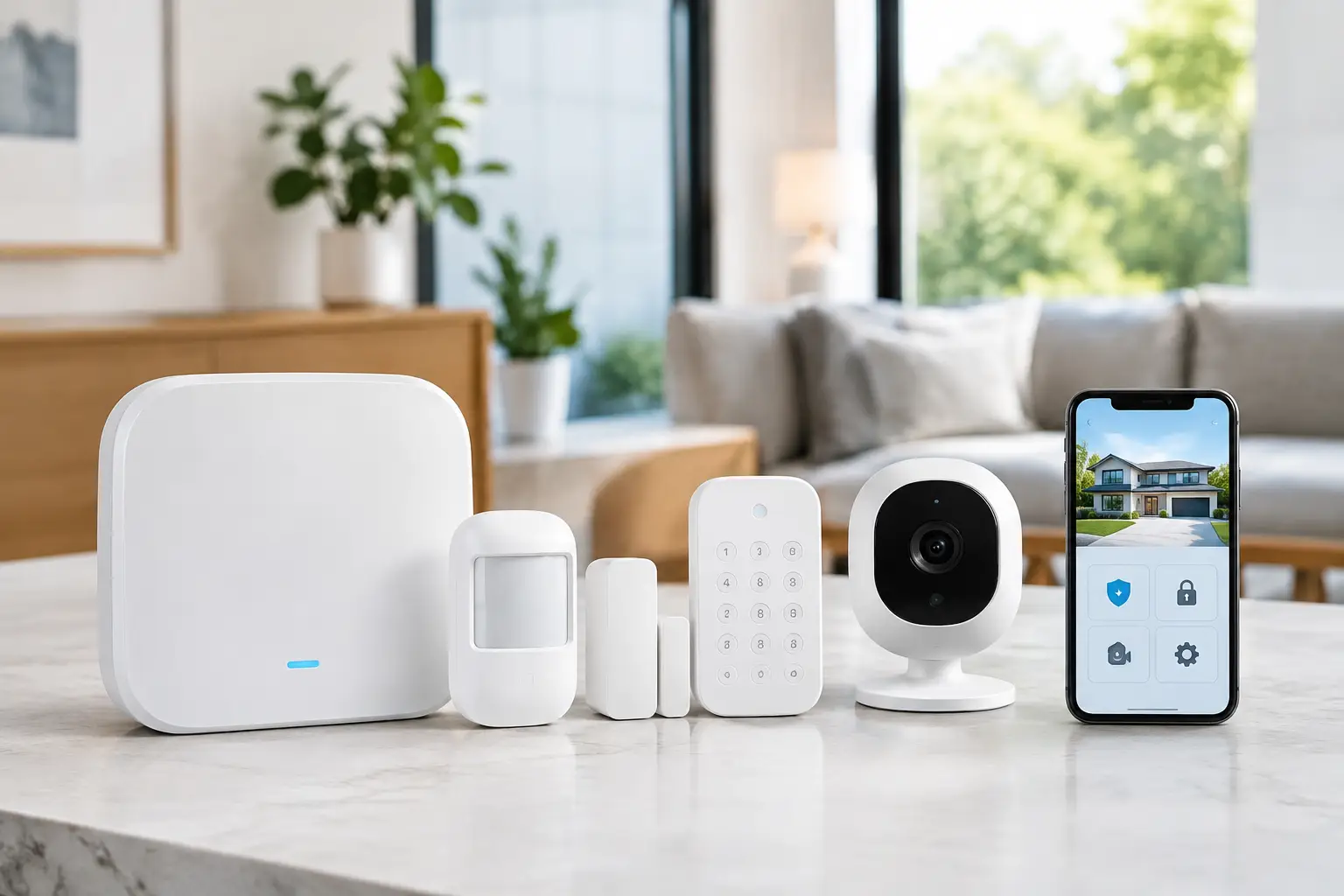
A wireless alarm system should do more than send an alert when a door opens. For a villa, penthouse, retail space, or office, the best wireless alarm systems create a complete security layer around the property – detecting intrusion early, notifying the right people, and working naturally with cameras, access control, lighting, and remote management.
The right choice is rarely the system with the longest list of sensors. It is the one designed around the way a property is used: who enters, where valuables are kept, whether staff or guests need access, and how quickly an incident must be verified and handled.
What Makes a Wireless Alarm System Worth Choosing?
Wireless security has become a strong option for both existing properties and new developments. Sensors communicate with a central control panel using encrypted wireless signals, minimizing the need to open finished walls or run new cabling through completed interiors. This can be particularly valuable in furnished villas, premium apartments, hospitality spaces, and operating businesses where disruption needs to stay low.
However, wireless does not mean simplified security. A professionally designed system should use supervised devices that report their status to the controller. If a sensor battery is low, a device is removed, or communication is interrupted, the system should identify the issue rather than leave the property unprotected without warning.
The best installations also consider more than the front door. They account for vulnerable ground-floor windows, garden access, service entrances, rooftop or balcony access, internal rooms containing valuables, and areas that may be occupied while the rest of the building is armed.
The Best Wireless Alarm Systems by Property Need
There is no single best solution for every building. The most suitable system depends on the property type, its security priorities, and whether the alarm should operate as part of a wider intelligent control system.
Premium villas and large residences
A villa needs more than a basic door sensor and a keypad. Large properties often have multiple entry points, detached staff areas, landscaped grounds, garages, balconies, and several zones that are used differently throughout the day.
For this setting, a professionally installed wireless alarm system with perimeter protection is usually the strongest choice. Door and window contacts can secure access points, while motion sensors protect internal circulation areas. Glass-break sensors may be appropriate for rooms with large glazed doors, and outdoor-rated detection can provide earlier awareness around selected boundaries when correctly planned.
Zoning matters. A family may want to arm the ground floor and outdoor access points at night while keeping bedroom areas available. A well-programmed system allows these scenarios without creating a complicated daily routine.
Apartments and penthouses
Apartments tend to have fewer external access points, but they still benefit from thoughtful protection. Main entrance doors, terrace doors, windows, storage rooms, and smart locks should be considered together. In a penthouse, private lift access, balconies, and large glass façades may require a more detailed plan.
Wireless alarms are especially practical here because they can be fitted with minimal impact on finished interiors. The strongest apartment systems combine intrusion detection with a video intercom, smart access control, and mobile notifications. This gives residents clarity about who is requesting entry and what is happening at home, whether they are in the building or traveling.
Offices, retail, and hospitality spaces
Commercial properties need a different operating model. Staff turnover, delivery schedules, multiple managers, and changing opening hours all affect how an alarm should be programmed. A retail store may prioritize stockroom and storefront protection. An office may need controlled access to server rooms and executive areas. A hotel or restaurant may require staff-only zones that operate independently from guest spaces.
For these environments, choose a system that supports multiple users, clear permissions, event history, and scheduled arming. The alarm should also work alongside CCTV and access control, so a manager can investigate an event with useful context instead of responding to an isolated notification.
Features That Matter More Than Marketing Claims
When comparing wireless alarm systems, focus on the performance details that affect real security and day-to-day use.
Encrypted two-way communication is a priority. It helps protect communication between sensors and the control panel, while two-way supervision confirms that devices are online and functioning. Reliable battery reporting is equally valuable, especially in larger properties with many sensors.
Look for flexible communication paths. A system that can communicate through internet and cellular connections offers better continuity if one path is unavailable. Backup battery power at the central panel is also essential, as an alarm should continue operating during a power interruption.
Mobile control should be useful, not merely impressive in a product brochure. Residents and property managers should be able to see alarm status, receive meaningful alerts, arm or disarm authorized areas, and review recent activity. For higher-value homes and businesses, event-based camera recording can add another layer of confidence by showing what triggered an alarm.
False alarms deserve attention as well. Poor sensor placement, unsuitable device selection, pets, direct air-conditioning airflow, moving curtains, and unmanaged user permissions can all create unnecessary alerts. The best system is one that is carefully surveyed, installed, and tested for the property rather than selected from a standard package.
Wireless, Wired, or Hybrid: Which Is Better?
Wireless is often the right answer for retrofit projects, occupied homes, and spaces where preserving finishes is a priority. It offers flexibility, faster installation in many cases, and an easier path for selected future additions.
Wired systems remain valuable for new construction and major renovations, particularly in large villas, hotels, or commercial sites where cabling can be planned before finishes are completed. Wired devices avoid battery replacement and can be ideal for permanent, high-density infrastructure.
For many premium projects, a hybrid approach is the most sensible option. Critical equipment and key areas can use wired connections where practical, while wireless sensors extend protection to finished rooms, outbuildings, or locations where new cabling would be disruptive. This approach balances long-term reliability with installation flexibility.
Why Integration Changes the Security Experience
An alarm becomes more useful when it can coordinate with the rest of the property. For example, an armed-away scene can turn off selected lights, adjust climate settings, close motorized curtains, and confirm that designated doors are locked. If an intrusion event occurs, exterior lights can activate, cameras can record the relevant area, and authorized users can receive an immediate alert.
This does not mean every security action should rely on automation. Core alarm operation must remain dependable on its own, with local controls and backup communication. Integration should enhance visibility and convenience while preserving clear, reliable security behavior.
For property owners, one intelligent system also reduces app fatigue. Instead of moving between separate platforms for CCTV, door access, alarms, lighting, and climate control, the property can be managed through a coordinated interface designed around real daily routines.
Questions to Ask Before Installation
Before selecting a wireless alarm system, ask how the property will be used during the day, at night, and when vacant. Consider whether there are children, pets, domestic staff, tenants, guests, contractors, or multiple business managers who need different levels of access.
It is also worth asking how the system will be maintained. Who receives low-battery notifications? Who can add or remove users? What happens if internet service is unavailable? Can the system expand when a new guesthouse, office, storage area, or smart lock is added later?
A professional site consultation should answer these questions before equipment is chosen. The process should include a clear security design, a transparent quotation, careful installation, complete testing, and practical handover guidance for the people who will use the system every day.
Esmartech approaches wireless security as part of the complete property experience, coordinating alarms with CCTV, intercoms, smart locks, lighting, and centralized control where it adds genuine value. The objective is not to fill a home or business with devices. It is to create protection that feels dependable, discreet, and easy to operate.
The best time to plan an alarm system is before a security concern forces a rushed decision. Start with the property’s real access points, routines, and risks, then choose technology that can protect the space quietly in the background while you focus on living or operating with confidence.


Leave a comment