
A camera that loses connection during a gate delivery, overnight perimeter alert, or building incident is not providing meaningful security. When evaluating PoE cameras versus wireless cameras, the key decision is not simply whether cables look neater. It is whether the surveillance system can deliver dependable coverage, clear recordings, and practical management for the way your property operates.
For a luxury villa, apartment, office, hotel, or retail space, both options have a place. The right choice depends on the building stage, camera locations, network quality, power availability, and the level of security expected over the long term.
PoE Cameras Versus Wireless Cameras: What Changes?
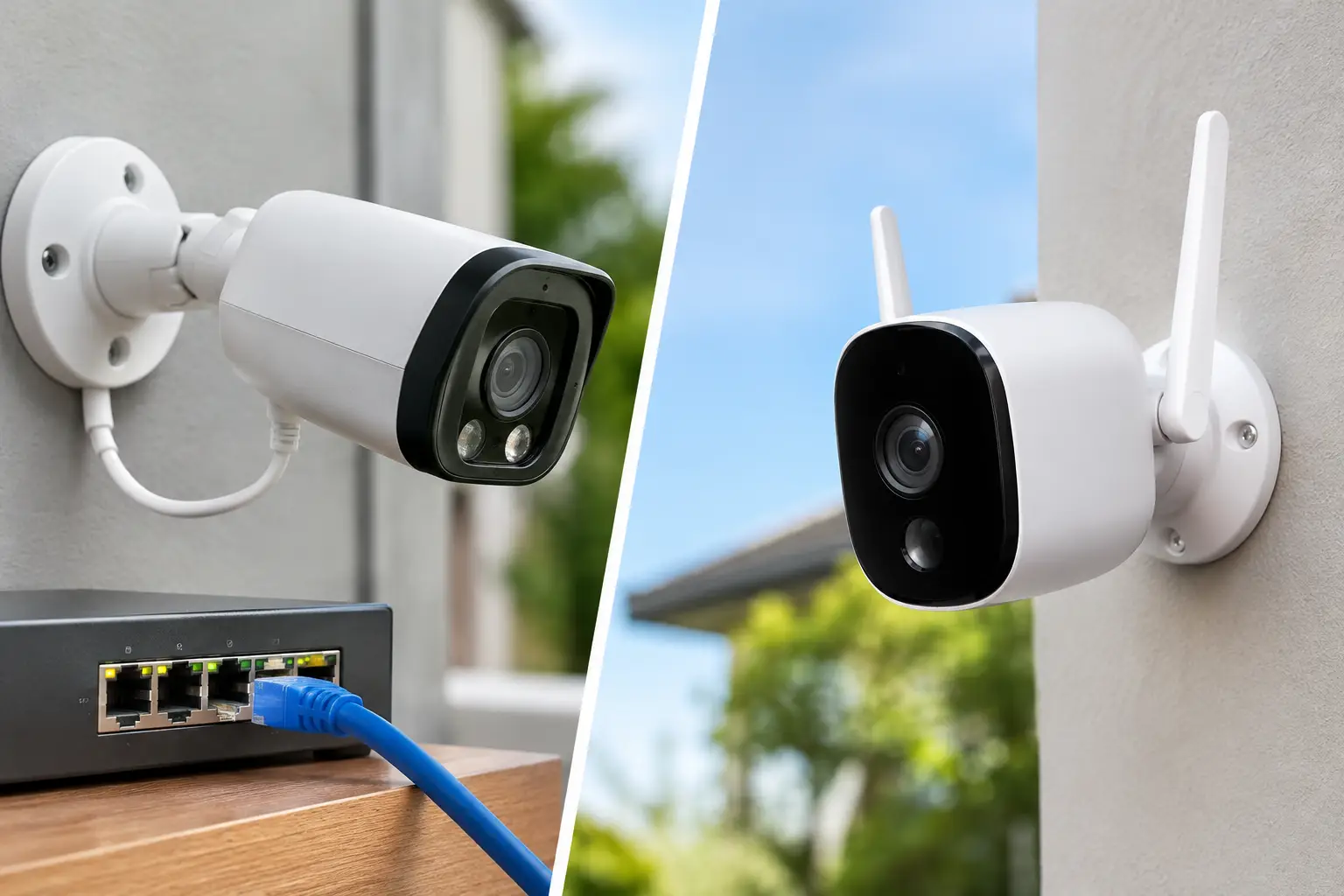
PoE means Power over Ethernet. A PoE camera receives electricity and network data through one Ethernet cable, usually connected to a PoE network switch or network video recorder. The same cable powers the camera, carries high-resolution video, and connects it to the recording system.
Wireless cameras generally connect to the property’s Wi-Fi network for data transmission. Most still require a nearby power outlet, although battery-powered models are available for selected applications. Their main advantage is avoiding a data cable between the camera and network equipment.
That distinction affects much more than installation. It determines how reliably the camera communicates, the quality it can sustain, how easily the system grows, and how much attention it may need after handover.
Why PoE Is Often the Professional Choice
A well-designed PoE system is usually the stronger option for permanent security installations. Because each camera has a dedicated wired connection, it is less exposed to Wi-Fi congestion, signal dropouts, and interference from neighboring networks or building materials.
This matters in properties where cameras need to cover gates, driveways, entrances, corridors, parking areas, staff access points, or cash-handling locations. These are not areas where intermittent recording is acceptable. A wired connection gives each camera a stable path back to the recorder, supporting consistent live viewing and video storage.
PoE also simplifies power planning. Rather than arranging separate electrical outlets near every camera, the installer can deliver low-voltage power through the Ethernet cable. A centralized uninterruptible power supply can keep the network switch and recorder operating during a short power interruption, helping cameras remain active when they are needed most.
For larger villas and commercial properties, centralized management is another benefit. Cameras can be organized through a network video recorder, monitored from one interface, and connected with access control, intercom, gate automation, and smart-home scenes where appropriate. For example, a gate station can trigger a camera view on a wall-mounted touch panel or mobile app, while an access event can be matched with the relevant footage.
PoE cameras also suit high-resolution surveillance. Detailed 4K video, multiple cameras, continuous recording, and advanced analytics all create substantial network traffic. A wired Ethernet connection is better positioned to carry that load predictably than a busy Wi-Fi network shared with phones, laptops, smart TVs, speakers, and guest devices.
The trade-off with PoE
PoE requires cable routing. In a new build, major renovation, or fit-out, this is typically straightforward and should be planned alongside lighting, Wi-Fi access points, intercoms, and other low-voltage systems. The cabling can be concealed within ceilings, walls, conduits, and structured wiring pathways for a clean result.
In a completed property, cable routes may be more difficult to hide. Installation can involve access above false ceilings, careful wall routes, or surface-mounted containment in utility areas. This does not make PoE unsuitable for an existing building, but it makes professional site assessment especially valuable. The aim is to protect the interior finish while achieving meaningful camera coverage rather than selecting locations only because they are easy to wire.
Where Wireless Cameras Make Sense
Wireless cameras are practical when running new network cable would be disruptive, expensive, or unnecessary. They can work well for a small apartment, a temporary monitoring need, or a single location such as an internal entryway, nursery, storeroom, or secondary door.
They are also useful for properties that need security coverage quickly. If there is strong Wi-Fi at the intended camera location and reliable power nearby, a wireless camera can be installed with minimal disruption. For renters or owners who cannot modify walls or ceilings, this flexibility can be attractive.
Battery-powered wireless cameras extend that flexibility further. They can be placed in areas without nearby power, such as a temporary construction entrance or an isolated garden feature. Yet battery operation always comes with a maintenance requirement. Recording frequency, motion sensitivity, weather conditions, and live-view use all affect battery life. A camera that needs frequent charging is rarely the right primary security solution for a busy entrance or critical perimeter.
Wireless systems should also be evaluated carefully in concrete-heavy buildings, large villas, and properties with multiple floors. Thick walls, metal structures, landscaping, and long distances can weaken signal strength. A camera may appear to work during initial testing, then become unreliable once residents, guests, staff, and connected devices place normal demands on the Wi-Fi network.
Wireless camera limitations to plan for
Wi-Fi is a shared resource. When the network is overloaded or a signal becomes weak, camera video may load slowly, reduce in quality, or disconnect. This is particularly relevant where several cameras are set to record continuously at high resolution.
Many wireless cameras also rely heavily on cloud services and subscription plans for video history, smart alerts, or advanced features. That can be convenient, but property owners should understand where footage is stored, how long it remains available, whether subscription costs apply, and what happens if the internet service goes down.
Privacy and cybersecurity deserve equal attention. Wireless cameras should use secure network settings, strong unique passwords, current firmware, and a properly configured guest network separate from security devices. A professional design can segment security equipment from everyday devices and give authorized users controlled access to live views and recordings.
Choosing by Property Type
For a new villa or full renovation, PoE is generally the better foundation. Plan cable points for gate cameras, exterior elevations, entrances, pool areas, corridors, service zones, and any locations requiring dependable evidence-quality recording. Even if every planned camera is not installed immediately, providing cable routes during construction protects future flexibility.
For an apartment, the decision is more balanced. A compact system with one or two wireless cameras may be sufficient for internal monitoring, especially where building management already controls common-area security. If the apartment has a private entrance, terrace, or valuable storage area requiring continuous coverage, a wired option may still be worthwhile.
For offices, restaurants, retail spaces, and hospitality projects, PoE typically offers better operational control. These environments may require multiple cameras, longer recording retention, staff permissions, central monitoring, and integration with access control. A properly sized PoE network provides a stable security backbone as the business expands.
Design Matters More Than the Camera Type
The most expensive camera cannot compensate for poor placement. Before selecting PoE or wireless equipment, define what each camera must achieve: identify a visitor, view a vehicle plate, monitor a cash point, cover a doorway, or provide general awareness of a larger area. Each purpose may require a different lens, mounting height, field of view, and lighting approach.
Night performance is equally important. Exterior cameras should account for low light, reflective surfaces, gates, landscaping, and nearby streetlights. In Dubai and across the UAE, outdoor equipment must also be selected and installed for heat, dust, and sun exposure. A camera positioned directly against intense afternoon glare may produce less useful footage than one installed with a slight adjustment in angle or location.
Storage should be planned early. Continuous recording provides the fullest record of activity but requires greater storage capacity. Motion-based recording can reduce storage use, but it depends on accurate detection settings. The right retention period depends on the property type, the number of cameras, local requirements, and how long an owner or operator needs footage available.
A Better Way to Make the Decision
Start with a site consultation rather than choosing cameras from a product list. Review the layout, existing network, internet service, electrical access, ceiling conditions, exterior exposure, and the areas that matter most to the owner or operator. This reveals whether a wireless solution is genuinely suitable or merely the easiest short-term option.
For many permanent installations, the answer is not entirely one or the other. A PoE system can cover critical entrances, perimeter zones, and shared operational areas, while a wireless camera supports a difficult-to-cable secondary location. The objective is one intelligent security system tailored to the property, not a single technology used everywhere.
Esmartech designs, installs, tests, and hands over security systems with the same attention given to the wider smart-property experience. The camera network can be considered alongside intercoms, smart locks, access control, automation controls, and remote access so the finished system remains straightforward to use.
Choose wired PoE where reliability, continuous recording, and scale are essential. Use wireless where flexibility and minimal disruption genuinely outweigh the limits of Wi-Fi. A thoughtful site plan will give you more confidence than a camera specification ever can.



Leave a comment